
Development and Design of the Transall C-160
The Transall C-160 military transport aircraft is designed for cargo operations and paratrooper deployment. The “Transall (Transport Allianz)” group, combining the capabilities of Aérospatiale (France), MBB, and VFW (Germany), was responsible for its construction. Development began in 1959, with the prototype’s first flight on February 25, 1963, and the production model’s first flight on May 21, 1965.
The C-160 features a conventional design with a high-mounted, all-metal straight wing. The semi-monocoque fuselage, made of aluminum alloy, has a round cross-section flattened underneath. The cockpit, located in the nose, accommodates two pilots and a flight engineer. The pressurized cabin has a rear cargo ramp in the upward-sloping tail section of the fuselage and hatches on each side for paratrooper drops.
The landing gear is tricycle, hydraulically operated, with tandem dual wheels on the main struts, which can partially retract to reduce the loading ramp angle.
Cargo Capacity and Advanced Avionics
To facilitate loading and unloading of equipment and cargo, the height of the cabin floor and loading ramp can be adjusted using a special mechanism mounted on the main landing gear struts. The cabin is equipped with the necessary loading equipment, and its floor features rail guides and rollers for cargo movement. The forward part of the fuselage also houses the majority of the onboard radio-electronic equipment.
The C-160 is capable of transporting cars, armored personnel carriers, tanks, cargo containers, and other large items weighing up to 16 tons. In-flight drops of individual loads weighing up to 8 tons are possible from altitudes of 3-9 meters. Converting the cabin for troop transport takes three people 1.5 hours.
The C-160 is powered by two Rolls-Royce “Tyne” Rty.20 Mk.22 turboprops, each producing 6100 horsepower. It features four-blade, feathering, reversible propellers with a diameter of 5.5 meters. Fuel is stored in four wing-compartment tanks with a total capacity of 19050 liters. Its avionics suite includes an RDN-72 Doppler navigation radar, an auxiliary Crouzet “Nadir” computer, a TRT AHV-6 radio altimeter, and an Omera ORB-37 weather radar.
Furthermore, it is equipped with a ZIM SAGU automatic flight control system, comprising two attitude-heading reference systems, two gyrocompasses, and a PA-SI autopilot. Distance measuring equipment can be LMT DM-820 or Collins 860E-5, and the radio compass, Collins NRAN-19 or DF-206. It also incorporates a VHF omnidirectional radio beacon receiver and an EAS RNA 720 instrumental landing system.
Variants and Specialized Roles
Between 1967 and 1972, 169 production aircraft were built. Production ceased in 1972 but resumed in 1976 with a modified variant, the C-160NG. The first flight of this improved model took place in April 1981, with 35 units built before production ended in 1985.
The C-160NG differs from the base model with improved flight performance, advanced avionics, a strengthened wing structure (with the option of an additional fuel tank for increased range), an in-flight refueling system, and the absence of the left cargo door. This modified variant retains the ability to take off from small airfields with unpaved runways, similar to the first production aircraft.
In its transport configuration, the C-160NG can accommodate 93 soldiers, 61-88 fully equipped paratroopers, or 62 stretchers with 4 attendants. The aircraft can be reconfigured into a flying hospital, a firefighting aircraft, or a search and rescue variant. An operating room can be installed for emergency medical assistance.
Modular spare parts kits allow this machine to be used as a C-160S maritime surveillance aircraft or a C-160SE electronic intelligence aircraft. Four C-160NG aircraft were converted to provide communication with French ballistic missile submarines, similar to the US Navy EC-130Q “Hercules.” There is also a C.160NG variant with the ASTARTE system for the French Air Force’s nuclear command.
Two aircraft were more substantially modified to the Gabriel standard, incorporating multiple fuselage fairings, wingtip pods, and large retractable dome fairings in the lower nose section of the fuselage, configured as tactical reconnaissance aircraft with the Thomson-CSF Gabriel electronic intelligence system.
Technical Specifications
| Modification | C.160F |
| Wingspan, m | 40.00 |
| Aircraft length, m | 32.40 |
| Aircraft height, m | 11.65 |
| Wing area, m2 | 160.10 |
| Empty weight | 29000 |
| Normal takeoff weight | 44200 |
| Maximum takeoff weight | 51000 |
| Internal fuel, l | 19050 |
| Engine type | 2 Turboprop Rolls-Royce Tyne RTy.20 Mk 22 |
| Power, ehp | 2 x 6100 |
| Maximum speed, km/h | 593 |
| Cruising speed, km/h | 513 |
| Practical range, km | 8858 |
| Operational range, km | 1854 |
| Service ceiling, m | 8230 |
| Crew, crew | 3 |
| Payload | 93 soldiers or 88 paratroopers or 66 stretchers with 4 attendants or 16000 kg of cargo |
Image and diagram gallery of the C.160 Transall
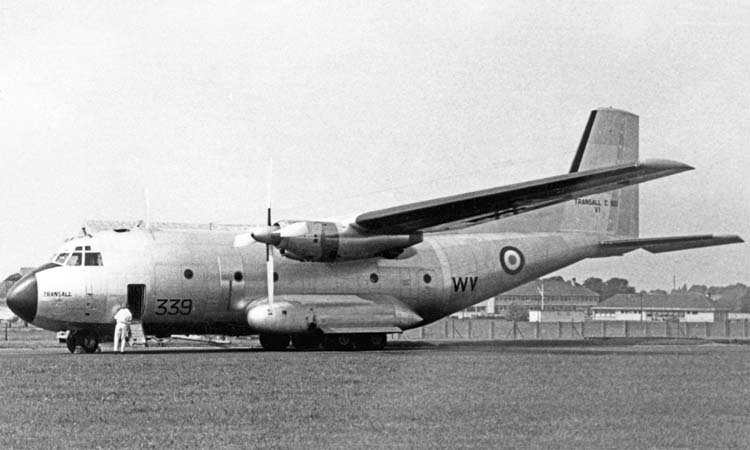 C.160 Transall |
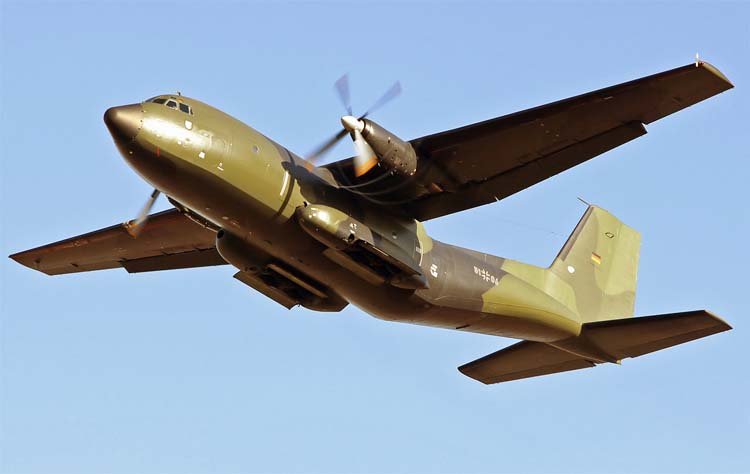 C.160 Transall |
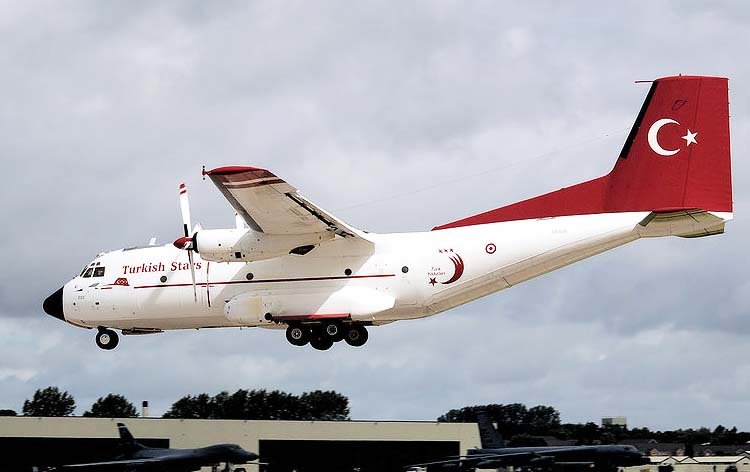 C.160 Transall |
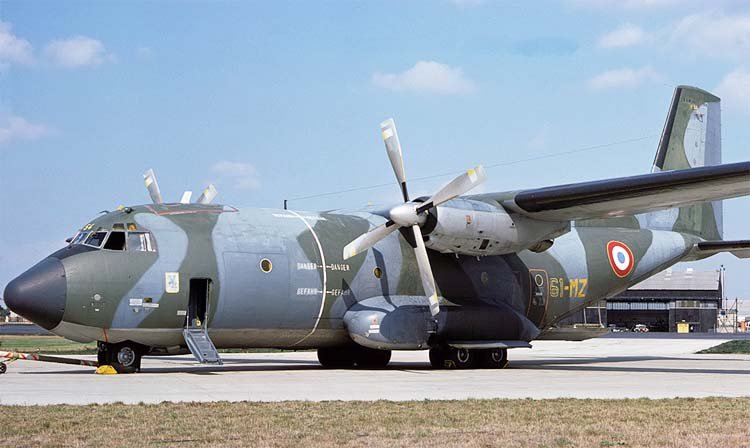 C.160 Transall |
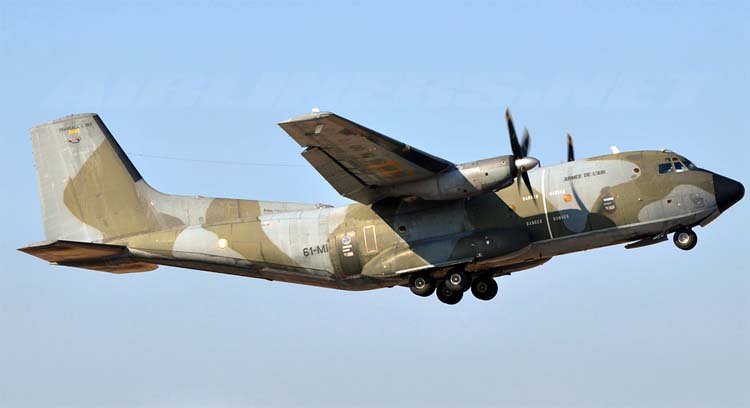 C.160 Transall |
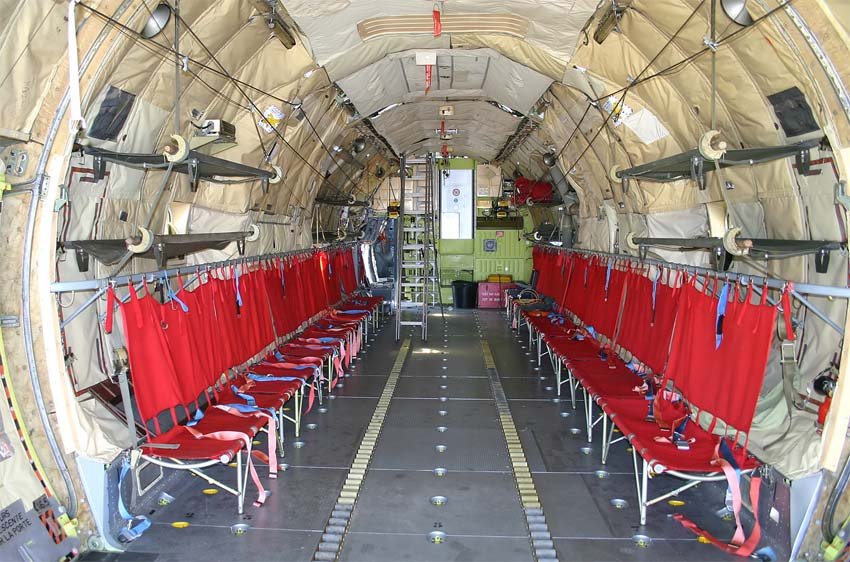 C.160 Transall |
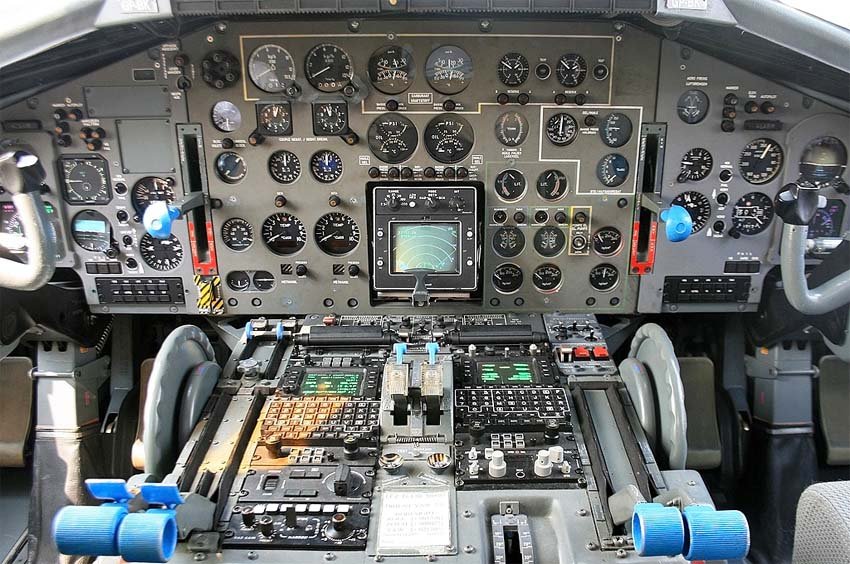 C.160 Transall |
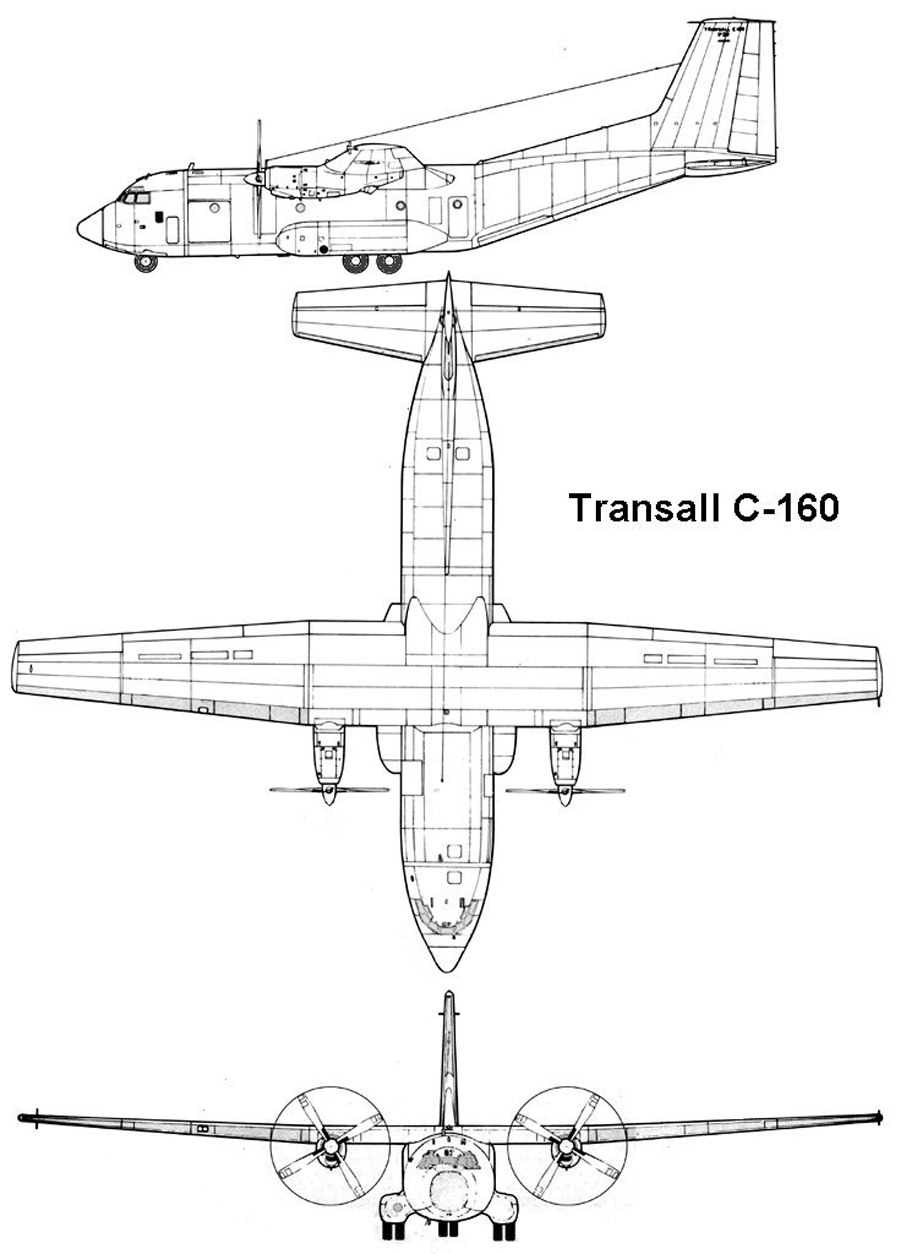 C.160 Transall |
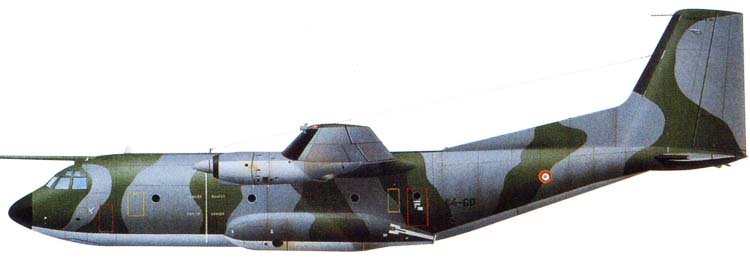 C.160 Transall |
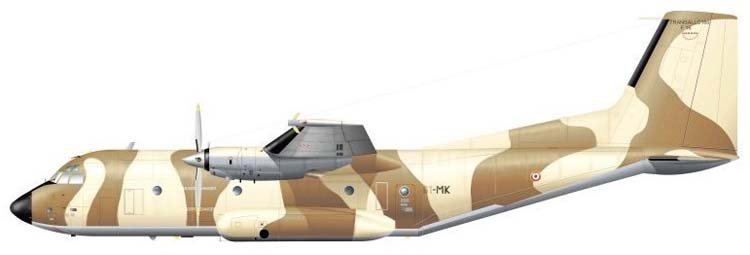 C.160 Transall |
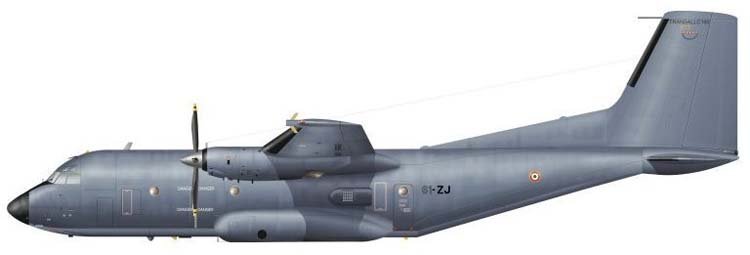 C.160 Transall |