
The conglomerate of Italian Count Giovanni Caproni’s aircraft manufacturing enterprises benefited from the fact that their founder came from a respected noble family in the country. Under Mussolini’s strict regime, the head of the conglomerate enjoyed relative independence from local conditions, allowing him to undertake deals that more dependent state-owned enterprises could not.
Each company within the conglomerate had its corporate brand, consisting of a general name and the division’s location (Caproni-Predapio, Caproni-Bergamasca, Caproni-Reggiane, Caproni-Vizzola, and Caproni-Trento). The conglomerate also owned engine manufacturing companies, such as Isotta-Fraschini. In 1937, the management of Società Italiana Aeroplani Caproni signed an international agreement with the Belgian company SABCA (Société Anonyme Belge de Constructions Aéronautiques).
The Belgian company was intended to represent the Italian conglomerate and ensure the sale and servicing of Italian aircraft. However, for deliveries in sensitive technological areas, SABCA cleverly rebranded Caproni machines as their own. The Ca.135 bomber became the S.45bis, the Ca.310 became the S.46, and the Ca.312, in turn, became the S.48, among others.
Origins and Development of the Ca.335 Maestrale
In the second half of the 1930s, interest grew in modern two- and three-seat high-speed reconnaissance aircraft, light bombers, and consequently, light monoplane fighters with retractable landing gear and enclosed cockpits. Thus, the Caproni conglomerate agreed with its Belgian representative to develop an aircraft analogous to the British Fairey Battle. The new aircraft was intended to be an evolution of the Italian A.P.1 combat aircraft.
The new machine was to be significantly upgraded compared to its predecessor. Instead of a domestic radial engine, it would be fitted with a French Hispano-Suiza H.S.12Y twelve-cylinder, twin-row, 850-hp liquid-cooled engine. The design for this aircraft was developed at the Caproni-Bergamasca company, located in the town of Ponte San Pietro. In Italy, the machine was designated Ca.335 Maestrale, and in Belgium, S.47.
Designer Cesare Pallavicino chose a low-wing concept for his aircraft, featuring a thin fuselage with a separate compartment for the pilot. There was also sufficient space for a glazed cabin for another crew member, who performed the functions of navigator, bombardier, radio operator, observer, and gunner. The main landing gear struts retracted in a Curtiss-like fashion, rotating 90° around their axis and folding backward into recesses located in the wing consoles.
The Ca.335’s construction was mixed: the fuselage was made of steel tubes and covered with plywood sheets, while the lifting and tail surfaces were wooden. The prototype was not ordered by the Italian Ministry of Aviation, and therefore, the aircraft flew in Bergamo without the mandatory military registration number MM.
In this city, the machine, powered by an 860-hp H.S.12Ycrs engine, underwent tests. Before Italy’s entry into the war, it was sent to the SABCA company in Brussels. However, at this time, SABCA was busy with subcontracts for French firms and building Koolhoven F.K.58 fighters under license for the French Air Force (Armée de l’Air). Consequently, there simply wasn’t enough production capacity for the S.47.
The Birth of the Ca.355 Tuffo and its Features
On May 10, 1940, Germany began its offensive on the Western Front, during which Belgium was quickly overrun. This also meant the end of the S.47 program. However, as early as 1939, the Italian Ministry of Aviation, influenced by the successes of the German Junkers Ju 87 Stuka, issued a specification. This required Italian aviation companies to design and build a prototype of a single or twin-engine aircraft capable of dive-bombing for precision targeting.
A large number of companies participated in the competition, albeit with more or less unsuccessful results. Among them was Caproni Aeronautica Bergamasca and its designer Cesare Pallavicino. He took the most rational path, adapting the Ca.335 to the new requirements. In a relatively short period, the new Ca.355 aircraft appeared, receiving the name Tuffo. In Italian, Tuffo means “deep dive,” which is associated with dive-bombing; indeed, bombers of this type in Italy were eventually designated “tuffatori.”
The new Ca.355 adopted the general layout, production technology, some systems, and the landing gear retraction scheme from the Ca.335. The new aircraft had smaller dimensions and was more robust. The second crew member’s cockpit was shifted forward closer to the center of gravity for better handling of G-forces. The machine also received a new engine: the twelve-cylinder inverted air-cooled Isotta-Fraschini Delta R.C.35 IV engine, which developed 850 hp at takeoff and drove a Piaggio three-blade reversible propeller.
The fuselage structure remained a welded truss of steel tubes. Duralumin sheets were used for the skinning up to the front cockpit, and plywood and fabric from the cockpit onwards. The wing was distinctive because the detachable wooden outer panels were attached to a metal box-spar center section, which carried the main landing gear struts and the oil radiator (on the right side). Just like the Ca.335, the wing and tail unit were entirely wooden with plywood and fabric covering. The tail wheel was non-retractable.
Testing and the Inevitable End of the Project
On January 14, 1941, the Tuffo prototype, bearing military registration number MM.470 and still without applied identification marks (only a white cross on the fin), took flight in Bergamo under test pilot Ettore Wengi. The machine flew unarmed; its intended armament was two 7.7 or 12.7 mm Breda-SAFAT machine guns in the wing consoles, and one movable 7.7 mm machine gun in the rear cockpit. However, armament installation was not planned for the prototype, and the mounting locations were sealed off.
In all tests, including a mock 250 kg bomb suspended under the fuselage, the Tuffo flew with only one pilot, while the total load was intended to be 400 kg. From March 1941, the prototype was tested at the Regia Aeronautica’s experimental center in Guidonia, during which the Ca.355 proved quite successful.
However, by this time, Germany had supplied the fascist regime with Ju 87 dive bombers of the B and later D modifications (these machines were named Picchiatello in Italy). The Junkers aircraft were more effective and, moreover, were immediately available. Serial production of the Ca.355 was not planned until the summer of 1942, by which point it was already too late for the Regia Aeronautica command, particularly for Mussolini’s plans in North Africa and on the Eastern Front. The single Ca.355 prototype remained in existence for some time and was subsequently disassembled for materials.
Technical Specifications
| Modification | Са.3 55 |
| Wingspan, m | 12.96 |
| Length, m | 9.93 |
| Height, m | 3.26 |
| Wing area, m2 | 23.37 |
| Empty weight | 1980 |
| Normal takeoff weight | 3050 |
| Engine type | 1 Piston engine Isotta-Fraschini Delta RC.35 |
| Power, hp | 1 х 850 |
| Maximum speed, km/h | 490 |
| Cruising speed, km/h | 380 |
| Practical range, km | 1025 |
| Maximum rate of climb, m/min | 270 |
| Service ceiling, m | 7450 |
| Crew | 3 |
| Armament | two 7.7-mm machine guns, up to 500 kg of bombs |
Image and diagram gallery of the Ca.355 Tuffo
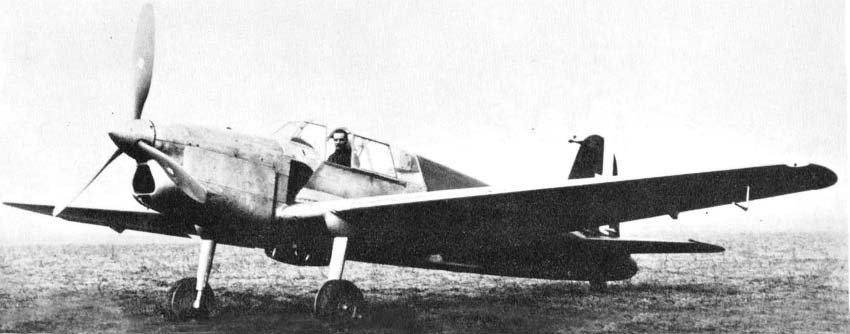 Ca.355 Tuffo |
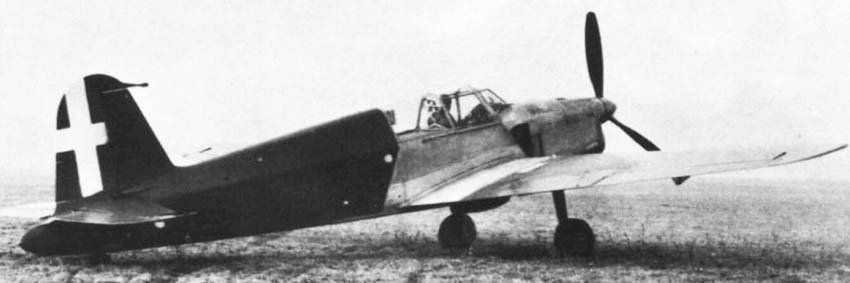 Ca.355 Tuffo |
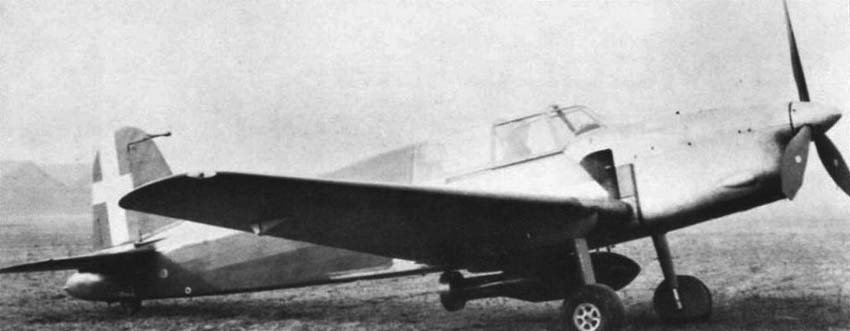 Ca.355 Tuffo |
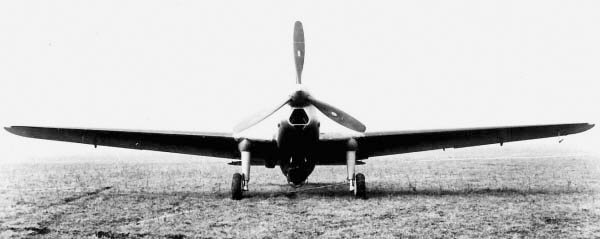 Ca.355 Tuffo |
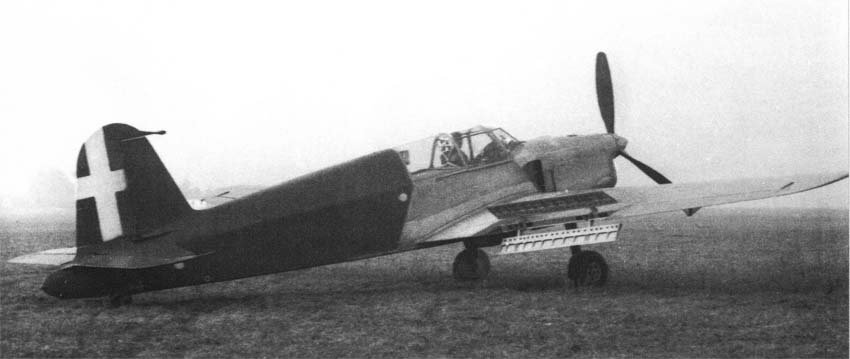 Ca.355 Tuffo |
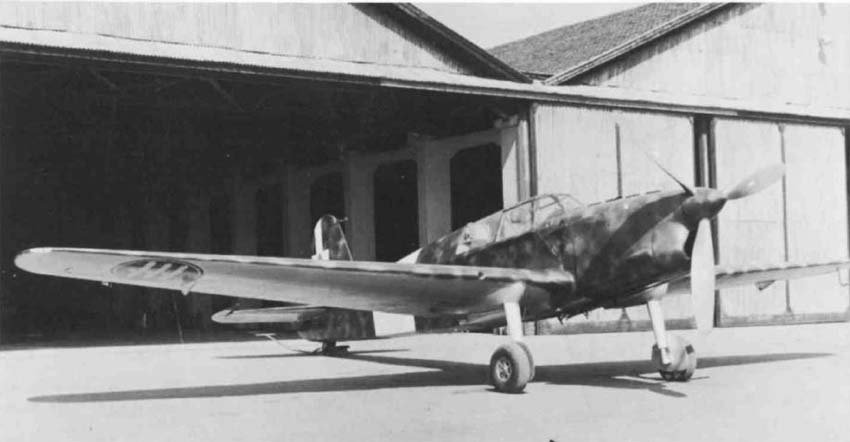 Ca.355 Tuffo |
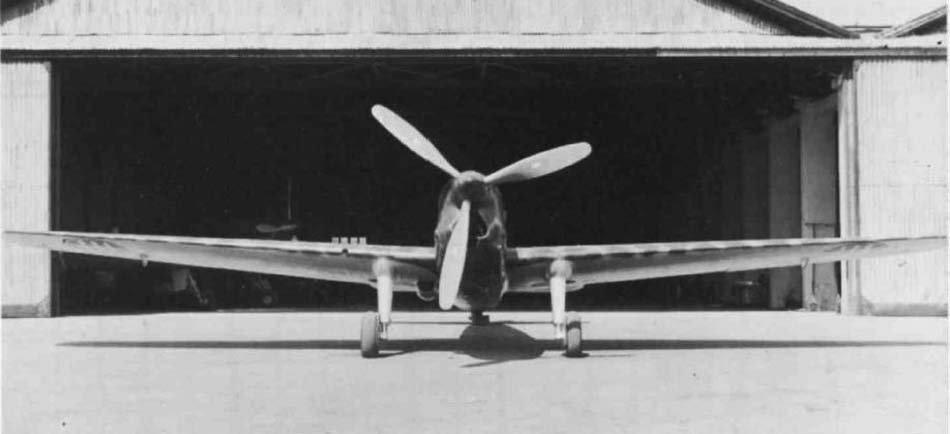 Ca.355 Tuffo |
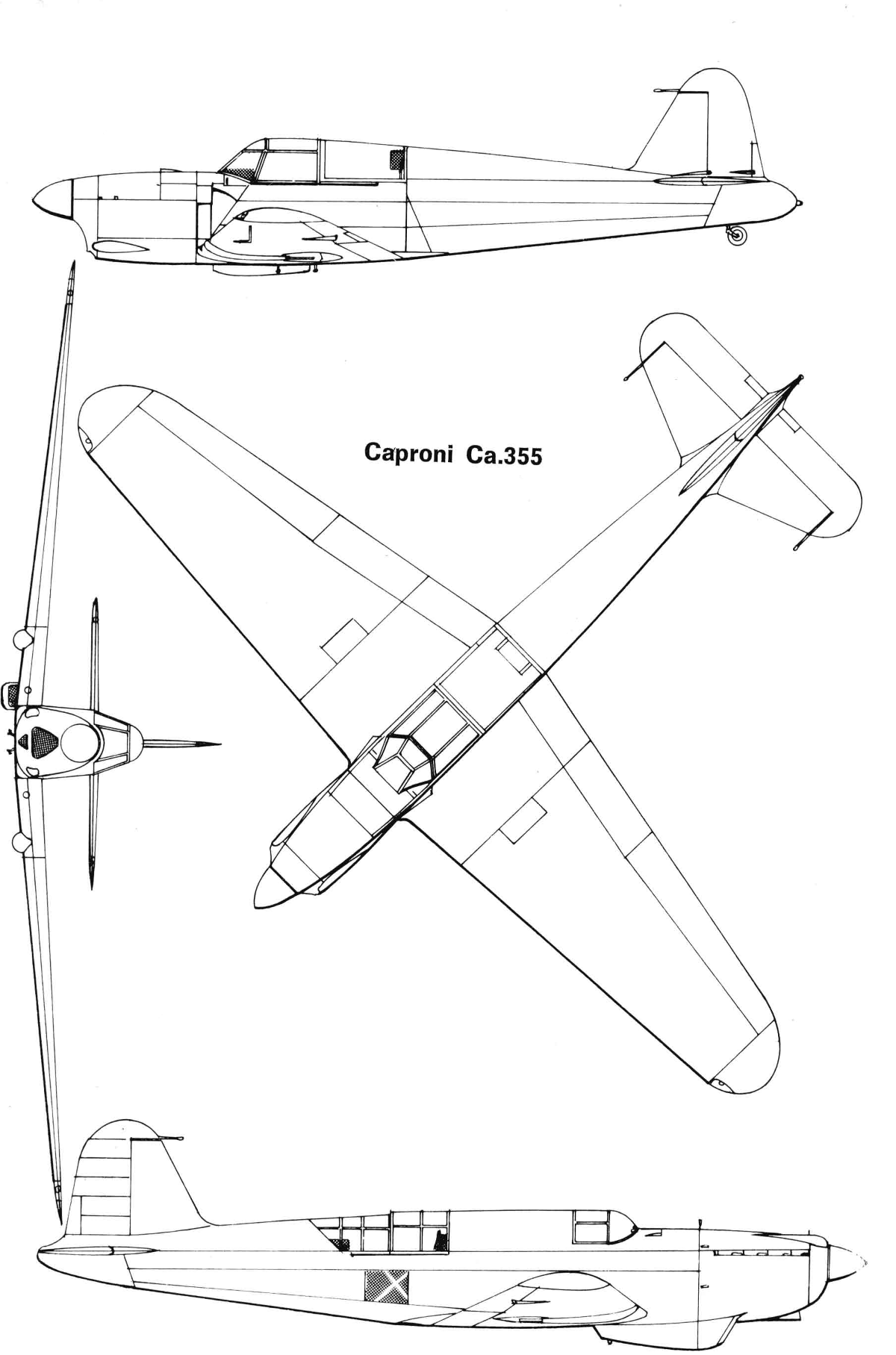 Ca.355 Tuffo |
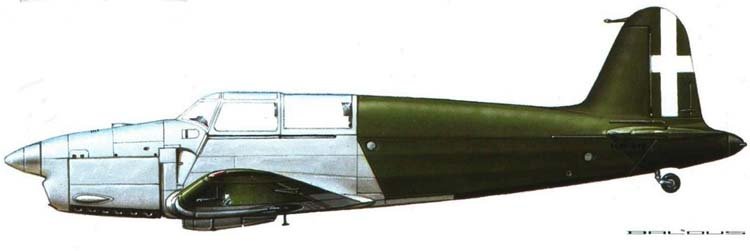 Ca.355 Tuffo |