
The Cessna 195 is a light multipurpose aircraft, developed by the American firm Cessna Aircraft Co. The Cessna 195 Businessliner is a modernized version of the Cessna 190 model, more carefully adapted for personal use by private individuals.
In its appearance, the Cessna 195 almost completely replicates the features of the previous model in this family, with the only exception being that the aircraft has a more extended nose section, which improves aerodynamic performance (depending on the year of manufacture).
Origins and Initial Production
Mass production of the Cessna 195 light aircraft began in the second half of 1947 and continued for seven years, until mid-1957. During this period, approximately 860 aircraft of this model rolled off the assembly line of the aircraft manufacturing company, of which only a few dozen are currently in operation.
The basic production model of the aircraft was equipped with a 300 hp seven-cylinder Jacobs R-755-A2 radial piston engine, which allowed the aircraft to accelerate to a maximum speed of 298 km/h, covering distances of up to 1287 kilometers, which was quite sufficient for individual use. The robust design of the Businessliner made it highly controllable and very maneuverable, and furthermore, reduced drag and improved aerodynamic performance.
Engine Evolution and Design Enhancements
However, in 1950, aircraft manufacturers concluded that the powerplant needed to be replaced with a more efficient one, resulting in the Cessna 195A model, equipped with a 245 hp Jacobs L-4MB engine, which was simpler to maintain and more reliable. Among other things, the Cessna 195A modification had the option to replace the standard landing gear with floats, allowing it to land on water.
During the development of the Cessna 195A, engineers decided not to change the landing gear design. This was because, all things being equal, the system was robust and allowed landing on a runway or any other nominally required length of terrain, even with strong crosswinds and a 15-degree bank.
In 1952, production of the Cessna 195B model began, equipped with a more advanced 275 hp Jacobs R-755B2 aircraft engine, which ensured more rational fuel consumption at an acceptable flight speed and wing loading. Additionally, Cessna engineers refined the flap design, increasing their area by one and a half times, which gave the aircraft better controllability and maneuverability.
Military Adaptations and Variants
Furthermore, Cessna created several modified versions of the Cessna 195B Businessliner for the US Air Force. These primarily include models such as the Cessna LC-126A and Cessna LC-126C, and the Cessna U-20A (a modified version of the Cessna LC-126A), which were intended for transporting high-ranking personnel and command.
Technical Specifications
| Modification | Cessna 195 |
| Wingspan, m | 11.02 |
| Aircraft length, m | 8.33 |
| Aircraft height, m | 2.18 |
| Wing area, m2 | 20.26 |
| Empty weight | 921 |
| Maximum takeoff weight | 1520 |
| Engine type | 1 Piston engine Jacobs R-755-A2 |
| Power, kW | 1 x 300 |
| Maximum speed, km/h | 278 |
| Cruising speed, km/h | 249 |
| Practical range, km | 1207 |
| Service ceiling, m | 4875 |
| Crew, crew members | 1 |
| Payload | 3-4 passengers |
Image and diagram gallery of the Cessna 195
 Cessna 195 |
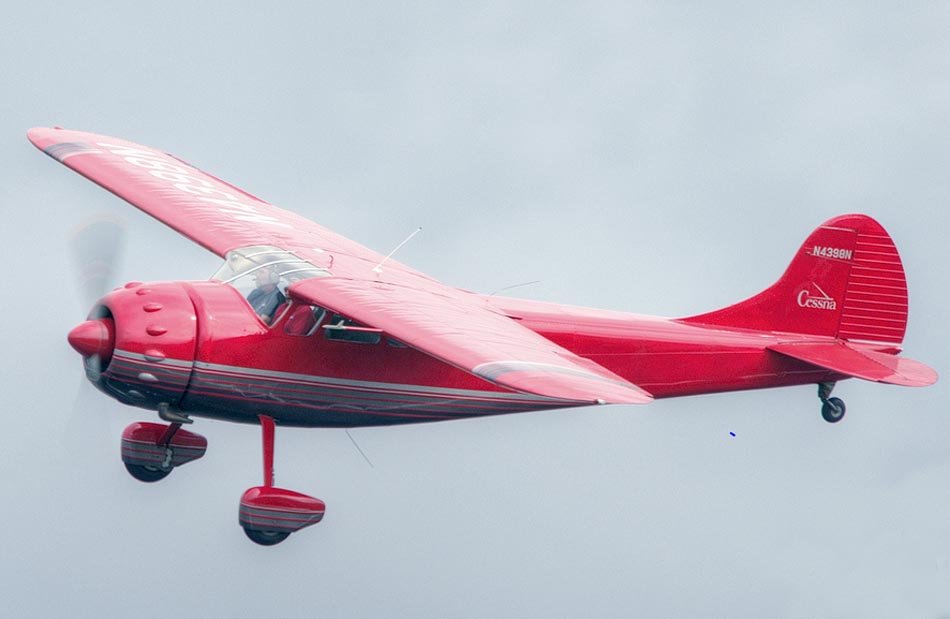 Cessna 195 |
 Cessna 195 |
 Cessna 195 |
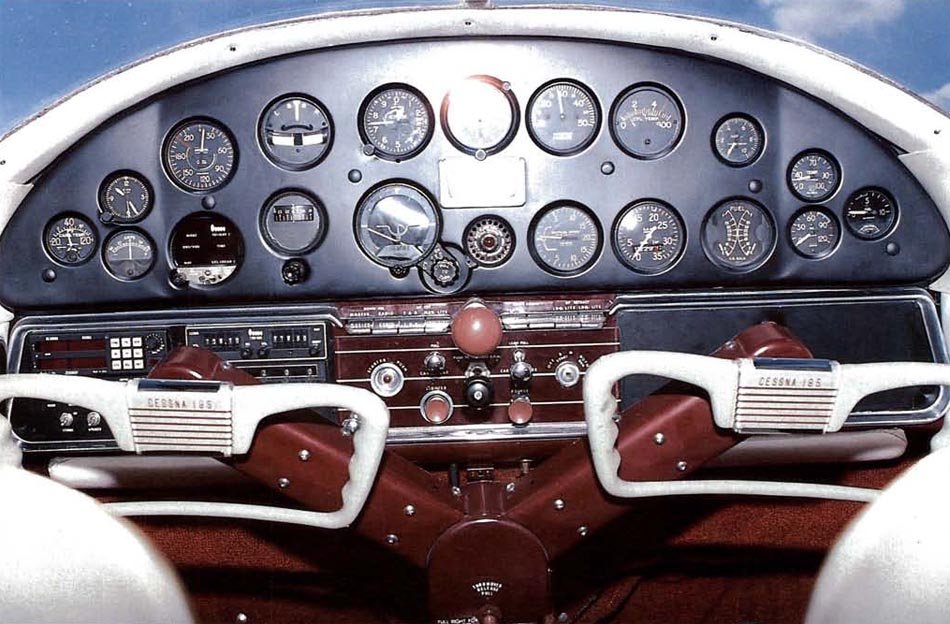 Cessna 195 |