
In the early 1920s, this aircraft was conceived as a transatlantic seaplane. However, this ‘flying boat’ had an empty weight greater than its projected total weight and showed a tendency to dive rather than fly, proving to be a complete failure. Nevertheless, it turned out to be quite profitable for the manufacturing company!
During the 1930s, many small aircraft manufacturing companies led a rather meager existence. Their activities were limited to building prototypes, which were not followed by serial production. Designer Marcel Besson’s company, who began his aviation career in 1912, was one of them, yet it stood out for its quest for innovation and inclination towards ‘seaplanes with many lifting surfaces’.
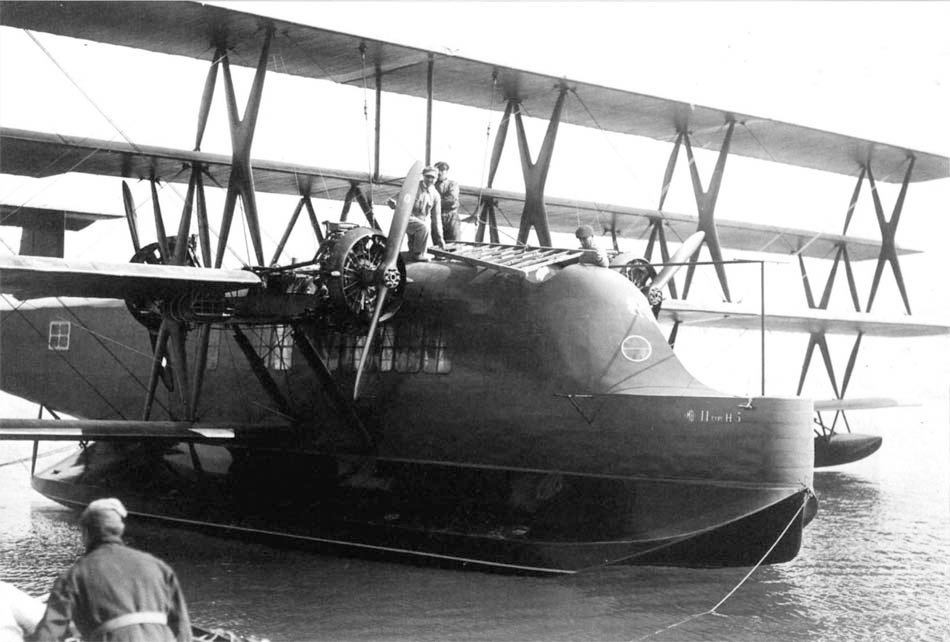
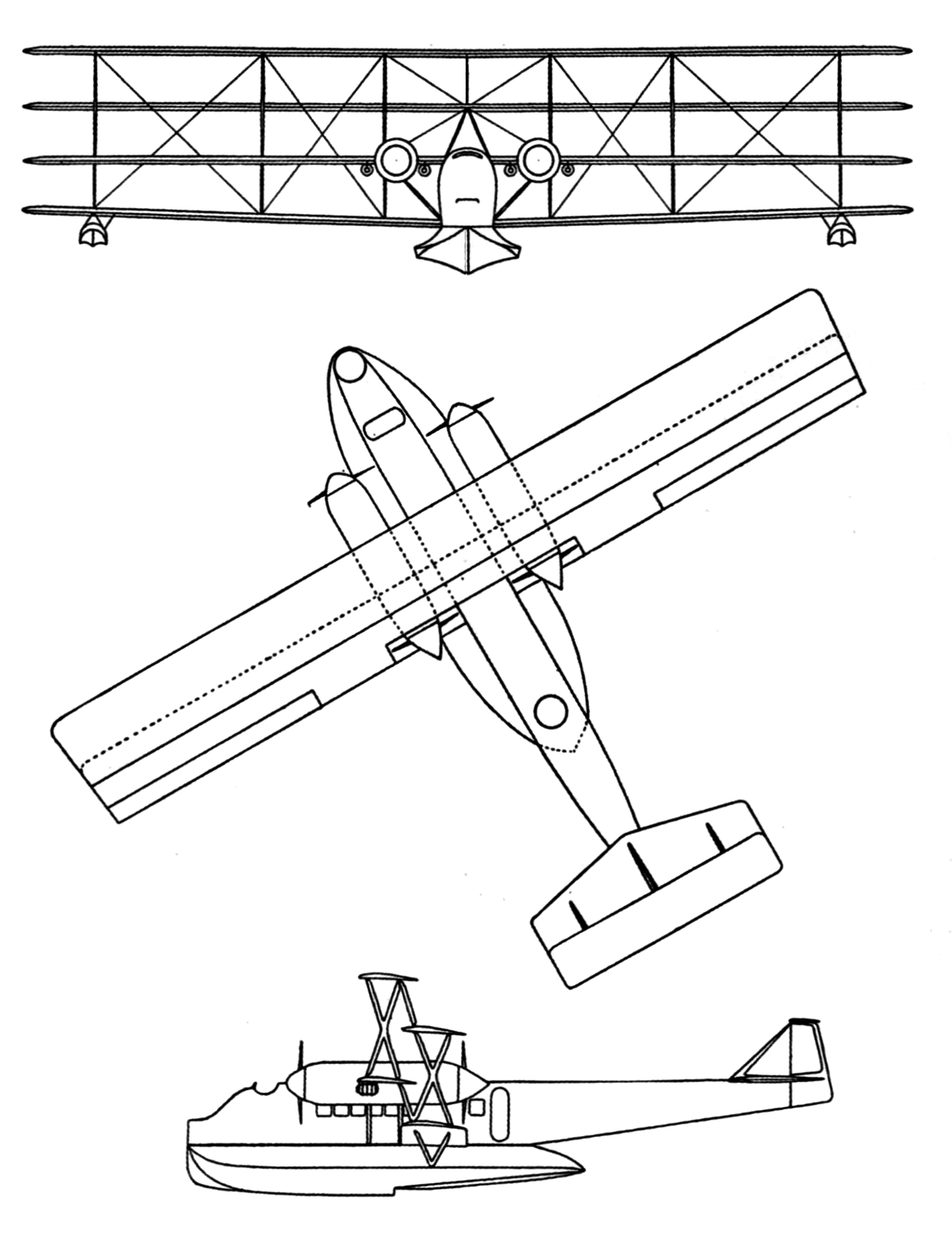
The company’s most famous machine is the small single-float seaplane MB-35, whose last variant, the MB-411, was part of the armament of the French submarine “Surcouf”. In addition, this company created one of the most imposing seaplanes of that era – the four-engine quadraplane H-5.
An Ambitious but Flawed Design
This aircraft was the result of a design scheme that was so dear to Marcel Besson. In 1916, the aircraft designer created his first triplane, equipped with a 95 hp engine located in the fuselage. This machine was constantly improved, and soon followed by a more ambitious aircraft – a triplane with a 450 hp power plant, capable of carrying two tons of payload. During 1919, Marcel Besson sought to create a large transatlantic four-engine passenger seaplane. The characteristics published by the press could not fail to impress: a flight range of 4200 km, 3.5 tons of payload, and a total weight of 8 tons. On Mediterranean routes, the seaplane was planned to be used in a configuration allowing flights of 7 hours with a payload weighing 9 tons.
On December 31, 1920, the Aviation Technical Service (Service technique de l’Aéronautique – STAé) issued contract No.120 to the Besson company for the construction of a prototype. A model of this aircraft, which received the in-house designation Marcel Besson H-5, was exhibited at the Grand Palais during the 1921 Paris Air Show. It is quite probable that this aircraft was ordered as part of an official program to create a “commercial four-engine seaplane with a 1000 hp power plant.”
Only a few details were known about this seaplane. The lack of information may explain the fact that Besson refused to compete with another project, presented by the constructor Latham. Tests of the competing aircraft began long before the H-5 – in early 1921. Latham opted for a classic biplane, using the same engines as Besson: 250 hp Salmson Z.9 water-cooled radial engines. A military variant of this seaplane, based on the civil version, was ordered in quantities of approximately 12 units.
A Series of Disastrous Test Flights
The Besson H-5 was manufactured in 1921 at the company’s factory in Boulogne-sur-Seine (now Boulogne-Billancourt). The seaplane was then disassembled and transported to Saint-Raphaël, where reassembly continued from April to July 1922, after which it was presented to the Commission for Practical Aviation Studies (Commission d’études pratiques d’aviation – CEPA) for testing. In those years, CEPA tests were mandatory for both military and civil aircraft.
The initial tests encountered the need for fine-tuning the Odier starters, with which the Salmson engines were equipped. This fine-tuning led to a delay in testing for several months. The Odier starter was a type of lever that, actuated by a cartridge, launched the propeller. Due to starter failures, the first flight and water landing took place on September 8, 1922.
Facing the Marcel Besson company’s inability to hire a civilian pilot, it was decided that the CEPA test pilot, Lieutenant de Vaisseau Maurice Hurel, would conduct the tests. Meanwhile, during a brief inspection, the designer noted that the balance on the trolley holding the aircraft – weighing 7845 kg (significantly more than the maximum specification requirements) – was accidentally “too tail-heavy.” To restore the center of gravity, 175 kg of ballast in the form of sandbags were loaded into the aircraft’s nose.
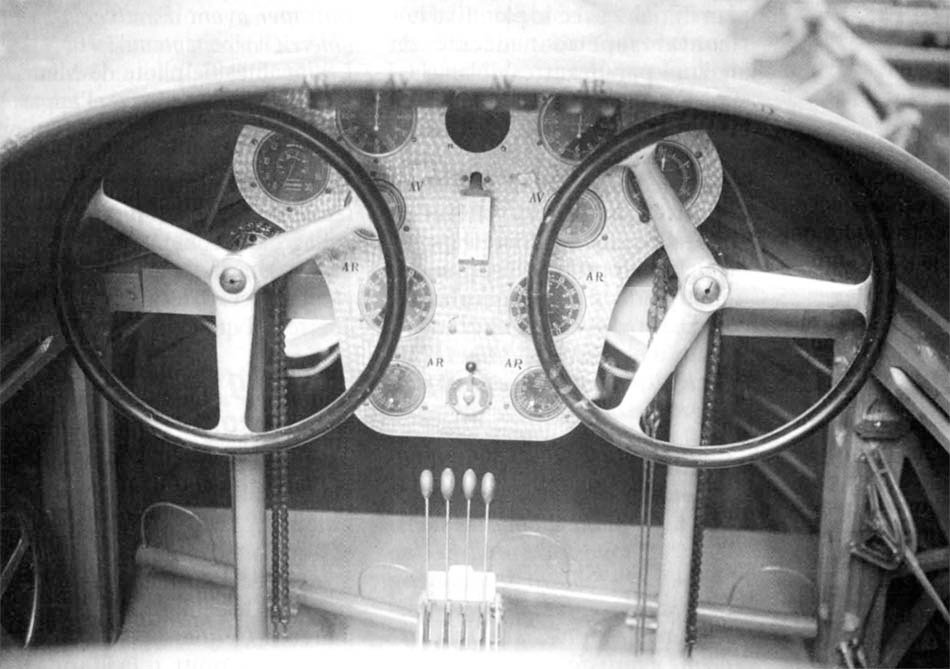
After this procedure, Maurice Hurel, alone on board the flying boat, began a series of test flights that he long recalled as an impressive experience, referring to the aircraft’s handling problems, which, by contrast, earned it the name “Nautilus des airs” (Nautilus of the Skies). The rest is detailed in the final CEPA report: “The first takeoff was very quick, and the pilot immediately realized that the aircraft’s balance had serious problems. Despite the additional weight in the extreme nose, it counteracted the pilot’s attempt to keep the aircraft in line of flight, even with the pitch angle set to the lowest position and the engines at full throttle. However, thanks to the quick deflection of the adjustable flaps (author’s note – trimmers), the pilot managed to avoid a fatal pitch-up and made a water landing, which was performed by successive applications and cuts of engine throttle. Despite the action of the trimmers and lowering the elevators, the aircraft irrepressibly pitched up, and only a reduction in engine speed saved the situation.”
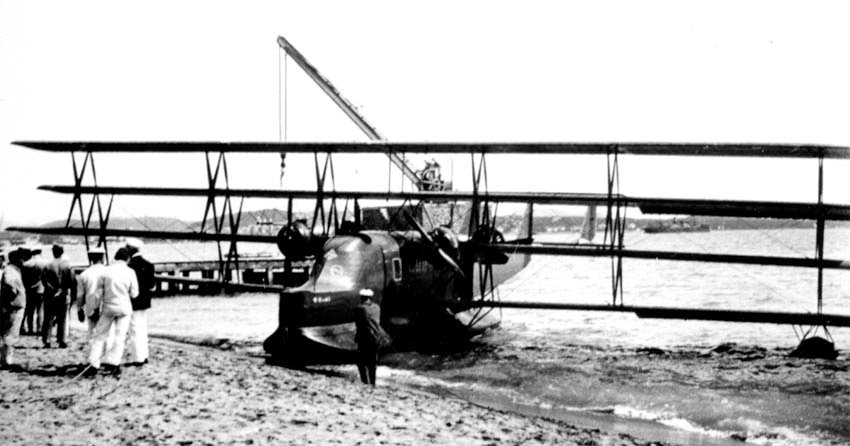
The water landing on a calm sea seemed acceptable to the pilot, but against all odds, approximately one square meter of the hull’s port side (immediately before the step, where the planking thickness was 15 mm) was suddenly torn away. Maurice Hurel managed to reach the shore and beach the aircraft, preventing the huge flying boat from sinking. Marcel Besson undertook to strengthen the hull’s bottom, and these prolonged works led to an increase in the aircraft’s empty mass by 440 kg. In addition, the aircraft’s balance was improved, and the biplane horizontal tail was replaced: instead of the original with an upper fixed horizontal plane and a lower plane extended forward, a classic tail with increased area was installed. But after this decision, the empty weight of the aircraft continued to exceed the original state by 270 kg!
Before the second flight, the H-5’s weight was 8343 kg. In the second flight, Maurice Hurel was to face a much more serious handling problem than during the first flight, as the test control commission subsequently reported: “On March 26, 1923, the aircraft, thanks to the width of its hull, lifted off the water much faster: in 17 seconds, reaching an angle of attack of 17º and continuing to increasingly pitch up, although the pilot deflected the lower stabilizers downwards. Reducing engine speed did not decrease the continuously increasing angle of attack, and the pilot developed maximum engine power and, deflecting the elevators downwards, successfully forced the aircraft to dive. However, despite this action, the machine was irresistibly pulling into a pitch-up: after water landing, the aircraft soared into the sky again and began to lose speed at an altitude of 30 meters above the water. The aircraft tilted to the left, glided, and, hitting its nose on the water, gained speed. The pilot, before the aircraft reached the water again, managed to take control and correctly land the aircraft.”
Only Maurice Hurel’s flying skill saved the flying boat from imminent destruction. The balance problems were attributed to a significant hole (about 500 liters) the flying boat sustained at takeoff. A starter pin detached and was thrown by the rear engine’s propeller into the hull, puncturing it!
On April 17, 1923, during the third flight, the seaplane’s total weight was 8830 kg, with 850 kg of ballast placed in the extreme nose of the machine. This was 3570 kg more than the allowed weight specified in the contract! On this day, it took three attempts for the seaplane to finally deign to make a 27-second flight. After flying over the harbor at an altitude of 30 meters, Maurice Hurel, holding the control wheel and keeping the aircraft in line of flight, quickly became exhausted and preferred to land the flying boat. However, all CEPA specialists, including Marcel Besson himself, believed that the ballast weight in the front had reached its maximum value (850 kg) and could not be exceeded!
On May 9, 1923, with the same weight as in the previous test flight, the H-5 – still under Maurice Hurel’s command – took off in 48 seconds and remained in flight without any incidents for an hour, reaching a maximum altitude of 900 meters. Marcel Besson had every reason to be pleased. Of course, it was not about serial production of the aircraft, but about receiving the more important flight premium at that moment! The H-5 satisfied only one of the acceptance test requirements stated in the contract: “Unloaded flight lasting one hour with fuel for two and a half hours of flight. The flight must be performed at an altitude of at least 500 meters; several turns must be performed during the flight. The aircraft must perform three or four takeoffs.”
Other premiums remained unpaid, which seemed difficult to win. Capitaine de Corvette Godfroy, in the CEPA report on the test results, presented a mechanism of amazing manipulations that allowed playing with administrative provisions solely in the interest of the manufacturer: “For operational tests, which entitled to premium payments, the contract, for example, stipulated: a load of 3000 kg, including 1500 kg of fuel, which could not be removed from the aircraft. During the tests, following STAé instructions, Mr. Undersecretary intervened, who introduced additional amendments to the contract, allowing the aircraft to perform operational tests: To meet such preferential requirements, the aircraft only needed to have a takeoff weight of 9000 kg, which was 170 kg more than in its last flight…”
On July 16, 1923, flights resumed. The first takeoff attempt, despite a 2 km glide, ended in failure. The second attempt brought an end to this mastodon, from whose inner hull, 45 seconds after the start of gliding, a piece of skin along with parts of the frames was torn out. The total area of the torn piece was about one square meter. Maurice Hurel managed to reach the beach at Saint-Raphaël and beach the flying boat, preventing it from sinking. The CEPA deemed that further testing was pointless and that restoring the aircraft would not be worth the cost. This decision resulted in the completion of tests for this seaplane – probably to Maurice Hurel’s great relief. After the tests, the aircraft was stored outdoors at the base. At the end of December 1923, during a strong storm with sharp gusts of wind, the tail section was torn from the rest of the hull. A structural investigation revealed that “the rupture was a consequence of insufficient overall fuselage strength and weakened longerons, whose cross-sectional area was insufficient.” The CEPA crew’s concerns about the in-flight destruction of the fragile hull were entirely justified.
The Unforgiving CEPA Verdict
At the end of the tests, the commission, in its final report, returned to the most discouraging features of this aircraft: “The most original distinguishing feature of the seaplane was its quadraplane wing box, formed by two staggered biplane boxes; in height, the stagger was equal to half the interplane distance. The quadraplane wing box had several interesting features. At the trajectory inclination angles used, the total lift application point of all lifting surfaces of the quadraplane box is much closer to the aircraft’s nose than the sum of two separate biplane boxes. This can be explained by the fact that, due to the deflection of airflows passing through the elements of the biplane boxes, the true angle of attack and lift of the rear biplane box had reduced values. Consequently, to restore a normal state, it was necessary to increase the angle of attack of the two rear planes. Due to airflow deflection, the difference in true angles of attack created such a drawback as excessive longitudinal instability.”
The CEPA commission’s conclusion was strict and contained no sympathy for the aircraft designer’s feelings: “The Besson-designed four-engine commercial seaplane with a total power output of 1000 hp was, unfortunately, built without serious preliminary research. In a number of components, it was created from unsystematic pencil strokes without any care for details. In particular, it is difficult to accept as normal that a designer can make such an error in weight calculations as Mr. Besson did (7150 kg instead of 4500 kg), while creating a very flimsy structure. The aircraft was presented for testing with balance problems, and only thanks to the exceptional flying skill and presence of mind of the pilot was the aircraft’s destruction avoided several times. The shape of the hull made the aircraft unsuitable for any service at sea; on the other hand, it is highly unlikely that it could have taken off with a hull of a different shape. The commercial efficiency of this aircraft appears negligible. The aircraft cannot be accepted due to the exceptionally moderate requirements placed upon it. Only the mutual arrangement of the lifting surfaces is of interest. If the designer wished to investigate this arrangement more fully, it would be preferable to do so not on this seaplane, but on a small aircraft designed for technical experiments.”
Thus, Marcel Besson, probably suffering from the failure of the H-5, subsequently returned to smaller projects – such as, for example, the tiny MB-35 seaplane, housed on a submarine.
Technical Specifications
| Modification | H-5 |
| Wingspan, m | 29. 00 |
| Aircraft length, m | 20. 70 |
| Aircraft height, m | 6.33 |
| Wing area, m2 | 250.00 |
| Empty weight | 7290 |
| Maximum takeoff weight | 8830 |
| Engine type | 4 Piston engines Salmson 9Z |
| Power, hp | 4 х 250 |
| Maximum speed, km/h | 168 |
| Cruising speed, km/h | 126 |
| Practical range, km | 900 |
| Service ceiling, m | 3500 |
| Crew, crew members | 2 |
| Payload: | up to 20 passengers |
Image and diagram gallery of the Marcel Besson H-5
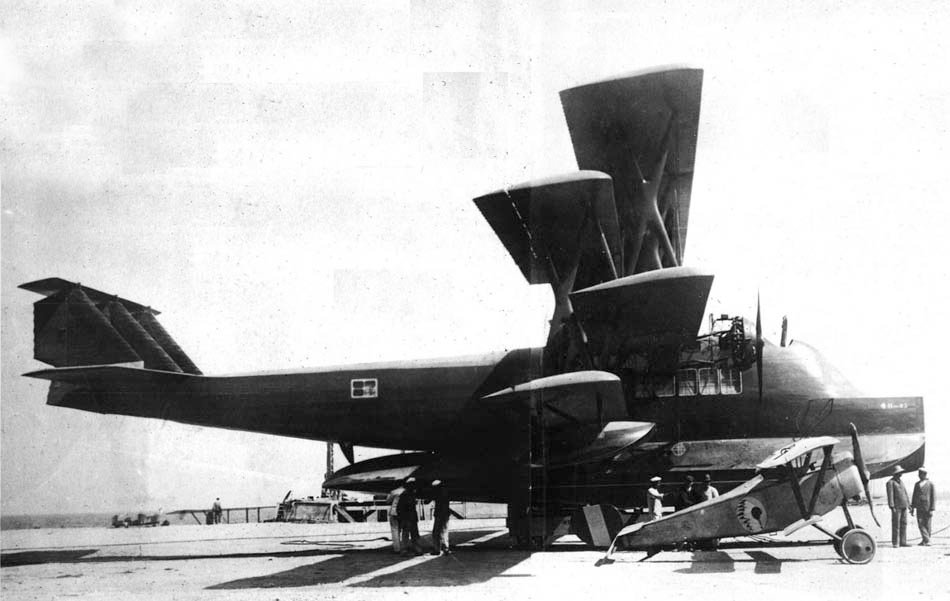 H-5 (MB.11) |
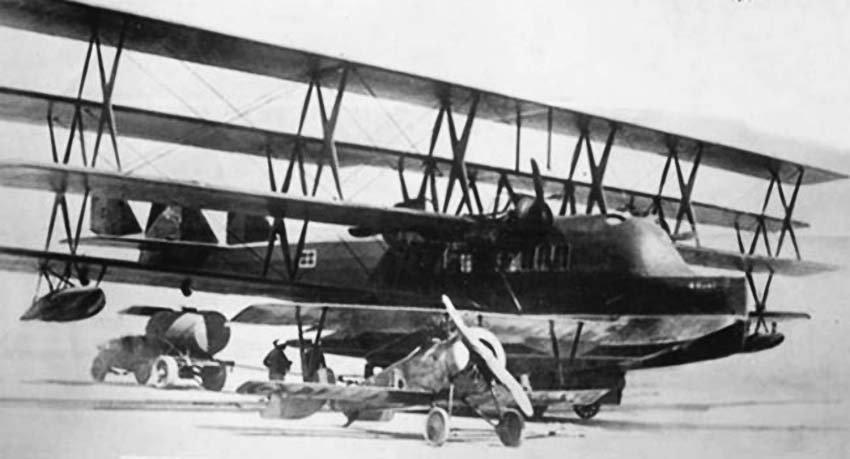 H-5 (MB.11) |
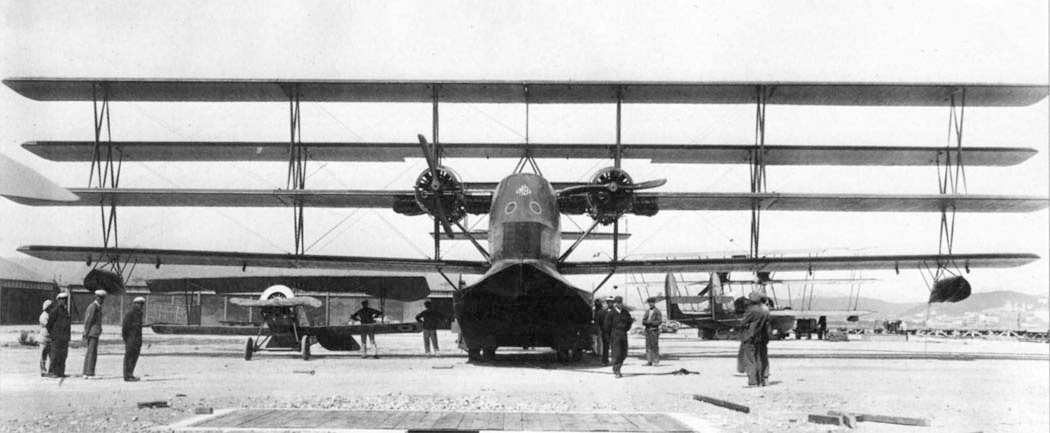 H-5 (MB.11) |
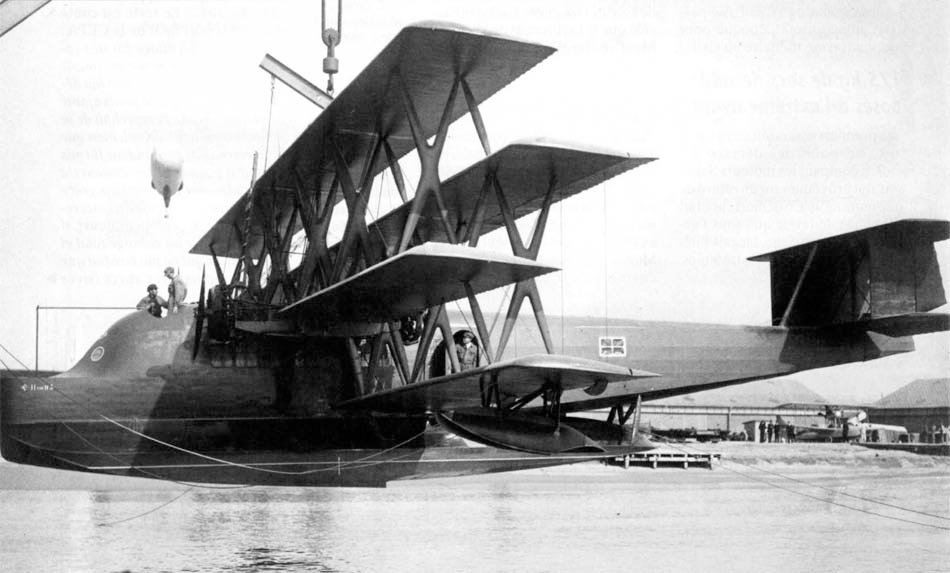 H-5 (MB.11) |
 H-5 (MB.11) |
 H-5 (MB.11) |
 H-5 (MB.11) |
 H-5 (MB.11) |