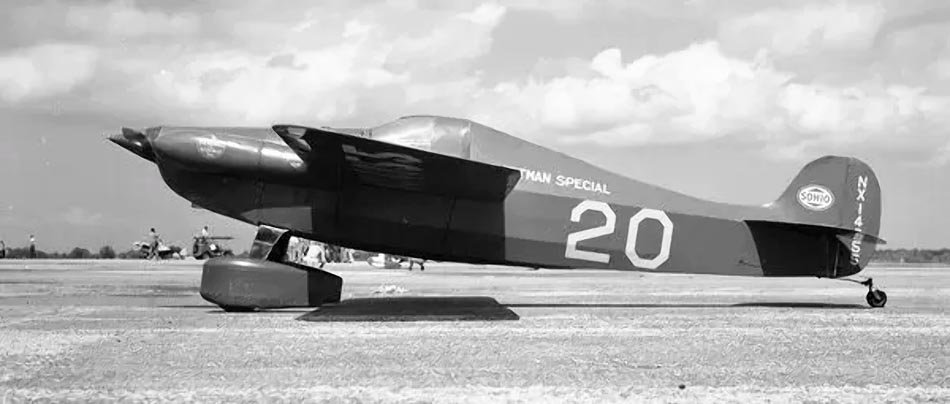
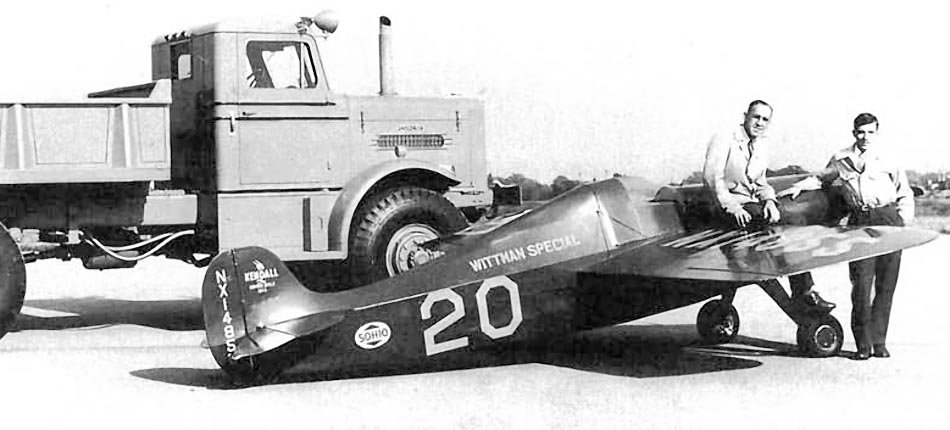
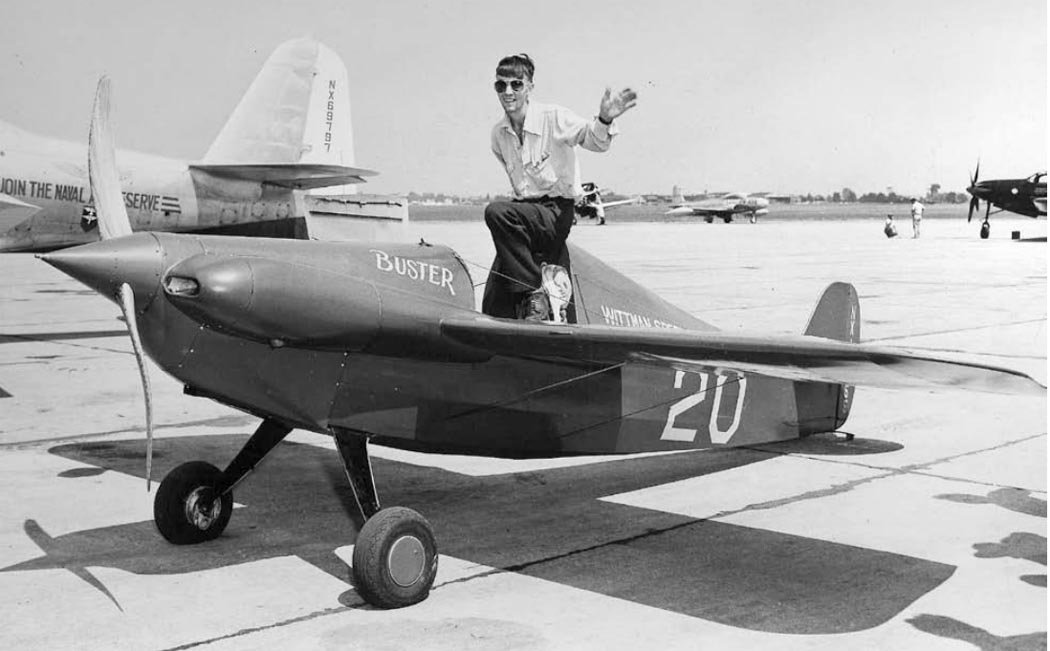
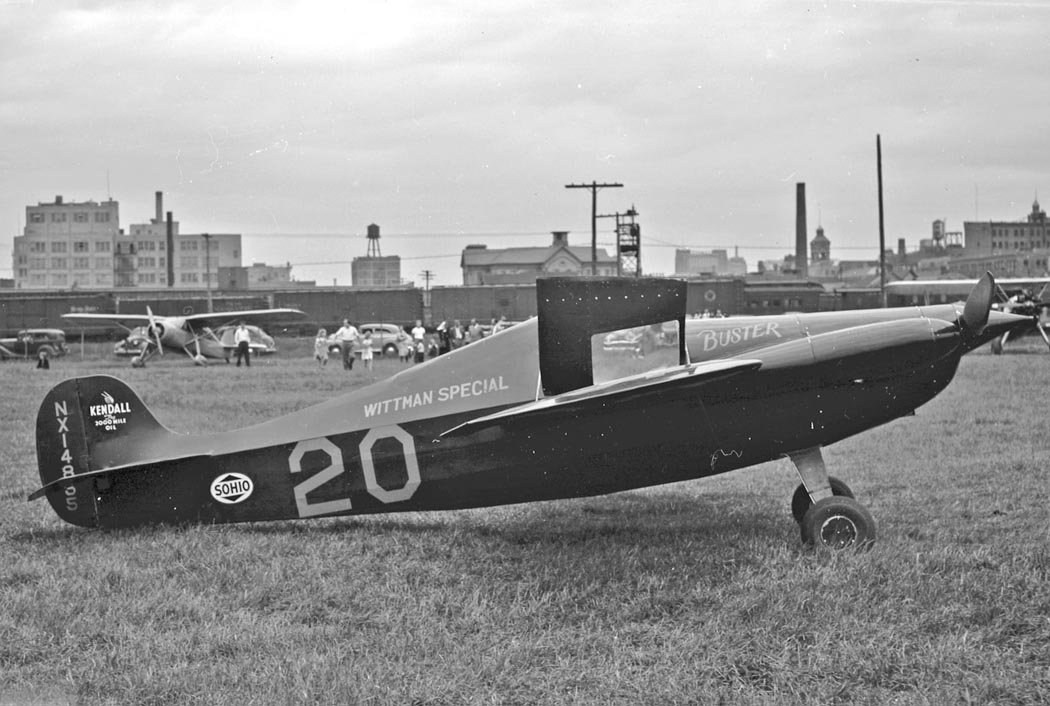
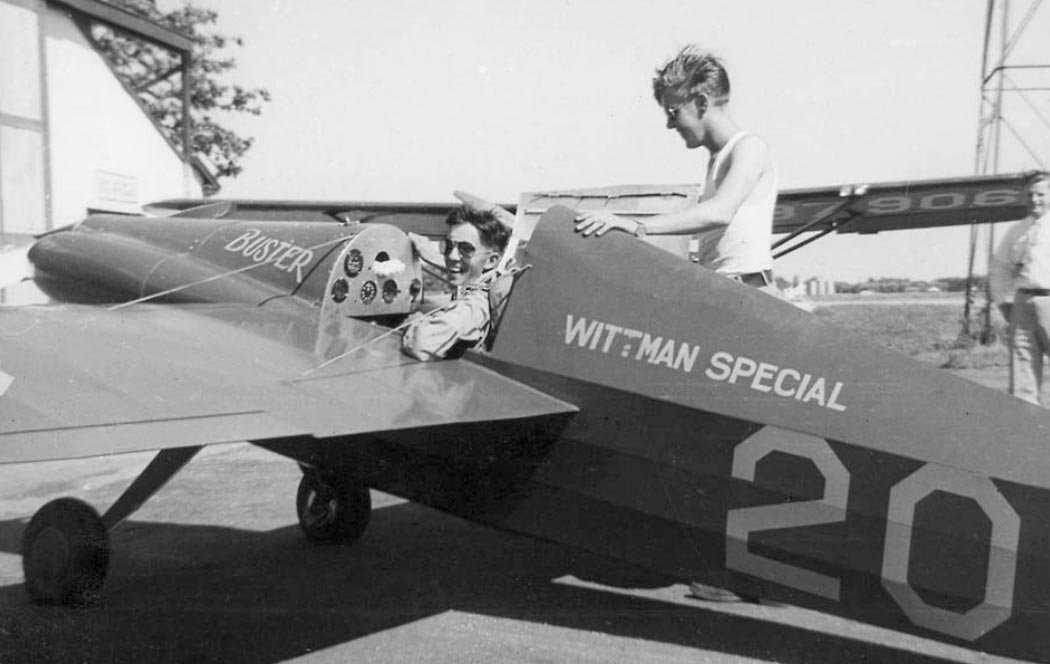
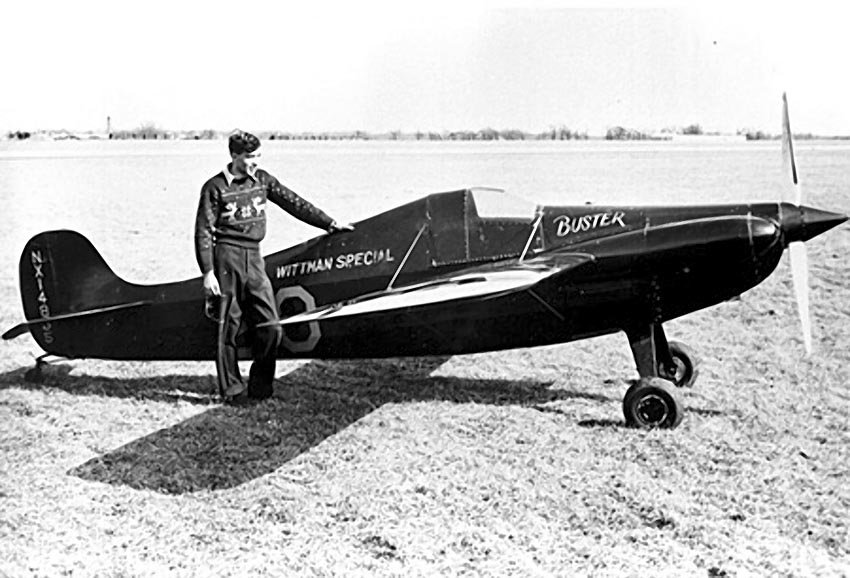
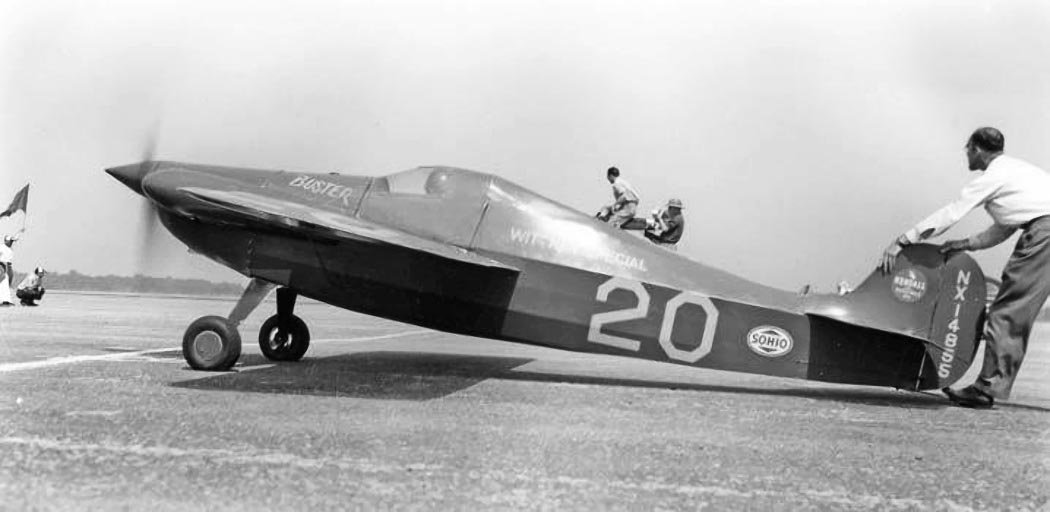
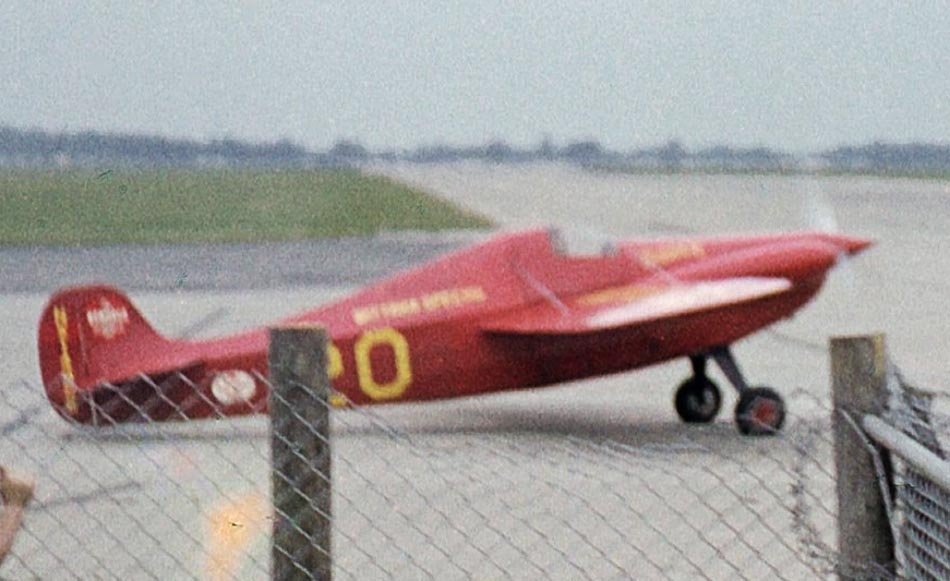
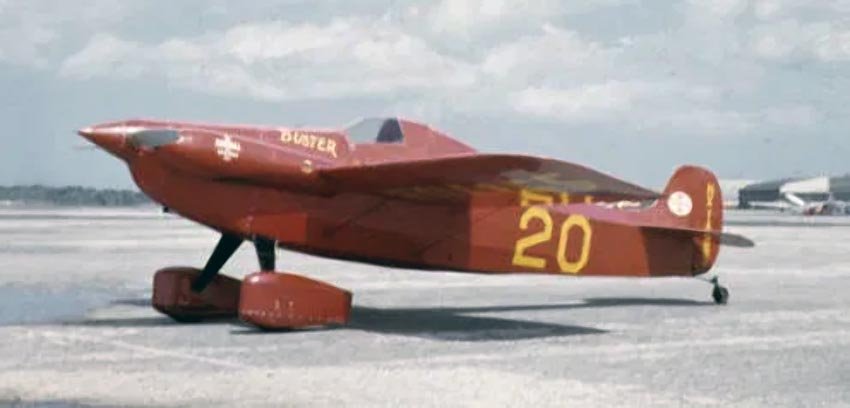
After World War II, air racing competitions resumed in the USA. Specifically for the Goodyear Air Races, Sylvester Wittman, along with young racer William “Bill” Brennand, built a new aircraft in 1946: the Wittman Buster.
The designer used the fuselage of the “Chief Oshkosh,” which had crashed in 1938, as its foundation. He installed new wings and incorporated a Continental C-85 engine with 85 hp as the powerplant. This clever combination laid the groundwork for exceptional performance in future races.
A Legacy of Victories
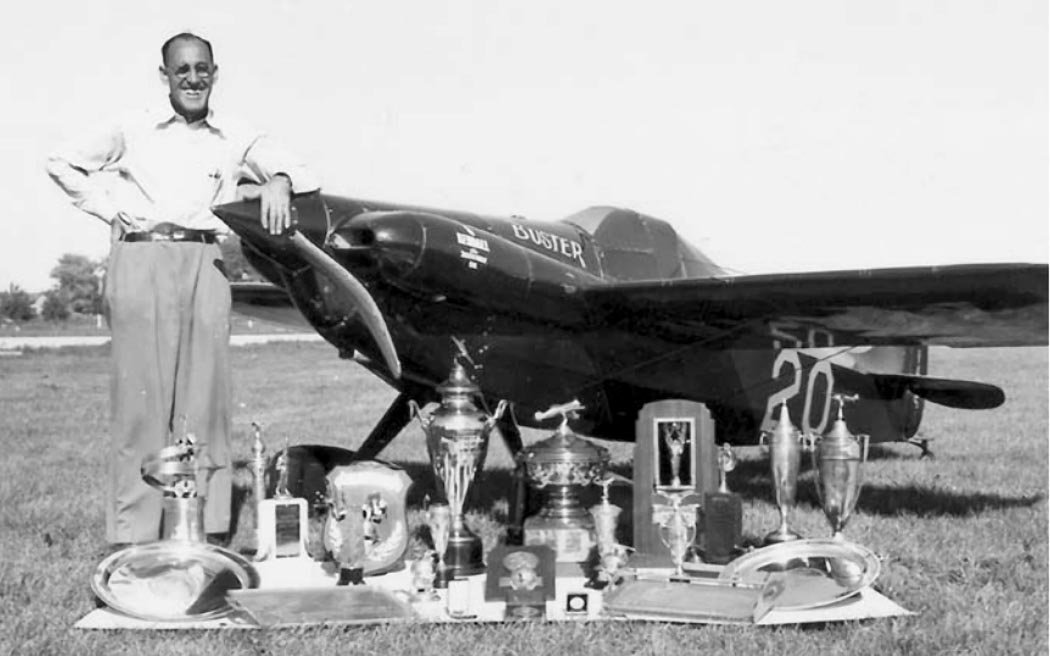
In 1947, at the Goodyear Air Races, Brennand piloted the Buster to first place, achieving a speed of 169.5 miles per hour (272.78 km/h). Two years later, in 1949, the pilot repeated his success with a speed of 177 miles per hour (284.85 km/h), cementing the aircraft’s reputation.
The Buster continued to compete and earn various awards in the Continental Motors Race from 1949 to 1954. Starting in 1951, Bob Porter took over from Bill Brennand at the controls, maintaining the aircraft’s competitive streak.
Historical Preservation
After concluding its racing career in 1954, the Wittman Buster was transferred to the Smithsonian National Air and Space Museum. There, this iconic racing aircraft is preserved as a testament to the innovation and excitement of post-war aviation.
Technical Specifications
| Modification | Buster |
| Wingspan, m | 4.59 |
| Aircraft length, m | 5.31 |
| Aircraft height, m | 1.22 |
| Empty weight | 227 |
| Engine type | 1 Piston engine Continental C-85 |
| Power, hp | 1 x 85 |
| Maximum speed, km/h | 285 |
| Crew | 1 |
Image and diagram gallery of the Wittman Buster
 Buster |
 Buster |
 Buster |
 Buster |
 Buster |
 Buster |
 Buster |
 Buster |
 Buster |
 Buster |