
In January 1940, Bristol proposed to the Royal Air Force an attack-bomber based on the “Blenheim” Mk IV airframe, armed with bombs and a battery of four machine guns. In May 1940, the Ministry of Aviation accepted the company’s proposal and issued Specification B.6/40, which called for the creation of a tactical bomber capable of providing direct support to ground troops with both bombs and machine-gun fire.
Bristol presented the “Type 149CS” project, an improved variant of the “Blenheim” Mk IV, in which the two-person crew and vital structural elements were protected by armor, weighing a total of 272 kg. In addition to the standard Mk IV bomb bay, the new aircraft received four 7.69mm machine guns in the nose section, which had lost its glazing. Bristol intended to use a low-altitude variant of the 950 hp “Mercury” engine, which ran on high-octane gasoline. The Ministry of Aviation ordered two prototypes of the new aircraft (AD675 and AD661), which were designated “Bisley” Mk 1.
Design Evolution and Prototypes
The evacuation of British expeditionary forces from Europe in June 1940 removed the urgent need for a close air support aircraft, and the requirements for the “Bisley” were adjusted. The aircraft now had to be capable of bombing from medium altitudes. These changes forced Bristol to develop the aircraft in two directions: AD675 became the prototype of an attack aircraft, while AD661 was re-configured with a navigator-bombardier’s position, transforming it into a bomber.
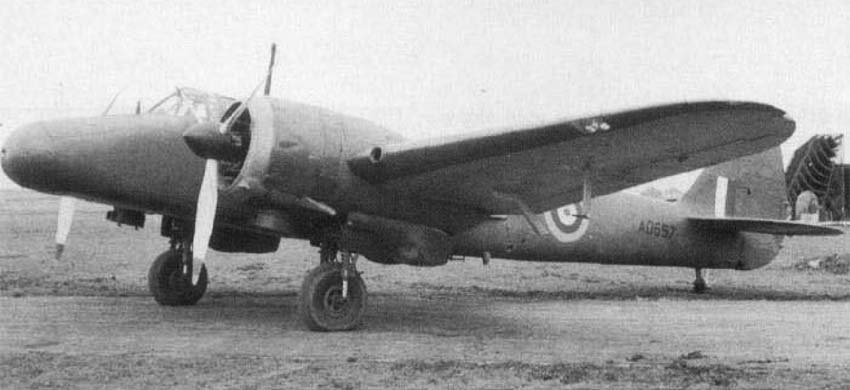
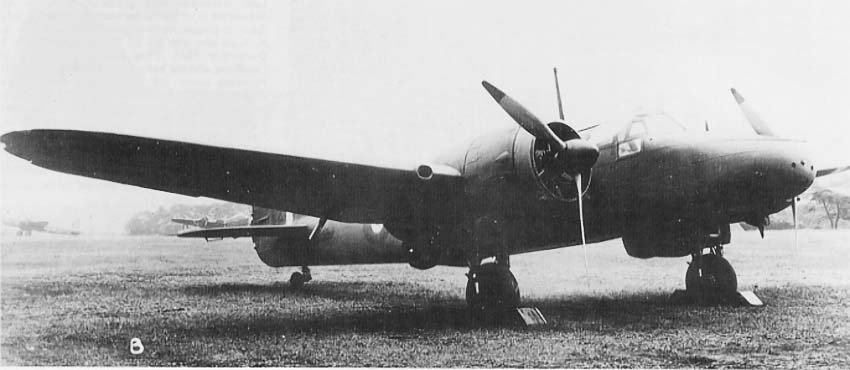
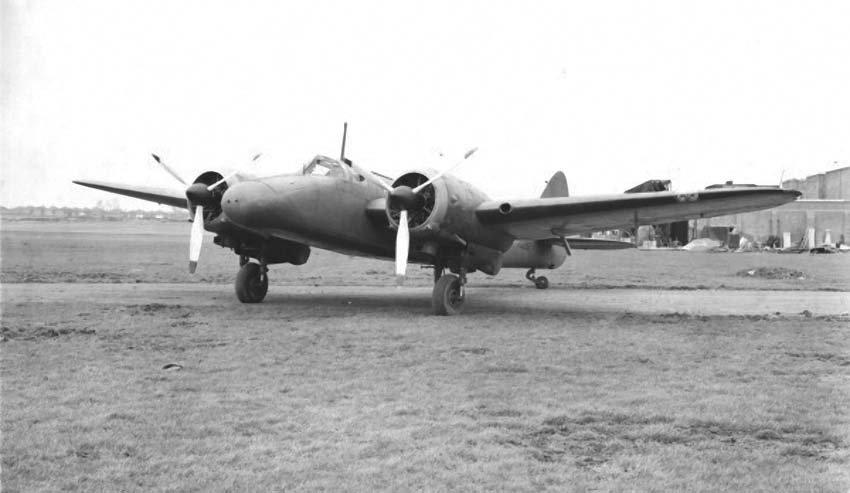
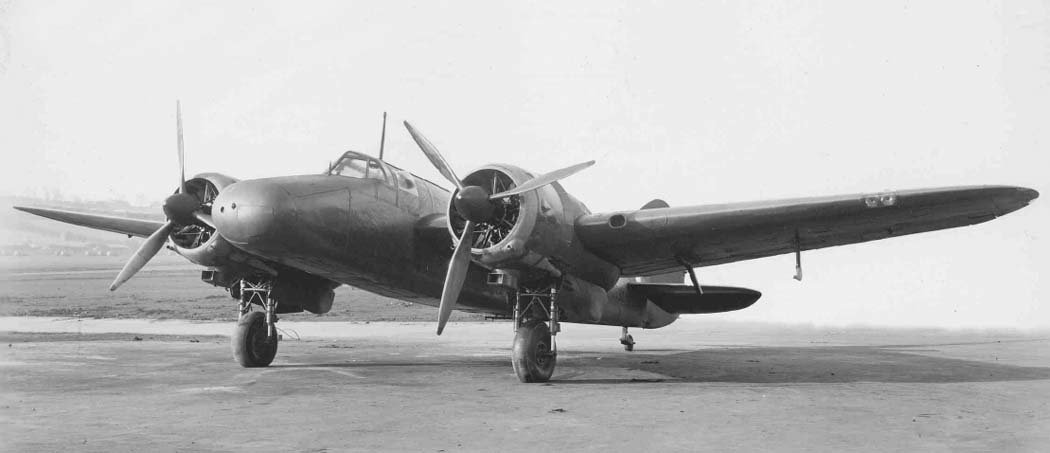
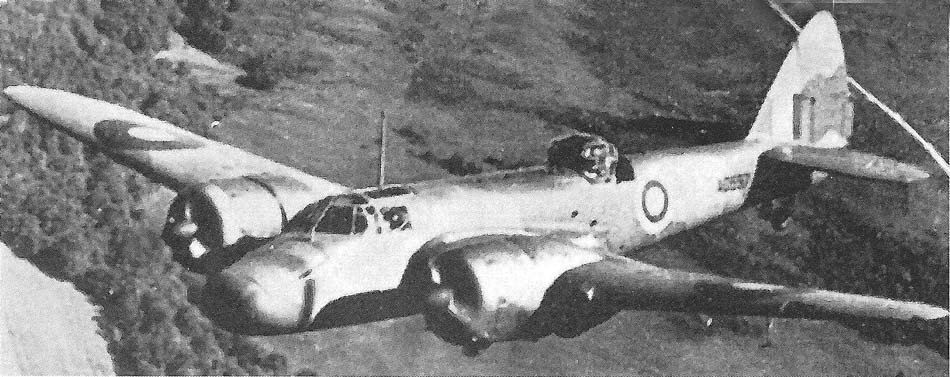
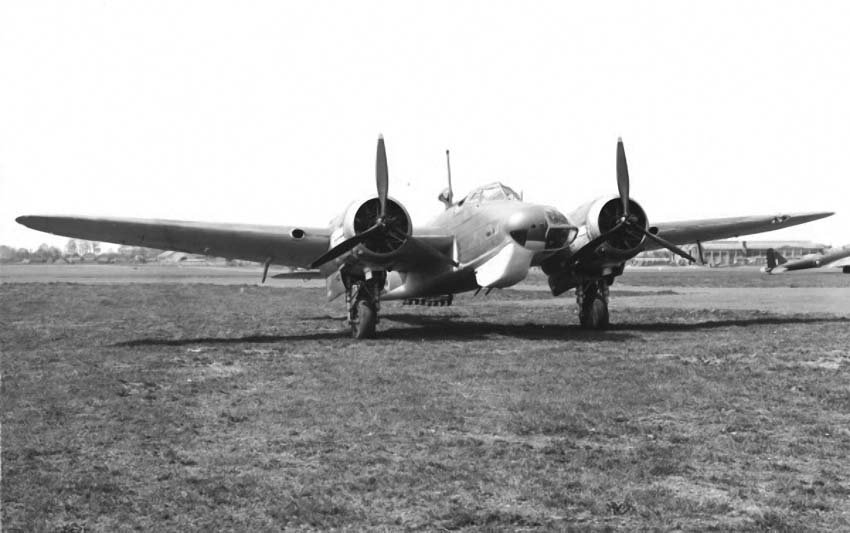
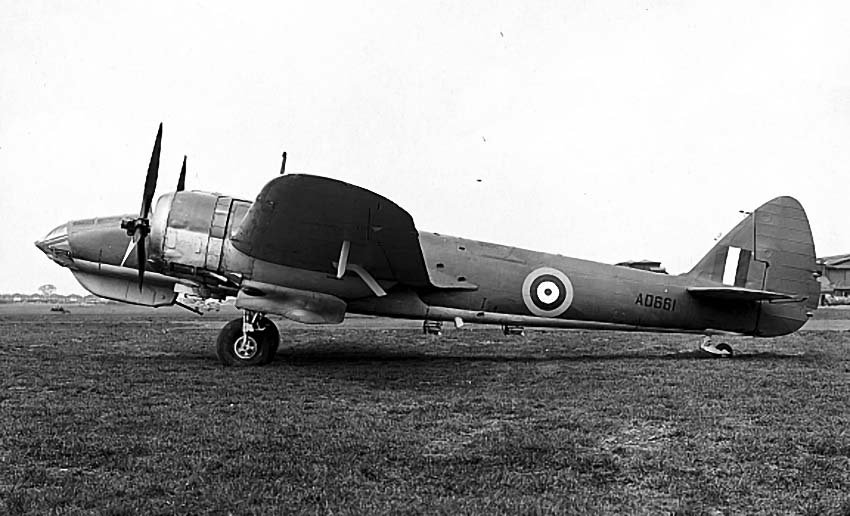
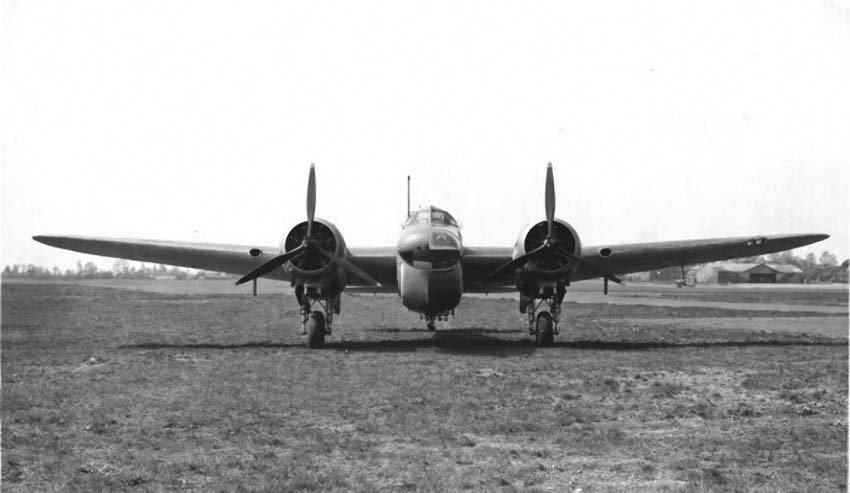
The prototypes differed externally from each other and from their predecessor, the “Blenheim” Mk IV, mainly concerning the design of the nose section. The AD675 featured a “duck nose” with a battery of four machine guns, while the nose of the AD661 had glazing for the navigator-bombardier on the port side.
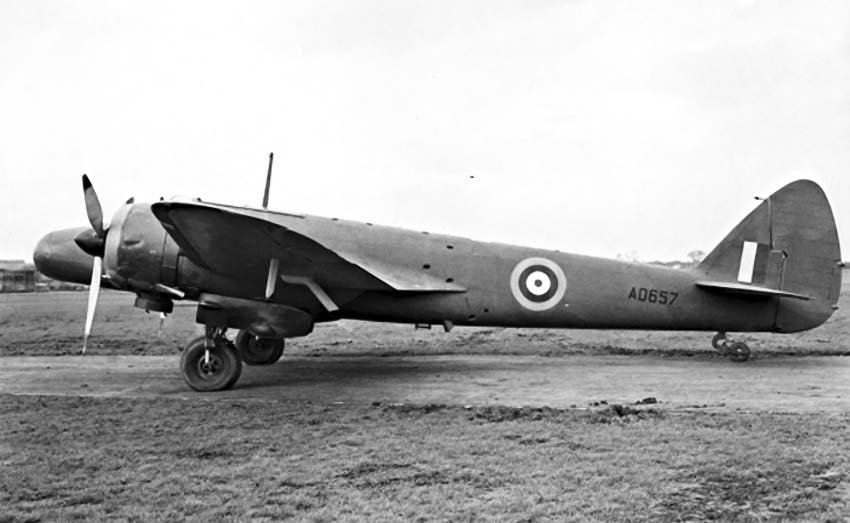
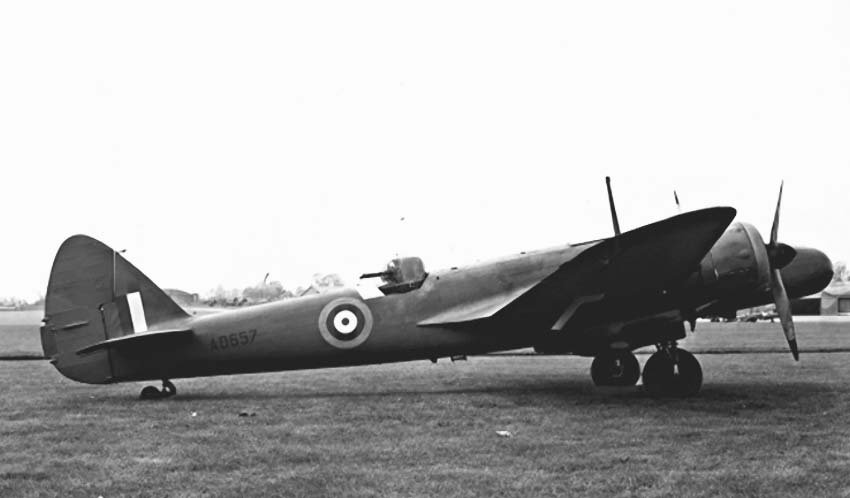
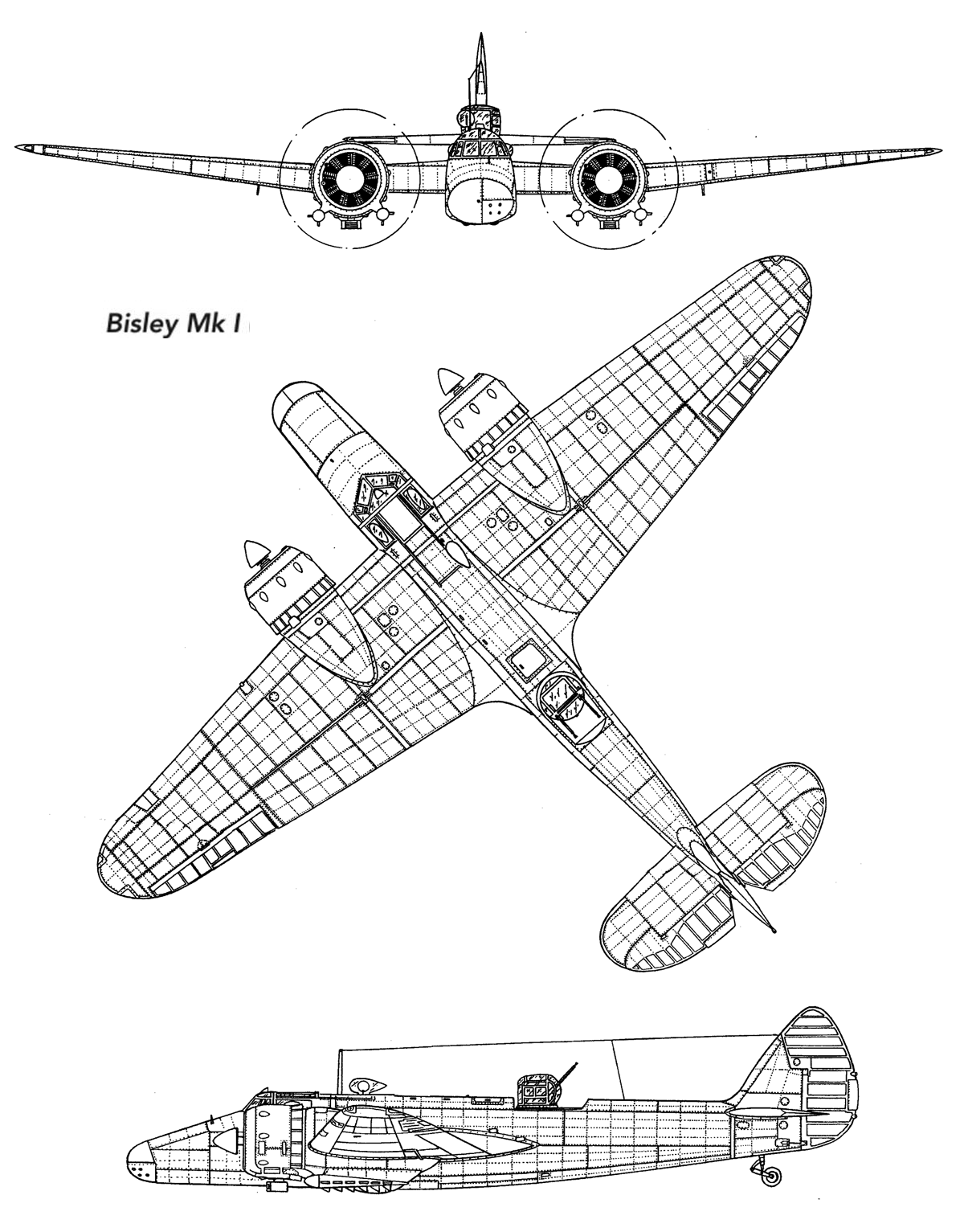
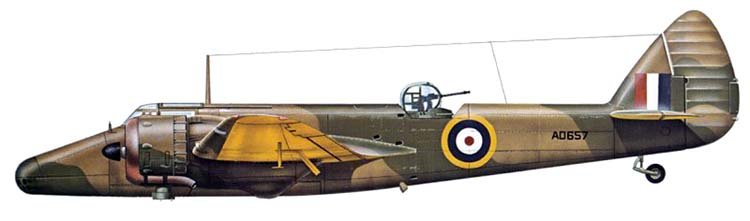
It was not necessary to “indent” the navigator’s cockpit glazing, as in the Mk IV, due to its low height. However, to allow the navigator to place their feet, a special gondola had to be created underneath, which also served as a fairing for the lower turret with a pair of 7.69mm machine guns. On top of the “Bisley,” a Bristol BX turret was installed, featuring two 7.69mm machine guns and a gyro-stabilized sight.
Unlike earlier turret models, the BX was larger and housed in a special cutout in the fuselage, which allowed for increased firing angles. Other external differences included the installation of a radio direction finder antenna in a transparent teardrop-shaped fairing behind the radio antenna mast. The mast itself “moved” forward, being installed to the right of the upper sliding cockpit hatch.
Due to the increased weight (7711 kg), the landing gear was strengthened, and the design of its well doors was changed. While previous modifications used a single door attached to the main strut and opening forward in flight, the “Bisley” used two doors on the engine nacelle that opened sideways. Oil radiators were moved from the engines to the outer parts of the wing roots, where air intakes were made in the leading edge, next to the engine nacelles.
Production and Final Designation
In addition to the nose section design, the prototypes had a couple more differences: AD657 had propeller spinners installed, while AD661 initially flew without a top turret. The first prototype to fly was AD657, on February 24, 1941, soon followed by AD661.
The Ministry of Aviation designated Rootes Securities as the main supplier for the “Bisley” and placed an order for 750 aircraft. In September 1940, the contract was adjusted to include both attack aircraft and bombers. The latter received the designation “Type 149HA,” which was later replaced by “Type 160.” Two pre-production aircraft rolled off the Rootes assembly line in September; the first of these, DJ702, was handed over to Bristol for testing. Official tests showed that the “Bisley” Mk I could achieve a maximum speed of 423 km/h at sea level with a maximum weight of 7711 kg.
However, these results cannot be considered reliable, as the prototypes were fitted with “Mercury” XVI engines producing 920 hp, while production aircraft used “Mercury” XXV or XXX engines producing 840 hp. Given the increased weight of the “Bisley,” its flight characteristics were expected to deteriorate. Serial production of the aircraft began in October 1941.
In November, the Ministry of Aviation abandoned the name “Bisley” in favor of “Blenheim” Mk V, believing that different names for very similar aircraft could lead to confusion. Although the revised contract anticipated the production of 1195 machines, only 942 aircraft were actually manufactured, with the last one leaving the Rootes factory in Blythe Bridge, Staffordshire, in June 1943. It was armed with six 7.7mm machine guns, up to 454 kg of bombs in the bomb bay, and 145 kg on external hardpoints.
Technical Specifications
| Modification | Bisley Mk I |
| Wingspan, m | 17.09 |
| Length, m | 13.38 |
| Height, m | 3.10 |
| Wing area, m2 | 43.57 |
| Empty weight | 4 994 |
| Maximum takeoff weight | 7718 |
| Engine type | 2 Piston engine Bristol Mercury XXV |
| Power, hp | 2 x 840 |
| Maximum speed, km/h | 418 |
| Cruising speed, km/h | 300 |
| Practical range, km | 2 574 |
| Practical ceiling, m | 9450 |
| Crew, crew members | 2 |
| Armament: | six 7.7-mm machine guns, up to 454 kg of bombs in the bomb bay and 145 kg on external hardpoints. |
Image and diagram gallery of the Bisley
 Bisley |
 Bisley |
 Bisley |
 Bisley |
 Bisley |
 Bisley |
 Bisley |
 Bisley |
 Bisley |
 Bisley |
 Bisley |
 Bisley |