
The history of the Britten-Norman BN-2 Islander began in 1964, when Desmond Norman and John Britten started designing a new light passenger/transport aircraft for local airlines. It was conceived as a replacement for the already quite outdated de Havilland Dragon Rapide and other aircraft of similar purpose. The project generated considerable interest from potential customers.
In September 1964, construction began on the first prototype, designated BN-2 Islander, and on June 13, 1965, the aircraft made its maiden flight. The machine was equipped with two Rolls-Royce/Continental IO-360-B engines, each producing 210 hp.
Genesis and Early Development
Following testing, specific improvements were made to the aircraft’s design. The most significant of these included an increase in wingspan by 1.22 m and the installation of new Avco Lycoming O-540-E engines, rated at 260 hp, which subsequently became standard for this type of aircraft. The first production batch BN-2 Islander was an all-metal high-wing monoplane with a rectangular cross-section fuselage, a single fin tail unit, and a non-retractable tricycle landing gear with twin wheels on the main struts.
The aircraft was designed for a pilot and nine passengers, who were seated in a cabin only 1.09 m wide. The seats were arranged in a “side-to-side” row, without an aisle between them. Boarding was carried out through two doors on the left side and one on the right side, with each door designed for its own row of seats.
The first production aircraft took to the air on April 24, 1967, and on August 13 of the same year, the first machine of this type entered commercial operation. In mid-1969, the BN-2 was succeeded by the modernized BN-2A, which featured improved aerodynamics, newer equipment, and a new device for loading baggage from the side. From 1978, the BN-2B Islander II modification entered production, differing from its predecessors primarily by a higher maximum permissible landing weight, improved cabin interior design, and reduced-diameter propellers, which aimed to lower noise levels in the cockpit and cabin.
Operational Evolution and Versatility
Throughout its operational life, various equipment designs were developed, significantly increasing the Islander’s efficiency for diverse tasks. Initially, the aircraft received Avco (Textron) Lycoming IO-540-K1BS piston engines, each with 300 hp. Later, they were equipped with Allison 250-BI7C turboprop engines, providing an effective shaft horsepower of 320 hp; these aircraft were designated BN-2T Turbine Islander.
Furthermore, there was an option to extend the aircraft’s nose section to increase baggage volume, and fuel capacity was enhanced by fitting two wingtip fuel tanks. The engine also began to be fitted with a Rajay turbocharging system, and it was possible to mount two additional underwing fuel tanks, each with a capacity of 227 liters.
In addition to the passenger modification, there was a transport variant (with passenger seats stowed in the rear baggage compartment) and an ambulance aircraft (accommodating three stretchers and two attendants). The aircraft could also be used for various auxiliary tasks. Paramilitary versions of this machine were designed and built: the Defender and Maritime Defender, which could be used for medical evacuation, patrol, transport, and search and rescue roles.
Commercial Success and Legacy
The commercial success of this aircraft family has been proven in practice: 1280 aircraft were built under numerous contracts for customers from 120 countries worldwide, with approximately 760 of them still in operation today. A significant number of aircraft were built under license in Romania, and 35 machines were assembled in the Philippines from components supplied by “Britten-Norman”.
However, in 1972, for financial reasons, control of the company passed to the “Fairey Group”. The following year, the Islander assembly line was moved from Bembridge to Gosselies (Belgium). But in 1977, the “Fairey Group” itself ceased to exist, and the “Britten-Norman” division was sold to the Swiss consortium “Oerlikon-Bührle,” which then owned “Pilatus.”
Ultimately, “Pilatus Britten-Norman Ltd” became the successor to the Islander program, moving the final assembly line to the Isle of Wight. On July 21, 1998, “Pilatus” sold the British “Britten-Norman” division, after which the company was reborn under its original name and continued building aircraft of the Islander family. Currently, the company is owned by the Zawawi family, originally from Oman.
As of late 2008, the company was offering potential customers aircraft of the BN-2B and BN-2T modifications. Additionally, the BN-2C Islander modification is being designed, featuring a new cockpit, avionics, and scimitar-shaped propellers. Some of the introduced improvements may also be implemented on previous models. The company’s product line also includes the Defender 4000 aircraft, equipped with Rolls-Royce 250 turboprop engines, an electronic flight indicator, and special equipment for various military tasks.
Technical Specifications
| Modification | BN-2A |
| Wingspan, m | 14. 94 |
| Length, m | 10. 86 |
| Height, m | 4. 18 |
| Wing area, m2 | 30.20 |
| Empty weight | 1627 |
| Maximum takeoff weight | 2994 |
| Engine type | 2 Piston engines Lycoming O-540-E4C |
| Power, hp | 2 x 265 |
| Max diving speed, km/h | 273 |
| Cruising speed, km/h | 257 |
| Practical range, km | 1400 |
| Maximum rate of climb, m/min | 294 |
| Practical ceiling, m | 4024 |
| Crew, crew members | 1-2 |
| Payload | up to 9 passengers |
Image and diagram gallery of the BN-2 Islander
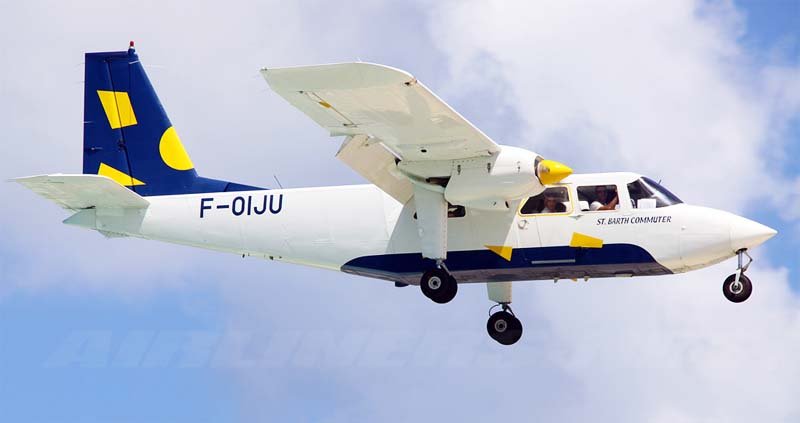 BN-2 Islander |
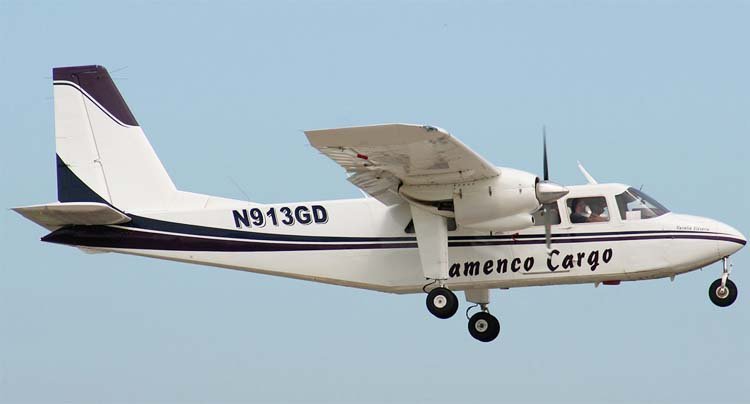 BN-2 Islander |
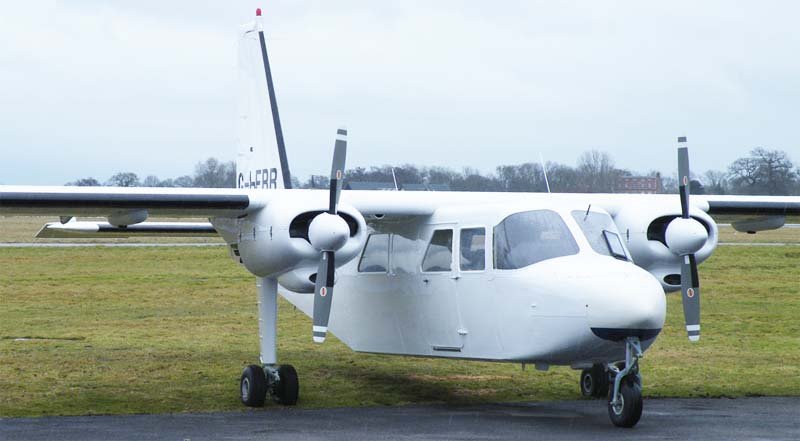 BN-2 Islander |
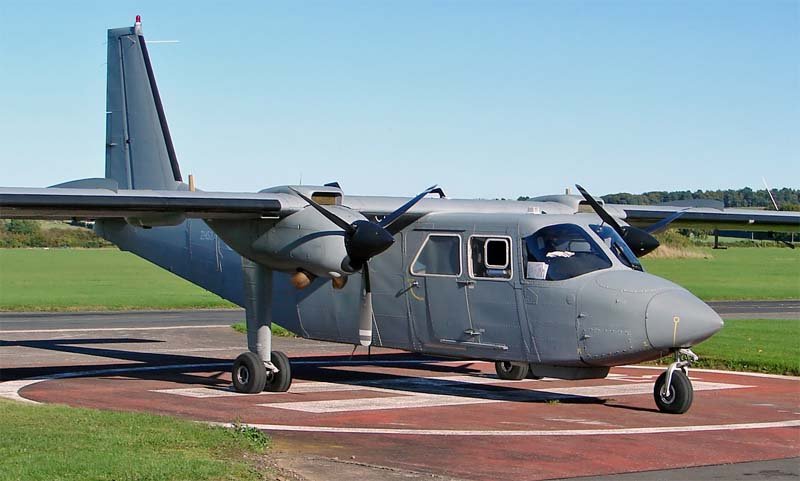 BN-2 Islander |
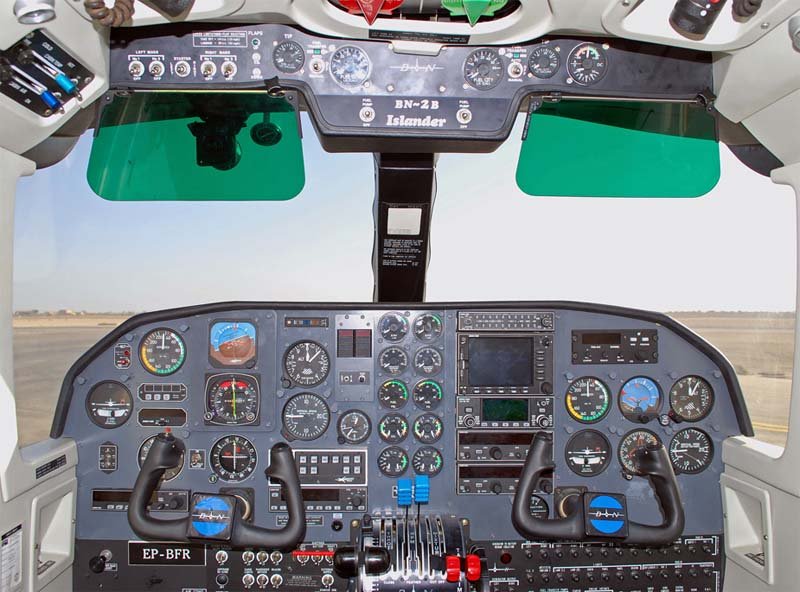 BN-2 Islander |
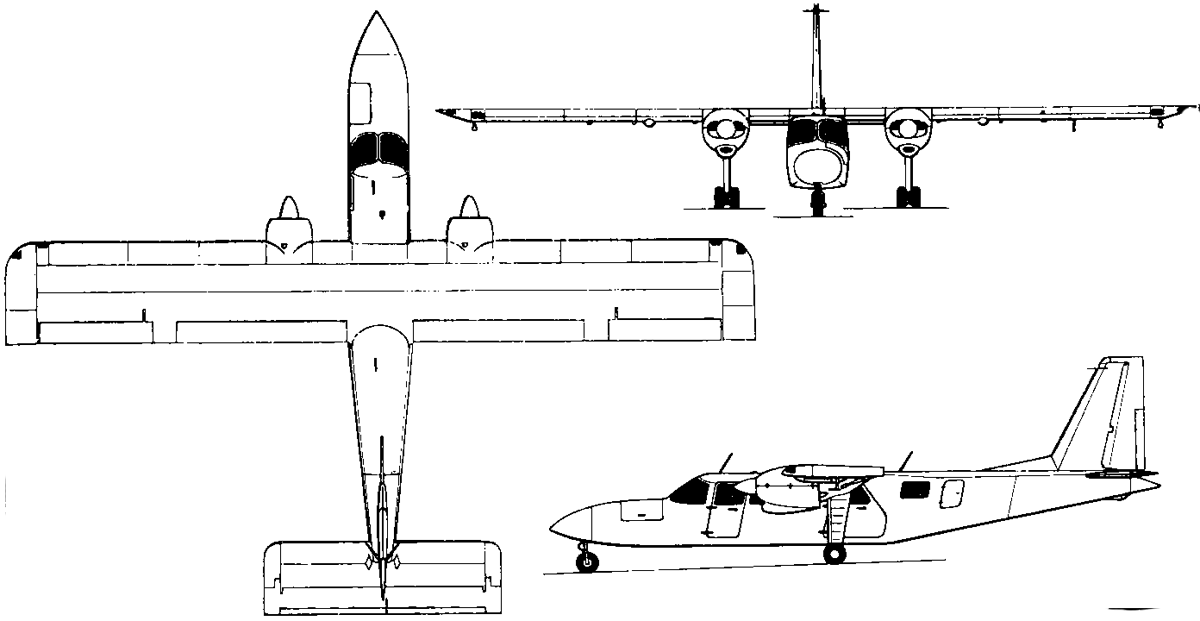 BN-2 Islander |