
Throughout the history of aviation, hundreds of models of various aircraft have been created, from small machines to giants like the “Hercules” or the An-225 “Mriya.” It would be reasonable to assume that among all this diversity, there would be an aircraft smaller than all the others. And such an aircraft does exist.
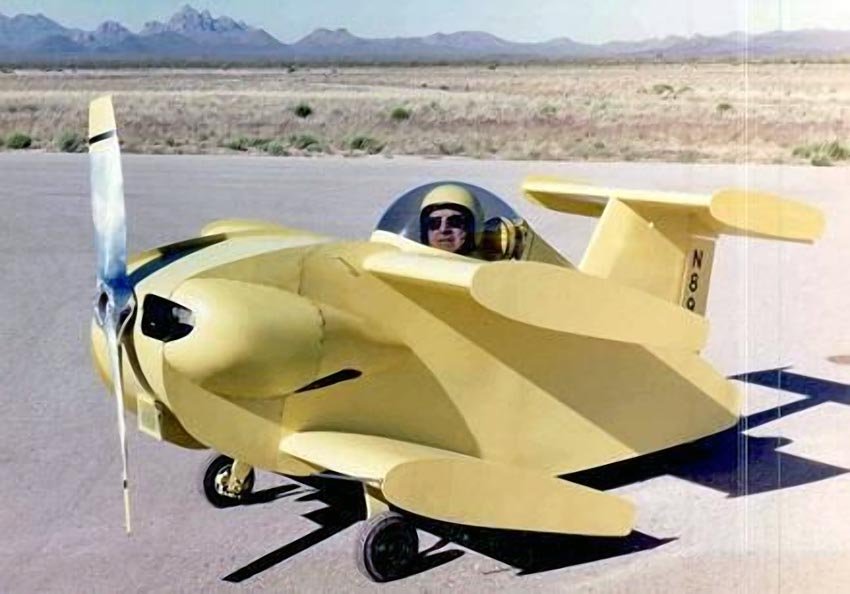
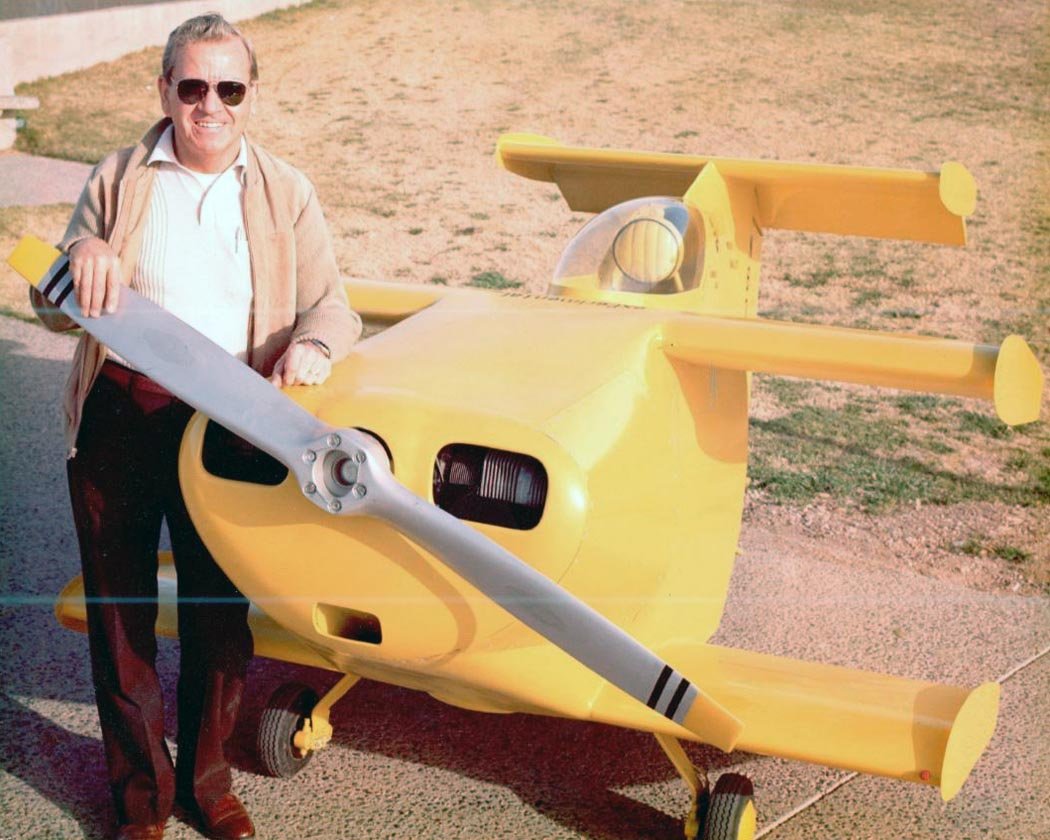
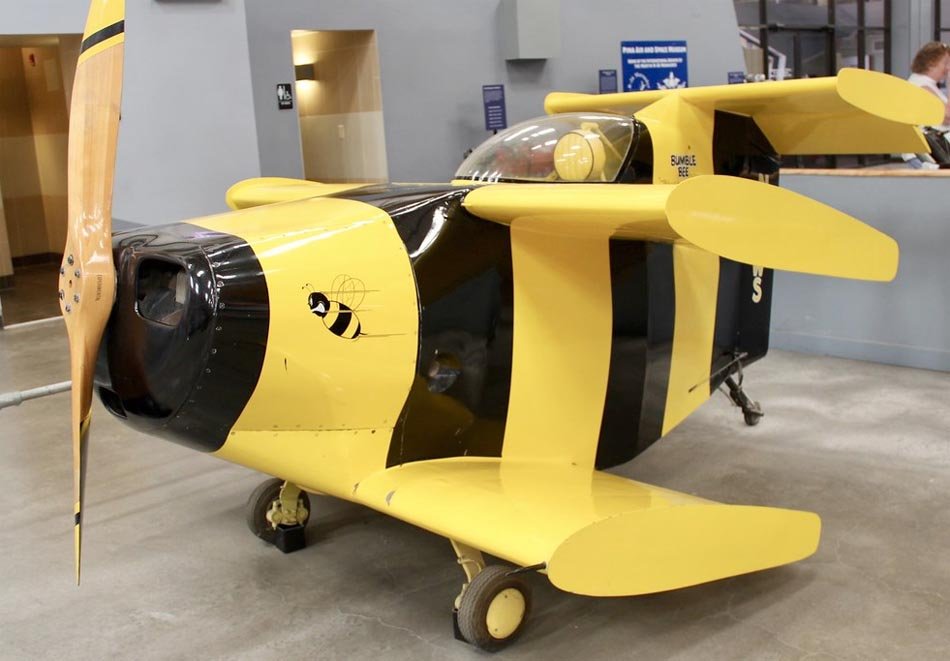
This aircraft was named Starr Bumble Bee. The most astonishing fact is that this experimental aircraft was built with a single purpose: to earn the title of the world’s smallest airplane.
The Race for the Smallest Aircraft
The title of “world’s smallest airplane” changed hands quite frequently. The first official holder of this title was the Wee Bee, built in California, which made its first flight in 1948. In the following four years, engineers Ray Stits with his Junior aircraft and Wilbur Staib with his Little Bit machine entered the competition.
In 1952, Stits made his mark: his new mini-plane, the Stits SA-2A Sky Baby, had a wingspan of 2.18 meters, and the record held until the 1980s. Indeed, the main parameter for aircraft size is the wingspan; the length can be slightly greater than the previous record holder.
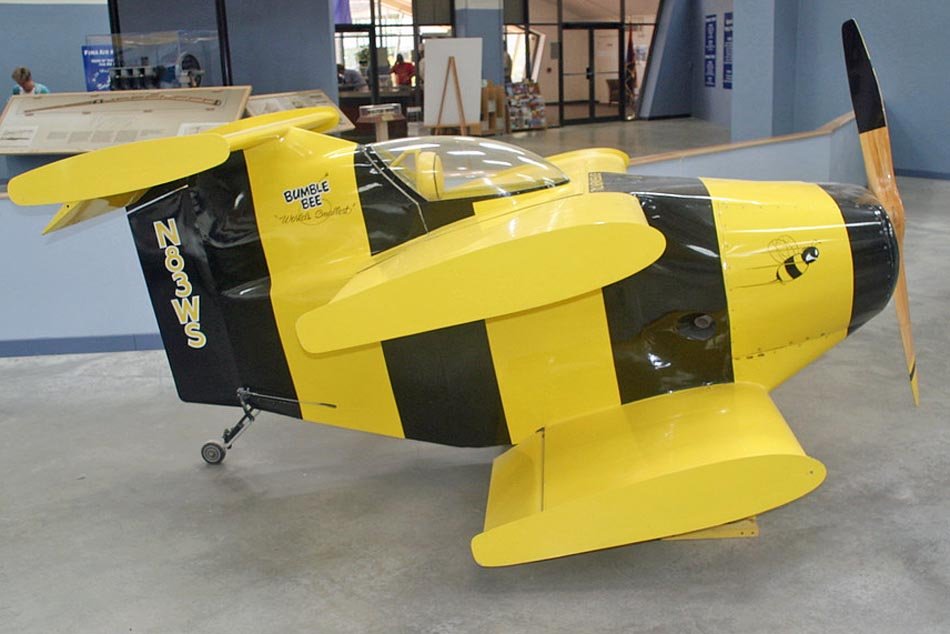
Engineer Robert Starr (Robert H. Starr) from Arizona set himself the task of breaking Stits’ achievement, and on January 28, 1984, he did so by flying the Bumble Bee I (N83WS) with a wingspan of 1.98 m. However, Sky Baby designer Ray Stits had a son, Donald, who six months later, in mid-1984, set another mini-record by building the Baby Bird aircraft with a wingspan of 1.90 m. Subsequently, the Baby Bird, piloted by Harold Nemar, successfully took to the air 35 more times.
The Starr Bumble Bee II: A Miniature Milestone
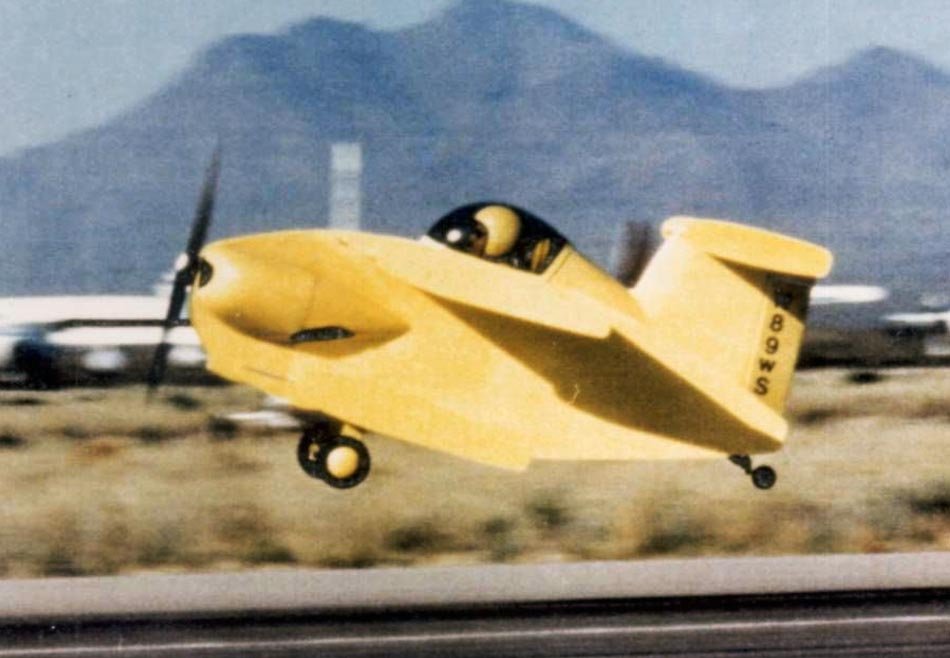
But Starr did not give up. In 1988, he finally completed the construction of the Starr Bumble Bee II (N89WS) with a seemingly impossible wingspan of 1.68 m. On May 8, 1988, the Bumble Bee II made its first flight, and the record returned to Starr.
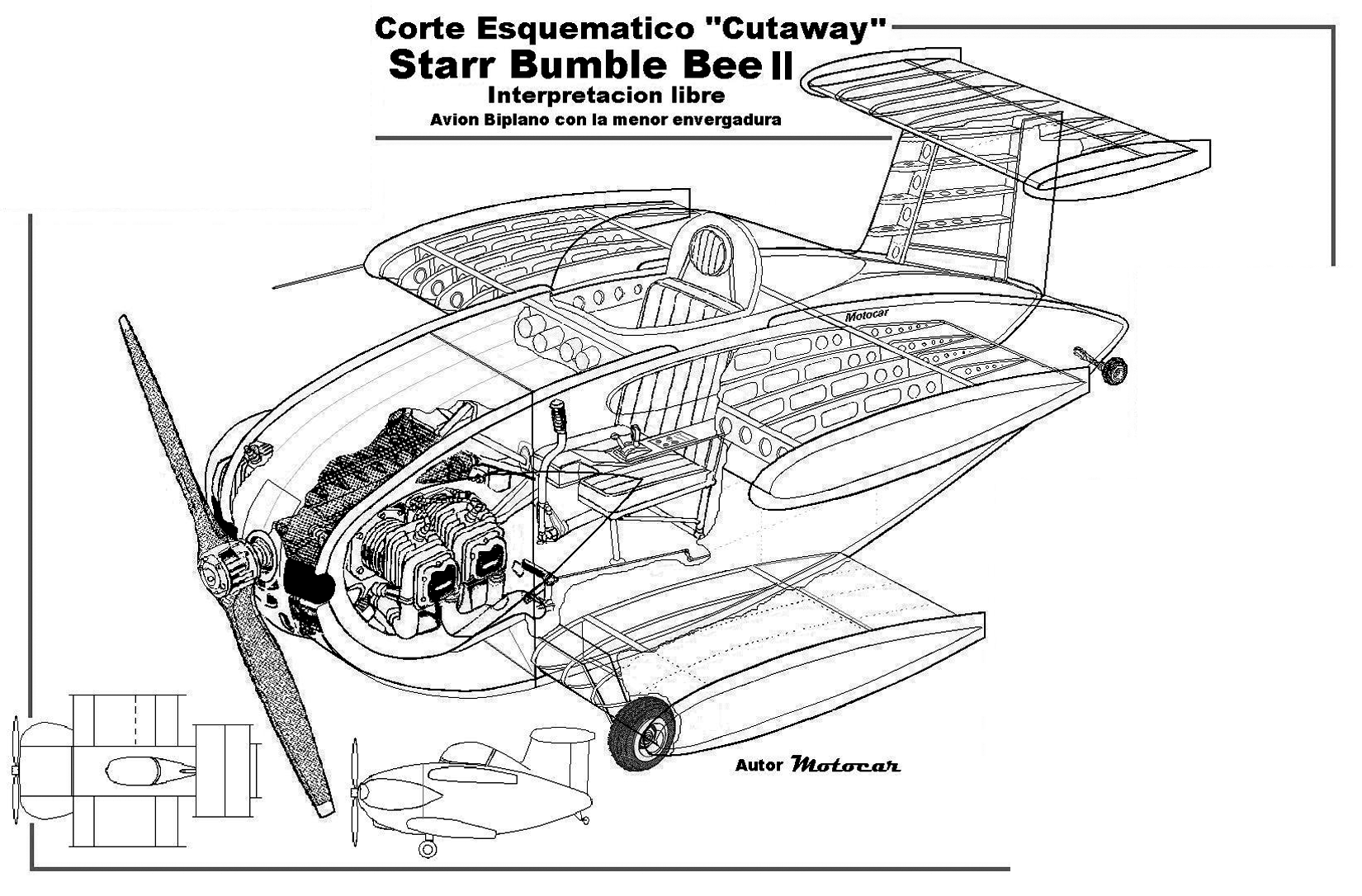
The aircraft was a strutless biplane with a single four-cylinder Continental C85 piston engine delivering 85 hp. The fuselage was made of welded tubes and covered with sheet metal. The upper wing featured flaps, while the lower wing had ailerons.
As for its dimensions, the aircraft’s length was only 2.7 meters, and its height was 1.2 meters. The maximum takeoff weight was 260 kg. Despite its size, the aircraft reached a maximum speed of up to 190 km/h and was capable of climbing up to 4270 meters.
A Historic Flight with a Dramatic End
Yet, at the same time, the story ended almost tragically. Starr underestimated the complexity of controlling his aircraft. It demonstrated sufficient stability and remained airborne long enough to set the record, but then he decided to fly a little longer for pleasure.
At an altitude of 120 meters, the tiny engine of the Bumble Bee II simply stalled. The aircraft and pilot crashed to the ground. Starr miraculously survived, sustaining multiple fractures, while almost nothing remained of the aircraft. After this incident, the Bumble Bee I was donated to the Pima Air & Space Museum in Tucson.
To settle the Stits and Starr rivalry, the Guinness Book of Records split the record into two parts: Stits’ aircraft became the world’s smallest monoplane, and Starr’s became the world’s smallest biplane.
Why was this aircraft named “Bumble Bee”? A widely held belief is that a bumblebee flies defying all laws of physics and aerodynamics, as its short wings and massive body should not keep it airborne. Looking at the Bumble Bee II, it gives the impression that, like the bumblebee, it cannot stay airborne with such small wings.
Nevertheless, the little airplane was excellently controllable and fully managed by the pilot in the air.
Technical Specifications
| Modification | Bumble Bee II |
| Wingspan, m | 1.68 |
| Length, m | 2.70 |
| Height, m | 1.20 |
| Empty weight | 180 |
| Maximum takeoff weight | 260 |
| Fuel, l | 11.35 |
| Engine type | 1 Piston engine Continental C85 |
| Power, hp | 1 x 85 |
| Maximum speed, km/h | 190 |
| Cruising speed, km/h | 150 |
| Maximum rate of climb, m/min | 1380 |
| Service ceiling, m | 4270 |
| Crew, crew | 1 |
Image and diagram gallery of the Starr Bumble Bee II
 Bumble Bee |
 Bumble Bee |
 Bumble Bee |
 Bumble Bee |
 Bumble Bee |
 Bumble Bee |