
The American company Cessna Aircraft is today known primarily for its business jets. However, the Cessna brand’s fame was originally built on its light propeller aircraft for general aviation. Twin-engine models were considered from the outset as a unique “upgrade,” utilizing well-proven Continental and Lycoming engines.
There was even an exotic variant like the Cessna 336/337 Skymaster (1961), a four-seat “push-pull” with one engine in the nose of the fuselage and a second in the tail. Nevertheless, the classic twin-engine aircraft like the Cessna 411 (1962), Cessna 421 Golden Eagle (1965), and Cessna 401/402 Utiliner (1966) became more representative, faster, and respectable.
The Rise of Cessna’s Twin-Engine Fleet
These models served as prototypes for at least seven further improved versions, the last of which, the Cessna 303 Crusader, began production in 1979. Cessna’s twin-engine aircraft quickly became a classic of private and business aviation. They provided high comfort for their time, with cabins featuring soft adjustable seats, bars, toilets, and music.
Some aircraft in the “400-series” were pressurized, allowing for high-altitude flight, and the Cessna 441 Conquest II model received turboprop engines instead of piston engines. Though small by European standards and not overly luxurious, for America, they became as important a symbol of the country as Cadillac cars and the music of the Rolling Stones. The rest of the world followed the lead of the United States.
Soviet citizens encountered a classic of light aviation on May 28, 1987, when Mathias Rust’s Cessna 172 landed near the Kremlin walls. For a quarter-century, things went in their favor, but the market crisis for twin-engine propeller aircraft that emerged in the 1980s forced Cessna Aircraft to cease their production.
Cessna 401 & 402: Design and Versatility
The Model 401 and Model 402 were built based on the Cessna Model 411, receiving their airworthiness certificate on September 20, 1966. They represented more affordable modifications of the Model 411, distinguished by having two 6-cylinder Continental TSIO-520-E engines, each producing 300 hp.
The Model 401 was operated by a two-person crew and carried up to 6 passengers. The Model 402’s cabin could be quickly reconfigured from a nine-seat passenger layout to a cargo configuration, offering significant versatility for various operations.
Evolution and Production Halt
Production of the Model 401 ceased by mid-1972. The Model 402 was named Utiliner (universal passenger) in December 1971. Simultaneously, a new modification of the Model 402, the Businessliner, appeared. Both modifications featured TSIO-520-VB engines, delivering 325 hp.
They were released under the names Utiliner II, a small 10-seat passenger aircraft, and Businessliner II, an executive aircraft that could carry 2 to 6 passengers. The final modification was the Businessliner III, equipped with more sophisticated onboard electronic equipment, including weather radar. Declining demand for these aircraft led to the halt of production in 1986. By that time, 1540 units of all Model 402 modifications had been built.
Technical Specifications
| Modification | Cessna 402C |
| Wingspan, m | 13.45 |
| Aircraft length, m | 11.09 |
| Aircraft height, m | 3.49 |
| Wing area, m2 | 21.00 |
| Empty weight | 1845 |
| Maximum takeoff weight | 3107 |
| Engine type | 2 Piston engines Continental TSIO-520VB |
| Power, hp | 2 x 325 |
| Maximum speed, km/h | 428 |
| Cruising speed, km/h | 394 |
| Economical speed, km/h | 304 |
| Practical range, km | 2360 |
| Maximum rate of climb, m/min | 442 |
| Practical ceiling, m | 8200 |
| Crew, crew members | 1-2 |
| Payload: | 2-8 passengers in Businessliner modification and 10 in Utiliner modification. |
Image and diagram gallery of the Cessna 401/402 Utiliner
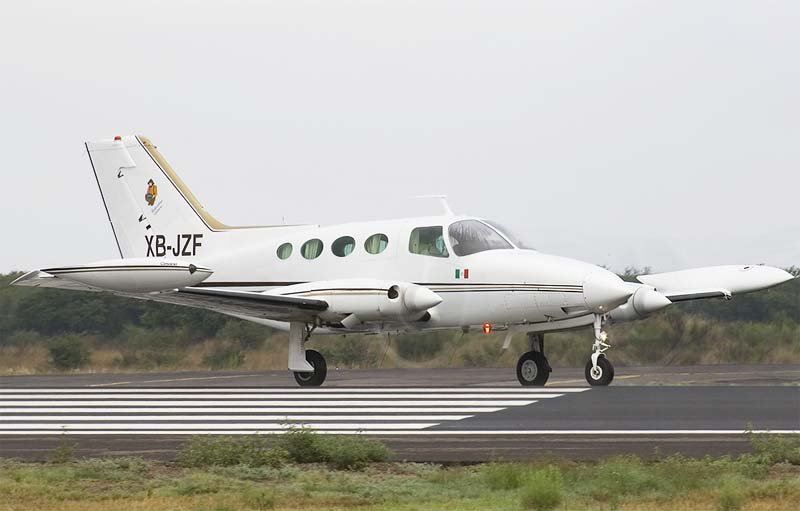 Cessna 401/402 Utiliner |
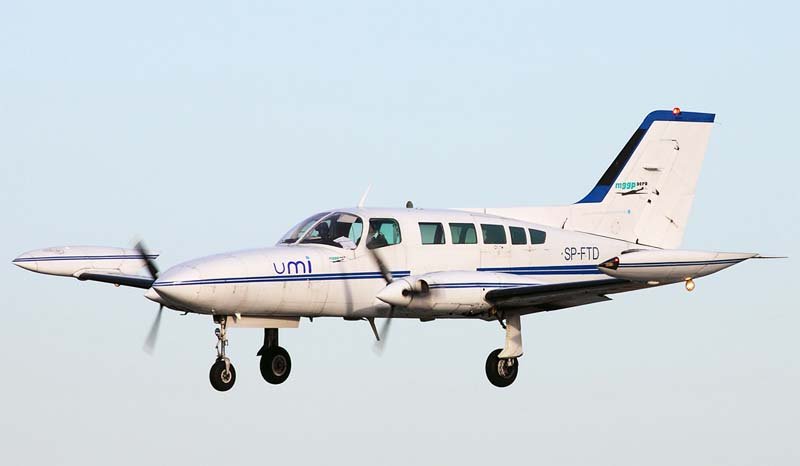 Cessna 401/402 Utiliner |
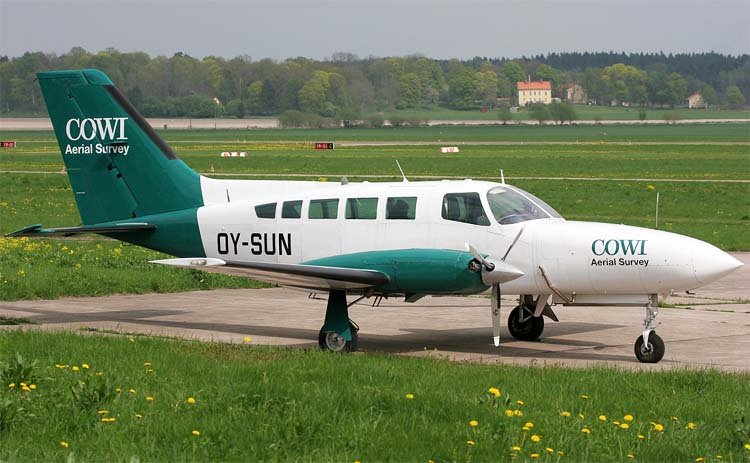 Cessna 401/402 Utiliner |
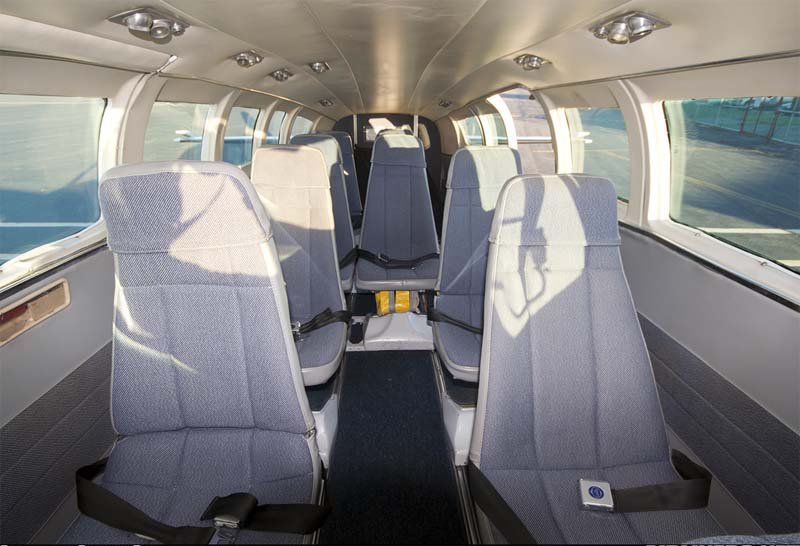 Cessna 401/402 Utiliner |
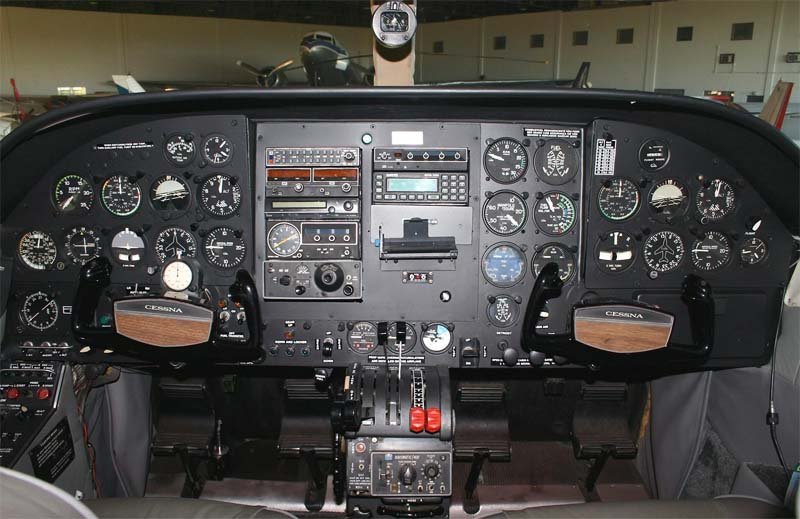 Cessna 401/402 Utiliner |