
The “Berkut” aerial target is designed to simulate air attack assets such as RPAS (Remotely Piloted Aircraft Systems), cruise missiles, and subsonic tactical aviation aircraft. It is used for combat training of crews, as well as for flight and firing tests of all modifications of S-125 anti-aircraft missile systems (SAM).
Target simulation covers both the 5N62 radar director and the 5G23 active/passive radar seekers, as well as the V-860 missile’s radio fuse. Various modifications of the “Berkut” aerial target equipment enable solving similar tasks for a wide range of SAM systems, as well as for air interception missile complexes (ARCP) manufactured in NATO countries and the former USSR (Russian Federation).
Advanced Simulation Capabilities
A promising and reliable method for simulating the radar signature (RCS) of typical aerial targets aboard a small and radar-stealthy carrier is active radar transponding with the required level of retransmitted signal from the active radar systems of ARCPs. The “Berkut” target mimics the RCS of typical aerial targets such as air-to-surface cruise missiles with Stealth technology airframes, featuring an RCS of 0.1 to 1.0 m².
It also simulates small reconnaissance UAVs, cruise missiles without Stealth technology, cruise missiles with ARGSN antenna systems, strike UAVs, and trainer aircraft, among others, with an RCS of 1.0 to 3.0 m². Furthermore, it can emulate fighter aircraft, multi-role fighter aircraft, light frontline aviation aircraft, and attack aircraft with an RCS of 5.0 to 10.0 m².
Other simulations include heavy frontline aviation aircraft with an RCS of up to 15.0-20.0 m², and military transport aircraft, AWACS aircraft, tankers, etc., with an RCS exceeding 30 m². The frequency range of the simulated reflected signal is determined by the frequency range of airborne radars and active radar seekers of air-to-air missiles.
Virtually the entire global fleet of airborne radars of ARCP fighters like the F-14C, F-15, F-16, F-18, Tornado F2/F3, Mirage 2000, F-22A, Rafale, EF-2000, armed with active radar-guided missiles such as AAAM, AIM-120A/B AMRAAM, MICA, Skyflash 90, or semi-active radar-guided missiles like AIM-7E/F/M Sparrow, uses the 3-cm wavelength band. The same applies to ARCP fighters such as the MiG-29, Su-27, Su-30MKK, Su-30MKI, Su-30MKM, armed with semi-active radar-guided missiles like the R-27.
Design and Operational Features
The robotic aerial target “Berkut” features a composite material airframe and two turbojet engines. It utilizes an aircraft-type flight for the main part of its route and a parachute landing.
The “Berkut” aerial target is a full analog of real targets across virtually the entire list of parameters relevant to firing radars and radar homing heads (range, speed, angular coordinates, RCS). Using the Berkut significantly reduces material costs for solving the aforementioned tasks, as it does not require expensive flights on real aircraft.
Moreover, the complexity and labor intensity of organizing flight experiments are substantially reduced. Ground control means are designed to provide operational changes to the target’s flight mission, as well as reception, display, and documentation of telemetry and external trajectory information.
Ground service facilities include a ground automated control system and a complex of technological equipment. These facilities are designed to perform checks of the target’s onboard systems, as well as its preparation for launch and repeated use.
The main flight modes of the “Berkut” aerial target include: takeoff, climb, horizontal flight, descent, turn, dive, climb, low-altitude flight, and parachute landing. The target is designed for multiple uses and can be utilized up to 50 times. Both autonomous and radio-corrected methods of flight mission execution can be employed. The complex includes: the “Berkut” aerial target aircraft with the “RIC” radar signal simulator.
Technical Specifications
| Modification | Berkut |
| Main rotor diameter, m | 2.82 |
| Length, m | 2.38 |
| Maximum takeoff weight | 34 |
| Engine type | 1 Turbojet |
| Thrust, kN | 1 x 0.23 |
| Maximum speed, km/h | 360 |
| Cruising speed, km/h | 150 |
| Range, km | 80 |
| Flight endurance, min | 30 |
| Service ceiling, m | 3000 |
Image and diagram gallery of the Berkut
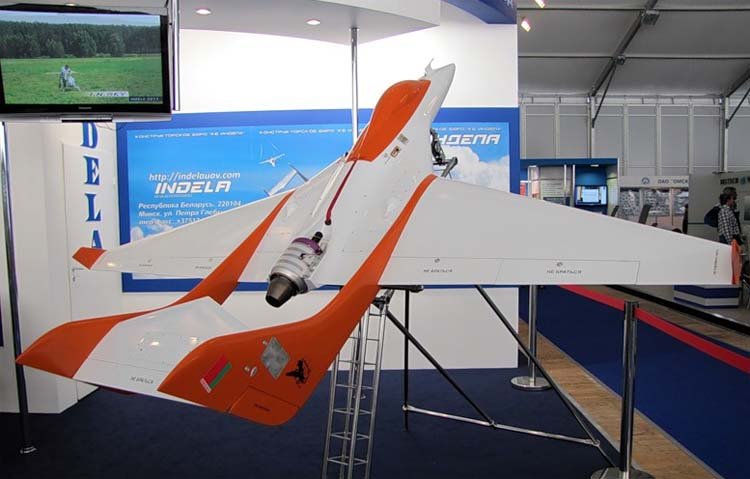 Berkut |
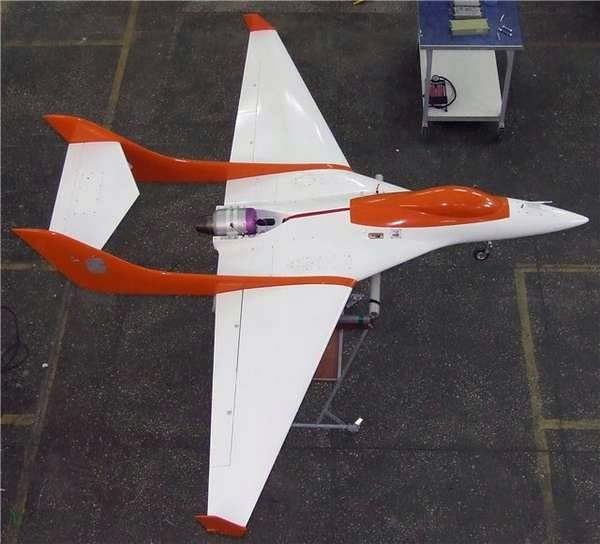 Berkut |
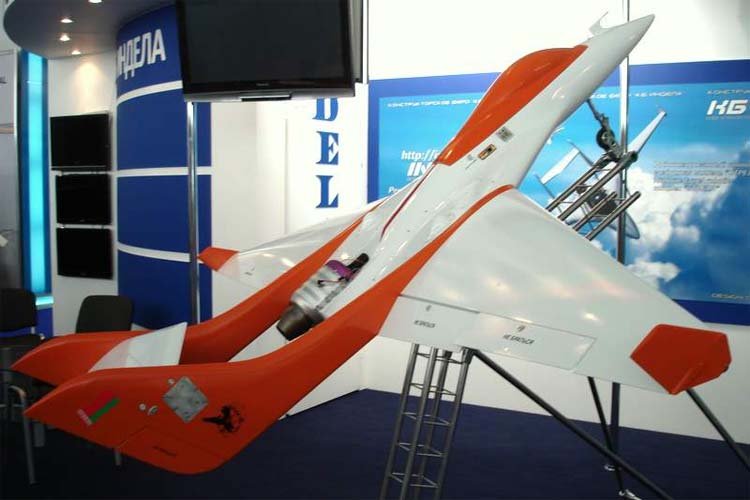 Berkut |