
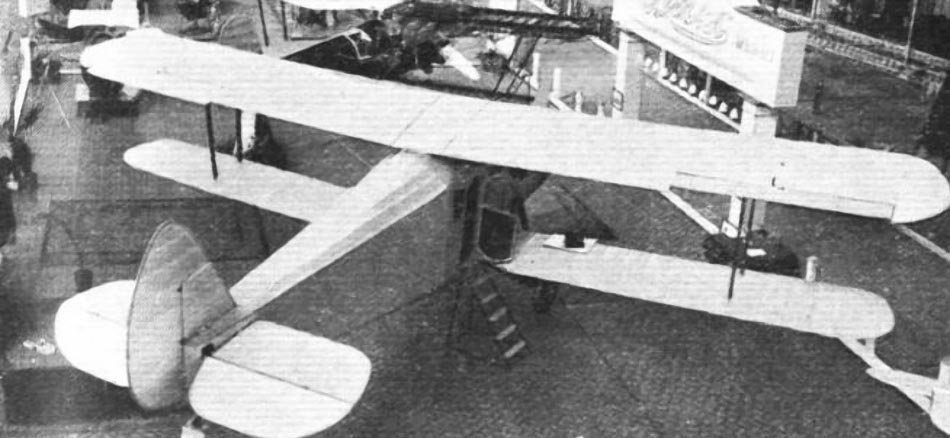
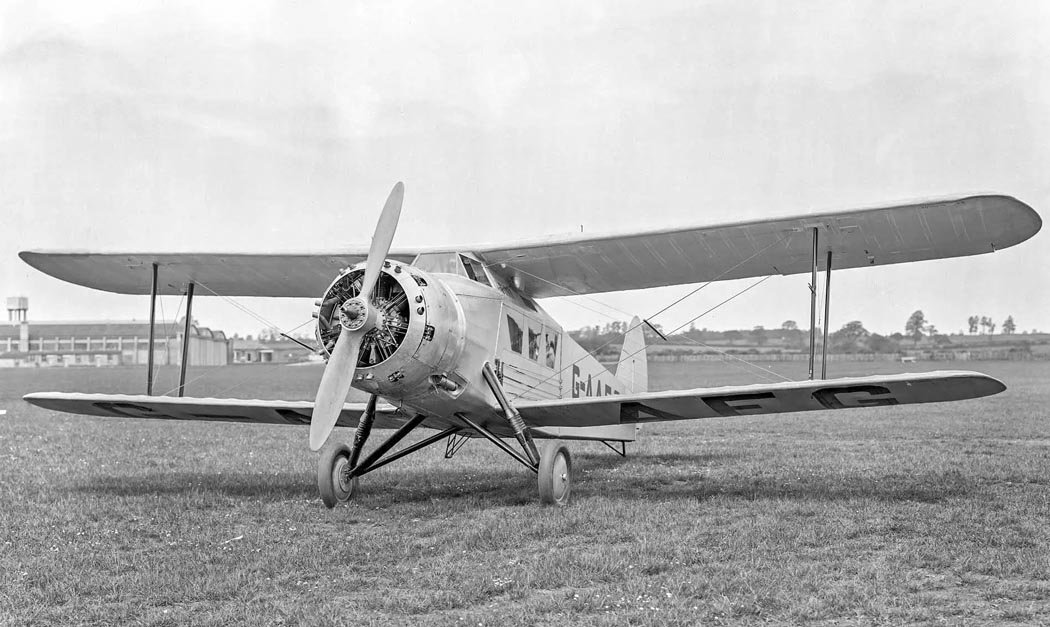
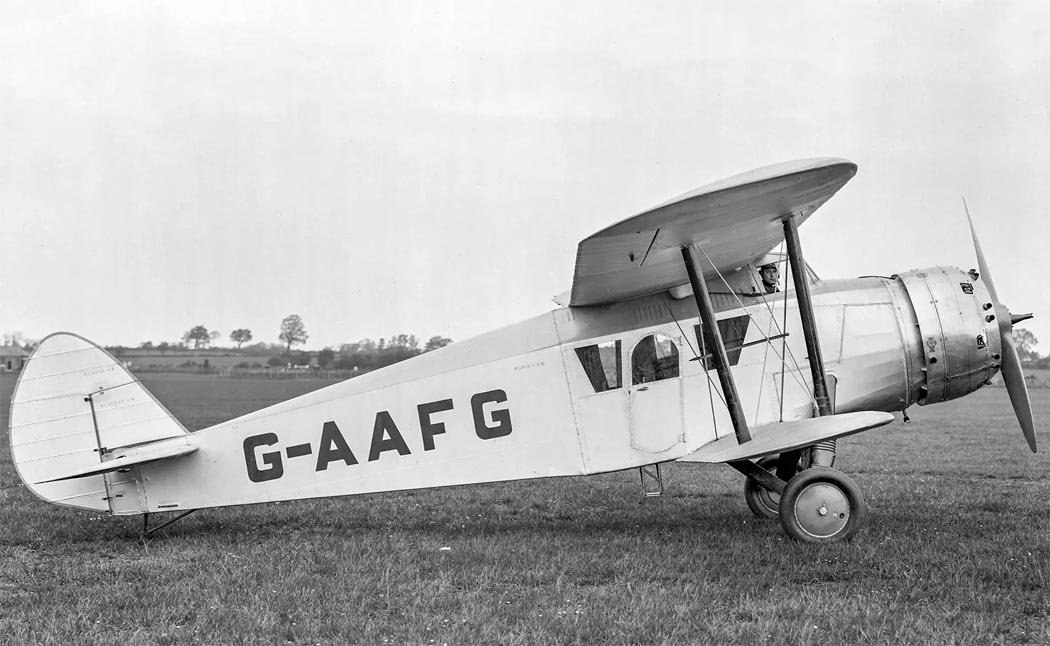
The Bristol Type 110 transport aircraft was designed for the new 220 hp Bristol Titan air-cooled engine. Its enclosed passenger cabin could accommodate four people. In this configuration, the aircraft (which received registration number G-AAFG) made its first flight on October 25, 1929.
Evolution and the Bristol Type 110A
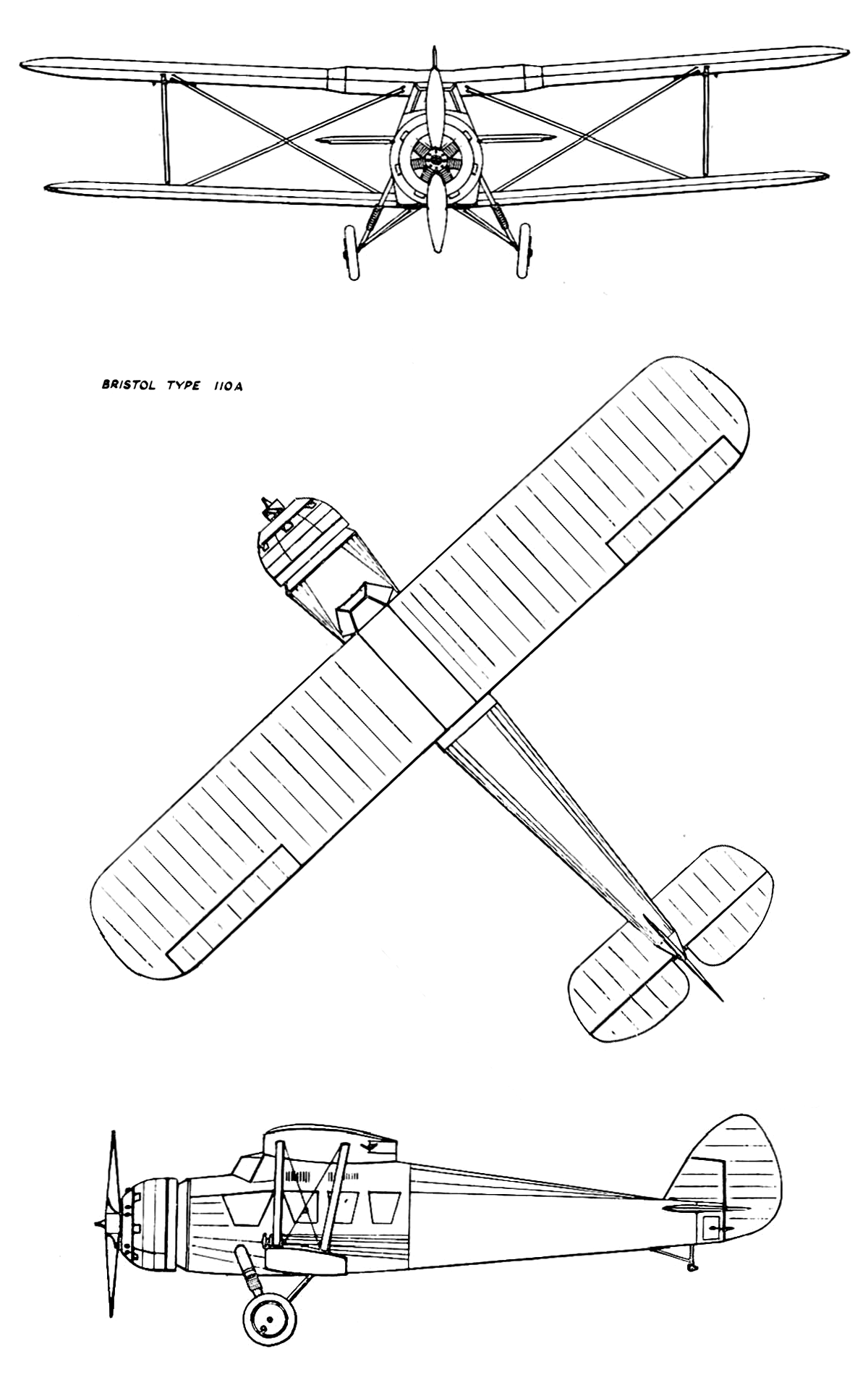
By this time, a newer and more advanced 315 hp Bristol Neptune engine was ready. It was decided to redesign the aircraft for this engine, increasing passenger capacity to five people. The new modification of the aircraft, unofficially designated Bristol Type 110A Five Seater, was transferred to Filton for testing.
Accidents and Project Cancellation
During one of its initial flights, the aircraft crashed. The commission’s conclusions stated that significant modifications were required to ensure flight reliability. Unfortunately, this could not be done, as the Bristol firm was overwhelmed with orders for the production of Bulldog fighters and the development of numerous military prototypes.
Consequently, the promising civilian project was canceled. The single restored example continued flying under Class B registration R-4 until February 1931, when after another accident, it was decided not to restore it again.
Technical Specifications
| Modification | Bristol 110 |
| Wingspan, m | 12.34 |
| Length, m | 10.21 |
| Height, m | 3.10 |
| Wing area, m2 | 36.14 |
| Empty weight | 1 057 |
| Normal takeoff weight | 1978 |
| Engine type | 1 Piston engine Bristol Titan |
| Power, hp | 1 x 220 |
| Maximum speed, km/h | 201 |
| Cruising speed, km/h | 185 |
| Crew, crew members | 1 |
| Payload | 4 passengers |
Image and diagram gallery of the Bristol Type 110
 |
 |
 |
 |