The Douglas Aircraft company built many machines during its existence, but this one remained in the memory of Great Patriotic War participants simply as “the Douglas.” We are talking, of course, about the famous DC-3 and its numerous variants. The DC-3 was designed in 1935 at the request of American Airlines and was originally called the DST.
In developing this machine, experience gained from the firm’s previous aircraft, the DC-2, was utilized, with its overall layout being fully preserved. Since the DC-2 had enjoyed significant market success, the DC-3’s design immediately incorporated mass production requirements.
The company did not err—DC-3s sold “like hotcakes” and soon spread worldwide. Following a batch of DC-2s, the Soviet Union also acquired two dozen DC-3s. They were used by both civil aviation, which operated them on domestic and international routes, and the RKKA Air Force as military transports.
DC-3s with red stars participated in supporting military operations in Khalkhin Gol and the “Winter War” with Finland. They continued to serve during the Great Patriotic War. Parallel to purchasing the aircraft, our country also acquired a license to produce the DC-3-196 modification. This modification was mastered by Plant No. 84 in Khimki as the PS-84, and then, in a slightly altered form, it was built during the war in Tashkent as the Li-2 (in honor of B.P. Lisunov, who oversaw its development at the plant).
From Civilian Transport to World War Service
When the United States entered the war, American military transport aviation had only a small number of converted civilian aircraft and outdated bombers. First, the military requisitioned unfinished passenger aircraft or those not yet delivered to customers from factories, including a large number of DC-3s of various variants.
From early 1942, C-47 “Skytrains” began to be built with a cargo door on the left side and a reinforced cabin floor for carrying goods. They became the most widespread military transport aircraft of the anti-Hitler coalition countries. As part of the Lend-Lease program, these machines were also supplied to the Soviet Union.
The first batch of twenty-five C-47s was scheduled for transfer in May-June 1942, but a series of delays meant the first seven C-47s only reached Ladd Field airbase in Alaska in September. On September 25, Soviet crews arrived from Chukotka for these aircraft. However, the American side suspended the handover of the C-47s until a special order was received, which did not arrive until early October.
On October 10, Soviet ferry pilots accepted six machines, which flew to our side of the Bering Strait and proceeded along the “Alsib” route—Fairbanks to Krasnoyarsk. By March 1943, the Soviet Union had received 30 C-47s. Subsequently, the scale of deliveries of these aircraft steadily increased. In total, the American side allocated 709 C-47s; 707 reached the acceptance point (Ladd Field in Alaska), and all were accepted by the Soviet mission.
704 machines arrived in Krasnoyarsk. At least two C-47 crashes on the route are known: on May 25, 1943, in Krasnoyarsk and on May 30, 1944, in Uelkal. Several variants of the C-47 were supplied to our country: the C-47A with modified electrical and radio equipment, and the C-47B with higher-altitude R-1830-90 engines and the ability to install an additional fuel tank in the cabin. The C-47 had 28 passenger seats, while the C-47A and C-47B had 27.
With seats removed, 18-24 wounded on stretchers could be carried. Here, all these machines were commonly referred to as Si-47, and among the people, the Li-2 and C-47 were simply called “Douglas.” This was understandable, as distinguishing them externally was quite difficult even for a specialist. Even now, photographs of C-47s are often published with the caption “Li-2.” It is even harder to distinguish the PS-84 from pre-war DC-3s – both also known as “Douglas” and “Douglas.”
The first C-47s were used to service the Krasnoyarsk route itself, as it was officially called here. They replaced worn-out PS-84s that had previously operated there and were initially allocated from the Moscow Aviation Group of the GVF (Civil Air Fleet). In April 1943, these machines were consolidated into a transport squadron (of 20 crews), and in June, the squadron was expanded into the 8th Transport Regiment (trap) under the command of V.A. Pushchinsky.
C-47s from this regiment transported people and cargo (ranging from secret mail and expensive instruments to lipstick), led groups of smaller aircraft that lacked such rich navigational equipment, and carried out rescue operations. This same regiment also ensured the ferrying of other C-47s along the route. The head of the route, the famous polar pilot I.P. Mazuruk, had his personal “Douglas” with the call sign “Leader-100,” decorated with a polar bear image.
Subsequently, new aircraft began to be accepted by Air Force units. One of the first C-47s ended up in the Air Force inspection regiment – Vasily Stalin’s favorite brainchild. Both bomber and fighter regiments usually received one transport aircraft for various transfers. However, many C-47s entered purely transport units.
There were reasons for this. The Li-2, in the form it was produced during the war by the Tashkent Aviation Plant, was a dual-purpose aircraft – transport and simultaneously a long-range night bomber, whereas the C-47 was a purely transport machine. Therefore, Li-2s primarily equipped long-range bomber units, and C-47s equipped transport units. Although several C-47s were usually transferred to regiments equipped with Li-2s as well. For example, the 102nd Bomber Regiment (bap) had three C-47s.
They were used for special assignments, household needs, and as “technical assistance” during forced landings of the regiment’s aircraft. From the summer of 1943, C-47s began arriving in GVF transport units. The largest number were with the 1st Transport Division (later the 10th Guards), based in Vnukovo near Moscow. These machines also arrived in the 3rd Separate Communications Division (Myachkovo) and separate GVF regiments operating on the fronts. Such regiments usually included a detachment of five Li-2s or C-47s by the end of the war. The “Douglases,” alongside the Li-2s, formed the backbone of our military transport aviation.
Although there were far fewer of them than U-2s and P-5s (R-5s), they carried out over half of all transports. A huge volume of cargo was moved by C-47s during various offensive operations of the Soviet Army. The regiments of the 1st Transport Aviation Division ensured the delivery of urgent cargo during the Battle of Kursk. In February-March 1944, a group of nine C-47s from the 1st TAD, under the command of B. Labutin, operated near Melitopol.
Operational Service and Logistics
In muddy conditions, only aviation could maintain the pace of the offensive. Aircraft delivered ammunition, shells, food, shoes, and uniforms. On return flights, they evacuated the wounded. They flew short distances, making 5-6 sorties per day. C-47s also participated in supporting the actions of General Pliev’s cavalry-mechanized group.
During the Leningrad offensive in June 1944, C-47s of the GVF’s 5th Transport Regiment and one of the Air Force regiments ensured the redeployment of ground personnel for the 7th Air Army’s regiments, headquarters, and the delivery of cargo to the front. Approximately the same tasks were performed by machines of the 9th and 120th Guards Transport Regiments during the offensive in Belarus. The role of transport aviation was significant in the liberation of Right-Bank Ukraine, Crimea, and the Baltic States. Flight intensity sometimes reached 8-10 sorties per day – extremely high for large transport aircraft!
Separately, operations to supply partisan detachments must be highlighted. Of course, the main burden here fell on the unpretentious U-2s and R-5s, but an Li-2 or C-47 could carry as much as a dozen of these biplanes. Therefore, when suitable landing sites were available (or, without them, by dropping cargo on parachutes), “Douglases” flew at night into German-held territory.
These operations were far from safe. On September 21, 1943, Lieutenant A.T. Borovsky’s aircraft dropped ammunition to partisans in the Lubny area. An anti-aircraft shell exploded in the tail of the machine, but the pilot managed to safely return home. C-47s participated in supplying partisans in Karelia, Belarus, and Ukraine. The 120th Guards Transport Regiment, reinforced by a flight of Li-2s and C-47s, supplied ammunition to 19 partisan brigades in the Belarusian forests before the 1944 offensive. Crews of the 2nd Transport Aviation Division transported 20 tons of explosives there.
Transport aviation pilots contributed to offensive operations in Romania, Poland, Hungary, and all the way to Berlin and Prague. Li-2s and C-47s of the 5th Bomber Corps (BAC) ALL played a major role in the “air bridge” established from Ukraine to insurgent Slovakia in 1944. There, at Zvolen airfield, C-47s of the 1st Transport Aviation Division landed. When the uprising was suppressed by the Germans, the airfield was evacuated. Last to take off, under mortar fire, was I.I. Ryshkov’s C-47 from the 2nd Transport Regiment: on board was a delegation of the Hungarian opposition bound for Moscow.
The Berlin operation involved the 62nd Guards Transport Regiment, 69th Guards Transport Regiment, 69th, and 23rd Transport Regiments, which also had C-47s in service. The transport aircraft performed well during the short campaign in the Far East. The pace of the offensive was so high that advanced tank units could only be supplied with fuel from aircraft. The Li-2 usually carried 8-10 barrels of diesel fuel, while the more capacious C-47 carried 12 barrels. In addition to fuel, ammunition was delivered in a similar manner.
Groups of two to ten aircraft deployed airborne landings in Harbin, Mukden, Girin, Port Arthur, and other locations. In the 9th Air Army, this was handled by a combined group of seven C-47s. It was on a “Douglas” that Colonel I.G. Artemenko arrived in Changchun, delivering an ultimatum to the Kwantung Army command. The former Manchukuo monarch Pu Yi was transported to the Soviet Union on a similar machine.
Technical Advantages and Enduring Legacy
The C-47 differed from the Li-2 in many respects. Its powerful R-1830 two-row radial engines provided higher speed (up to 360 km/h at 2300 m altitude) and a greater practical ceiling, and its payload capacity also increased. The engines were very successfully mounted and convenient to maintain. Replacing one M-62IR engine on an Li-2 took 62 man-hours. On a C-47, when removing it with the engine mount, it took only ten!
After a difficult period of initial familiarization, when technical staff became accustomed to servicing American aircraft engines, the engines not only produced their entire guaranteed service life but actually exceeded it by 1.5-2 times. Higher manufacturing culture also ensured higher quality airframe construction. The “American” was more reliable, its external surfaces provided better aerodynamic characteristics. Compared to the Li-2, both the fuel and hydraulic systems were much more advanced.
Unlike Soviet valves, American ones did not leak, which brought immense pleasure to mechanics. The C-47’s cargo door, which opened sideways, was much wider than the hatch with an upward-lifting flap on the Li-2 (inherited from the experimental PS-84K and appearing in series only in 1945). Two soft additional 375-liter tanks, if necessary placed in the cabin, allowed the flight range to be increased to 3400 km. And skilled individuals also installed larger non-standard tanks. Flight duration increased up to a full day.
The C-47’s instrumental and radio equipment turned out to be far more sophisticated than that of the Li-2. The set of instruments was significantly richer; they were also more accurate, reliable, and had a longer service life. Li-2 radio operators could only envy what was on the American machines: three different radio stations, a radio altimeter, a blind-landing kit, and an automatic radio compass.
Moreover, American stations had 5-6 times greater power, better operational stability, and at the same time, smaller weight and dimensions. On the C-47, the radio operator’s position was moved out of the propeller rotation zone and located in a special soundproofed compartment. The only unpleasant fact was that export C-47s came with an incomplete set of equipment. The US Army Air Forces equipped their machines with many other things, as evidenced by empty stands and unnecessary placards. But even in this form, the C-47 significantly surpassed both Soviet Air Force transport aircraft and bombers in this regard.
On the C-47, issues of low-temperature operation were well thought out. American designers provided for everything that existed at the time – de-icers on the wings and tail, washing of propeller blades and cockpit windows with alcohol mixtures, and calorific heating for the cockpit and cabin. Goodrich pneumatic de-icers worked more effectively than domestic thermal ones. Hydraulically powered “wipers” were also rated higher compared to the electric ones on the Li-2. Crews also liked the calorific heating. The Li-2 had a steam-air system with a water boiler. The flight engineer who serviced it was called a “stoker.” He had to work hard to make the “furnace” operate reliably. Otherwise, this device would emit a cloud of steam that filled the cockpit.
The Li-2 had to be warmed up for 40-45 minutes before takeoff. The “Douglas,” however, had a system for thinning oil with gasoline, which diluted the oil not only in the engine but also in the propeller hubs. The Americans filled the hydraulic system with a frost-resistant mixture. In Russian frosts, only the breather tubes between the engine and the oil tank needed insulation on the C-47. The C-47 was reliable and economical. According to Soviet statistics, in the first half of 1945, the number of flight incidents per aircraft of this type for the C-47 was 2.5 times less than for the Li-2.
In May 1943, the 105th Separate Long-Range Night Reconnaissance Squadron was formed with C-47s. Operating three to five “Douglases,” the squadron, from its inception until May 1944, conducted 131 sorties deep into enemy territory and another 294 flights delivering personnel and cargo to operational airfields. Later, joining the 2nd Special Purpose Air Division, by September it had dropped 213 reconnaissance agents and 90 tons of various equipment behind the front line.
In the summer of 1944, twelve C-47s flew from USSR territory to the Italian city of Bari. From there, an air group under the command of Major General V.I. Shchelkunov began operations. Its aircraft supported the combat activities of the People’s Liberation Army of Yugoslavia: carrying ammunition, weapons, medicines, and bringing back the wounded. From the Soviet Union to Bari, the transports delivered four disassembled U-2s, which were later handed over to the Yugoslavs.
On June 4, A.S. Shornikov’s crew evacuated the Supreme Headquarters, led by Marshal Tito, from the German-encircled city of Drvar. In September of the same year, the pilot of the 2nd Transport Aviation Regiment, A.P. Dymov, was ordered to locate and capture a special train in Bulgaria carrying members of the Bulgarian royal family, ministers, and German and Italian diplomats. On board the “Douglas” were 25 submachine gunners. Four “Bostons” from the 499th Bomber Aviation Regiment accompanied the C-47.
The train was found near the Bulgarian-Turkish border. Dymov skillfully landed the aircraft on a small platform near the railway. The paratroopers detained the train until reinforcements arrived. In October 1944, a C-47 from the 340th Bomber Aviation Regiment transported gold and silver from the Slovak National Bank to Soviet territory. On a similar machine, A.I. Semenkov delivered the act of Germany’s capitulation to Moscow.
The merits of the “Douglas” did not go unnoticed by commanders at all levels, who clearly preferred the C-47 to the domestic Li-2s. This was initiated by Stalin himself, who chose Colonel Grachev’s “Douglas” (from the Air Force special purpose regiment) for his flight to Tehran, even though five PS-84s had been specially manufactured in Tashkent for this mission. A special purpose detachment of the GVF flew C-47s, conducting important domestic and international flights. In July 1943, it was expanded into a squadron, and in November 1944, into the 19th Transport Regiment (twenty-four C-47s and five Li-2s). The 19th regiment serviced the first international lines opened during the war.
Its aircraft visited London, Cairo, Washington, and Basra… For example, in October 1944, regular air communication with Sweden was opened. The line was primarily for cargo rather than passengers. From Stockholm, aircraft delivered crates with famous Swedish bearings, used by our defense industry. In January 1945, C-47s began flying from Moscow to Tehran, where they connected with a line serviced by American military transport aviation. For this purpose, the USA provided ten additional aircraft. By the end of the war, the 19th regiment comprised about fifty machines.
The use of C-47s for such purposes was constrained by the rather “spartan” design solutions of the cabin, which was primarily intended for cargo transport. As a result, a series of modifications appeared with passenger cabin equipment similar to the PS-84, and later more luxurious variants for high-ranking officials. In August 1944, two additional fuel tanks were installed behind the pilot’s cabin on one C-47, which were then converted into sleeping berths for the crew. A partition separated this compartment from the salon, where there were 12 large armchairs and a table. The floor was covered with a carpet. On this machine, G.S. Benkunsky’s crew transported the Soviet delegation to the Dumbarton Oaks conference.
The number of incoming C-47A and C-47B models increased sharply in 1944-1945. From September 1944, Soviet identification marks – red stars with a white outline – began to be applied directly at the factory. Throughout April-May 1945, C-47As flowed continuously along the “Alsib,” then they began to intersperse with B-25s. After Germany’s capitulation, the Americans continued to deliver aircraft included in the so-called “Appendix III” – a list of supplies for the Far Eastern theater of operations.
The growing fleet of modern aircraft (by March 1944, Soviet civil aviation already had 79 C-47s of various modifications) allowed some machines to be allocated for the most important internal transports. For example, a group of C-47s transported nickel from Vorkuta and Dudinka (about 1500 tons were transported). Aircraft of the 8th Transport Regiment were involved in delivering gold from Magadan. Incidentally, the powerful “master” of those places, Dalstroy of the NKVD, had its own C-47, which served the regular Krasnoyarsk-Magadan route. These machines also flew on routes to Baku, Tbilisi, Krasnodar, Kuibyshev, and other cities across the country.
However, all this was, in general, traditional transport use. But the Northern Fleet aviation used C-47s for combating German submarines in the Arctic. It did not carry bombs, but thanks to its large fuel capacity, it could patrol remote areas for a long time where other types of machines could not reach. For this purpose, several C-47s were transferred to naval aviators in May 1944 from the ADD (Long-Range Aviation Division). They had been periodically used for this earlier too. For instance, in November 1943, a C-47 participated in escorting a convoy in the area of Kolguyev Island.
After the arrival of large PBY-1 flying boats from the USA, long-range anti-submarine patrol functions shifted to them, and the “Douglases” returned to their transport tasks. In total, naval aviation received ten C-47s, which were operated by the 65th Regiment (Izmailovo airfield, Moscow) and by transport squadrons and detachments of the fleets. In the 17th ADD Division, one C-47 was converted into a flying command post for its commander, with a suitably equipped cabin and necessary communication means.
Unlike the Li-2, the C-47 had no standard defensive armament. This was typical for all American transport aircraft. Cases of Americans installing machine guns on C-47s are very rare; they were usually not installed here either. However, Americans generally operated under conditions of air superiority. Here, however, when it was necessary to operate in the frontline zone and, especially over enemy territory, the lack of armament became a significant drawback. This, for example, affected the losses of the 5th ADD Corps during operations in Slovakia: although C-47s constituted a small part of the corps’ aircraft fleet, they accounted for almost half of the downed aircraft.
Cases are known of C-47s being fitted with an UTK-1 upper turret with a UBT machine gun, similar to the Li-2. There were even machines with an additional pair of ShKAS machine guns in the rear cabin windows.
Supplies of C-47s from the USA ceased after the victory over Japan. On September 8, P.P. Gamov’s crew flew the last C-47A out of Fairbanks. By the end of October, all machines were distributed to their locations. The majority of aircraft remained in service with the Air Force, where they were used as transport and staff aircraft. They participated in a number of major post-war exercises, including airborne troop drops.
The military polar expedition in the spring of 1950, which practiced creating temporary airfields on ice for strikes against the USA from the north, did not do without them. La-11 fighters, Tu-2 and Tu-4 bombers were involved, and the operation was supported by C-47s and Il-12s with cargo gliders. Civil aviation in early 1946 had over a hundred “Douglases.” For example, a detachment (later Directorate) of international communications was equipped with them. Its aircraft made flights from Moscow to Prague, Sofia, Budapest, Bucharest, Warsaw, Berlin, Rome.
Interestingly, the aircraft of this detachment long retained military identification marks – red stars. In 1947, a C-47 delivered the first Soviet embassy to independent India in Calcutta. 125 C-47s were converted from cargo to passenger aircraft by civil aviation repair bases. Until the mid-1950s, “Douglases” constituted a significant part of Aeroflot’s fleet.
After the cessation of supplies from the USA, difficulties with spare parts gradually arose. It became necessary to replace part of the electrical equipment and some instruments with domestic models. R-1830 engines underwent two to three major overhauls here. But they were not eternal. According to the project of N.T. Mashovets and Z.M. Lipsky, at aviation repair base No. 400 in Vnukovo, American aircraft began to be re-equipped with M-62IR (ASH-62IR) engines.
The modified machines were designated TS-62. They retained all C-47 systems, with the exception of the powerplant. The engines received winter front shutters similar to the Li-2, but with hydraulic drive rather than manual cable operation, as in the prototype. TS-62s were inferior to C-47s in flight performance but surpassed Li-2s due to better aerodynamics. It was noted, however, that repainting aircraft in the USSR always reduced maximum flight speed – American enamel was smoother.
These machines were operated by various GVF administrations. TS-62s existed in cargo (C-47 fuselage without modification) and passenger variants. In the Tajik GVF administration, similar TS-82 aircraft were operated – the same C-47s modified with ASH-82FN engines. The latter differed in both greater power and better high-altitude performance. The TS-82 easily outpaced the domestic Il-12 in cruise flight. Both the C-47 and TS-62 were highly valued in polar aviation.
There, these machines were usually equipped with additional large-volume fuel tanks. After the war, M.A. Titlov made a 24-hour flight in the western Arctic sector! Polar pilots sometimes fitted C-47s with skis from Li-2s. The polar aviators also had one R3D – an analog of the C-47, produced for American naval aviation and slightly differing in equipment. It was not officially acquired in the USA. It was discovered in May 1954 drifting on an ice floe.
As it later turned out, the crew had abandoned it after a breakdown in March 1952. It was decided to restore the aircraft. A C-47 designated for decommissioning by our Air Force was ferried to the ice floe as a set of spare parts. In June, the R3D took off and headed for Kresty. But, apparently, misfortune was written in this aircraft’s destiny. Six months later, it crashed during landing at “North Pole 3” station. It ended its journey as a local bathhouse.
C-47s, TS-62s, and TS-82s were actively used by Aeroflot throughout the first half of the 1950s. In 1957, when the airframe’s service life was not yet fully exhausted, the Ministry of Civil Aviation withdrew TS-62s and other C-47 variants from operation. Crews long remembered the comfort, thoughtful design, and meticulous manufacturing of the American machines. The C-47 greatly influenced the appearance of our first post-war passenger liners.
The requirements for post-war generation aircraft, formulated at the NII GVF conference in 1946, practically directly describe the C-47 and contain long lists of its equipment elements to be urgently copied in the USSR. A number of “Douglas” design solutions later appeared on domestic aircraft. The Il-12’s cargo door was very similar to the C-47’s door. The Il-14’s heating and ventilation systems largely replicated the American analog.
The Il-12, which appeared in the late 1940s, displaced the Li-2 and C-47, but, suffering from many shortcomings, failed to surpass the American machine. Only after the Il-14 entered service did crews begin to acknowledge the obsolescence of the C-47 and PS-62. Abroad, C-47s are still flying today. These long-lived aircraft have participated in almost every war that has occurred in the world since then. This reliable, durable, and economical machine, like its Soviet counterpart Li-2, has fully earned its truly legendary reputation.
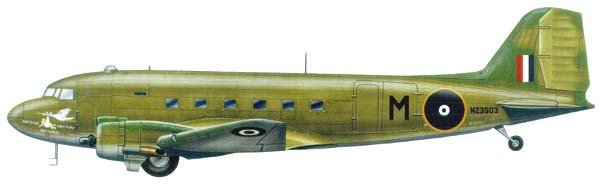
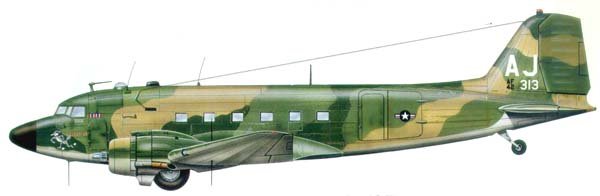
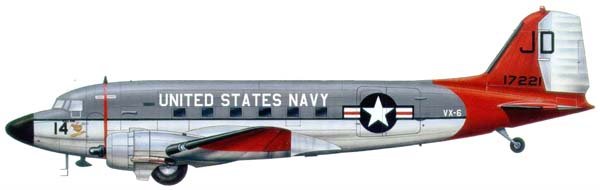
As befits an ordinary workhorse, the C-47 did not boast beauty or variety of liveries. Machines delivered to the Soviet Union had only one paint scheme – the classic American one: olive green on top and sides, gray underneath.
The difference lay in the demarcation line between the colors: straight or wavy. The wave could be two types – finer or bolder. Additionally, at the tail, the dividing line either rose towards the leading edge of the stabilizer (more often) or continued along the fuselage to its extreme point. Various silver, multi-colored camouflage “Douglases” mostly remained outside our nation. Yet, there were still nuances. The DC-3s serving troops in the Khalkhin Gol area in 1939 were painted most unusually. Their silver bodies were entirely covered with thin stripes resembling algae (green or brown). Against this “abracadabra” background, stars and side numbers almost disappeared. Other light-colored machines, such as the SB and I-153, were also painted similarly. A similar camouflage was repeated in Soviet aviation only once more – on several MBR-2s of the Northern Fleet.
Finally, during the war, several C-47s arrived where the main olive color was supplemented with small green spots – on the wing edges, fin, stabilizer, and engines. In the first wartime winters, some machines were painted with easily washable white paint on top. For repair repainting, green or dark grey paints were used.
Initially, “Douglases” were supplied to the Soviet Union with American markings, white stars in a blue circle. Here, red stars were applied over the white stars, and the blue circles were generally left. Then, red stars in a white circle, adapted to our needs, appeared – on the fuselage and under the wing. White circles, being demarking, were usually painted over in place. Only in the autumn of 1944 did American factories begin applying standard Soviet stars with an outline but without circles – on the fuselage and under the wing.
On all American machines, serial numbers were yellow on the tail – the first digit indicated the year of manufacture, the rest the aircraft number. Due to the international love of order among the military, these numbers were rarely painted over here – they were sometimes the only distinguishing mark of the aircraft in operation. But more often, units additionally applied side numbers of various colors, often unusually large for the Soviet Air Force, up to four digits. Aircraft that ended up in civil aviation received corresponding designations such as SSSR-L, -N, a number, and inscriptions “Aeroflot,” “Polar Aviation” – in white.
More individual distinctions on C-47s were rare, likely due to the calm nature of their pilots. For example, machines belonging to the 2nd ADON carried an arrow in the color of the corresponding regiment on the upper part of the fin. The airborne command post of the commander of the 2nd Guards ADD Corps, General E.F. Loginov, used by him since 1944, was not only re-equipped but also unusually painted. On both sides of the fin – a Red Banner with the inscription “2nd Guards Bryansk,” green spots, stars with a white outline against blue circles, and probably a red nose section.
The propeller blades on the C-47 were painted black, their tips yellow, and the leading edges were steel. On the edges of the wings, stabilizer, and fin – rubber de-icers, initially black, and dark gray during operation. The cockpit interior was green. Landing gear bays and similar areas were yellow.
C-47 Variants
C-47 (Original Military Model): initial military model, actually a DC-3A variant with military equipment, swivel seats, and R-1830-21 Twin Wasp radial piston engines; (1 unit built).
C-47A (Original Production Military Model): initial production military model with a 15.2 cm increased wingspan, new fuel tank arrangement, R-1830-92 radial piston engines, a small astrodome, capable of carrying 2722 kg of payload or 28 paratroopers, or 14 wounded with three attendants (965 aircraft built).
C-47B: improved C-47 aircraft with a 24-volt electrical system, instead of the 12-volt system of the previous model (5253 machines built).
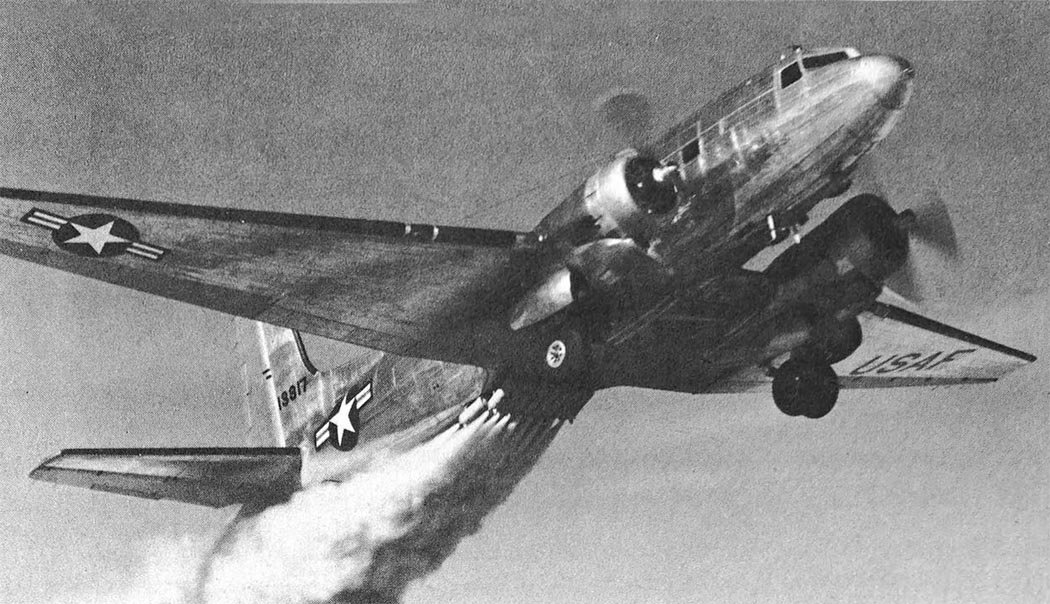
AC-47D: post-war modification, used in Korea for reconnaissance operations and dropping illumination bombs.
SC-47B: post-war search and rescue variant, redesignated HC-47A in 1962.
TC-47B: post-war modification for serial production aircraft intended for personnel transport.
C-47D: variant developed for flights “over the hump” between India and China, with improved heating and R-1830-90C radial piston engines with two-speed superchargers; this model was not entirely successful, and many aircraft were later brought to C-47D standard (3232 machines built).
C-47E: navigation training aircraft model (133 aircraft built).
C-47F: C-47B modification for personnel transport. XC-47C: experimental model fitted with two Edo Model 78 amphibious floats, each capable of holding approximately 1136 liters of fuel; 150 float kits were supplied for field installation.
C-47G: designation for the C-47B aircraft after removal of the upper supercharger.
C-47H: designation for 26 air route control aircraft, used in military transport aviation from 1953 to 1962, when they received the new designation EC-47D.
AC-47H: 1965 designation for aircraft equipped with gun platforms featuring three 7.62 mm General Electric Miniguns, firing through the fourth and fifth windows and through the open door on the left side of the fuselage.
SC-47H: search and rescue variant; redesignated HC-47D in 1962.
YC-47F: one Super DC-3 aircraft, evaluated by the US Air Force under the designation YC-129.
EC-47H: designation for C-47H and C-47J aircraft, equipped with special electronic equipment for use in the Vietnam War.
EC-47L: C-47A version, specially equipped for radio electronic reconnaissance in Vietnam.
EC-47M: C-47D variant, equipped for electronic reconnaissance in Vietnam.
EC-47N: variant with R-2000-4 engines, equipped for electronic reconnaissance in Vietnam.
C-47 (Non-standard): non-production variants, accepted at the construction stage or requisitioned during the war.
C-53 Skytrooper: troop transport variant with 28 seats, a glider towing hook, no cargo door, and equipped with R-1830-92 radial piston engines (221 aircraft built in Santa Monica).
C-53A Skytrooper: C-53 aircraft, modified in 1942 with full-span slotted flaps and an air-thermal anti-icing system.
C-53B Skytrooper: eight C-53 aircraft, modified in 1942 for Arctic flights with winter-rated equipment and additional fuel tanks.
C-53C Skytrooper: identical to the C-53 aircraft, with seats installed across the fuselage rather than along the sides.
C-53D Skytrooper: personnel transport aircraft with seating for 21 people and generally similar to the C-47B aircraft (17 machines built in Oklahoma City).
C-117B Skytrooper: 11 C-117A aircraft, modified by removing the upper superchargers from their R-1830-90C radial piston engines.
VC-117B: designation for VC-47 models, converted to C-117B aircraft standard.
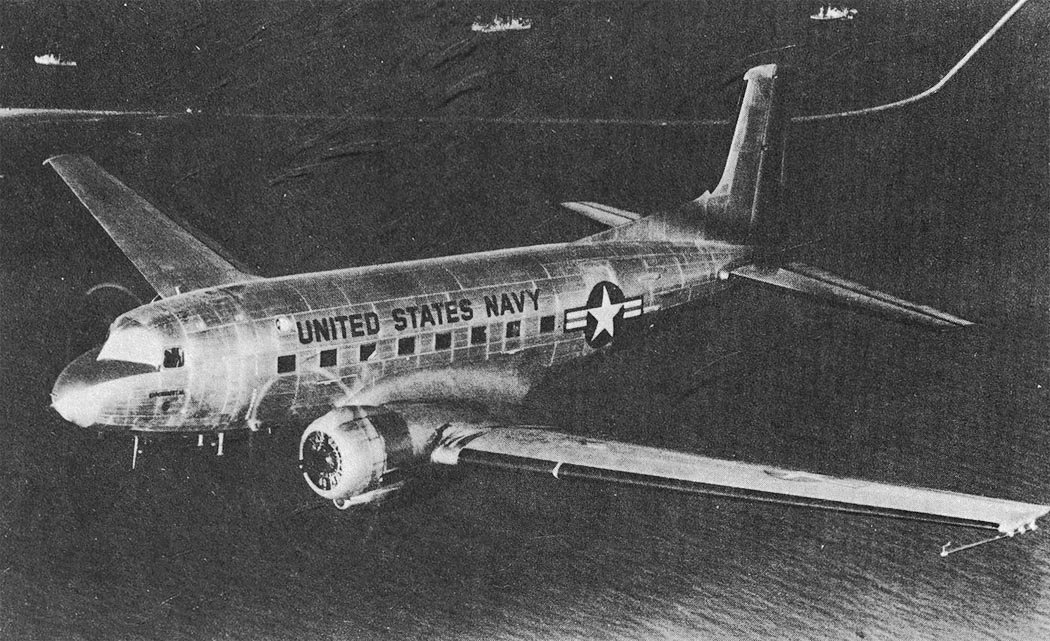
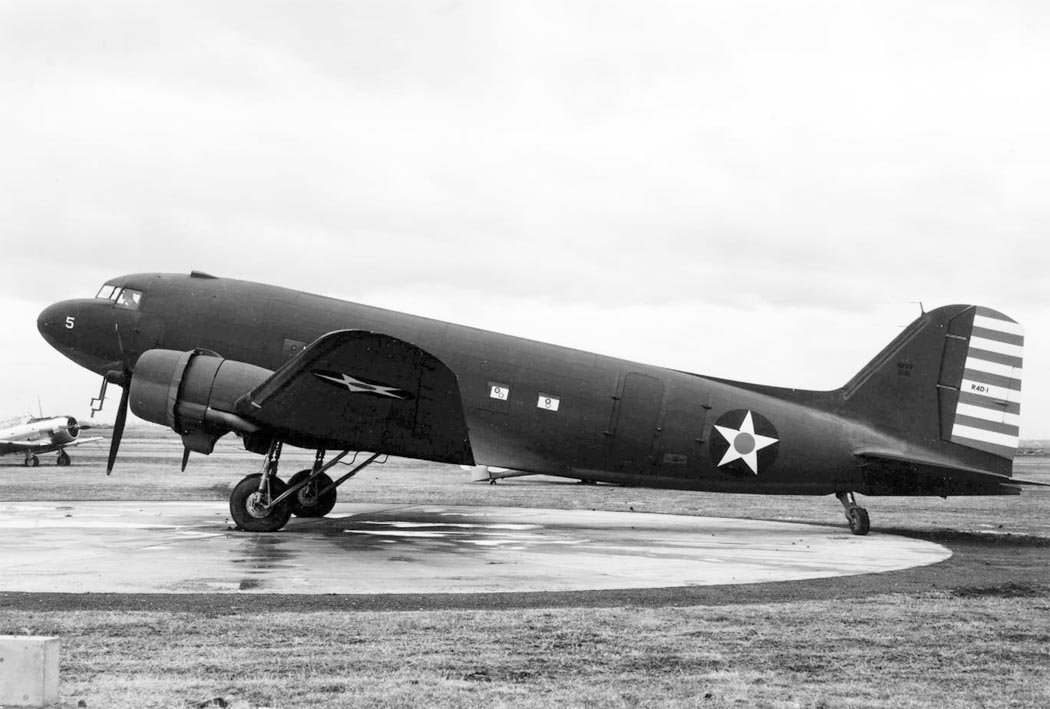
R4D-1: original cargo model for the US Navy, generally similar to the C-47 aircraft, but with additional naval equipment (100 machines built in Long Beach).
R4D-2: two DC-3 aircraft, used by the US Navy as personnel transport aircraft; they later received the designation R4D-2F and R4D-2Z.
R4D-3: 20 C-53 transport aircraft for passenger transport, received from the US Air Force.
R4D-4: 10 DC-3 aircraft, used by the US Navy as passenger transport aircraft; some of them were later converted into electronic countermeasures aircraft under the designation R4D-4Q.
R4D-5: 238 C-47A aircraft, received by the US Navy under contracts concluded by the US Air Force; surviving aircraft received the new designation C-47H in 1962.
R4D-5E: R4D-5 aircraft, modified for special radio electronic operations.
R4D-5L: R4D-5 aircraft, modified for operation in the Arctic and Antarctic; later received the designation LC-47H.
R4D-5Q: R4D-5 aircraft, modified for radio electronic countermeasures and radar jamming; later received the designation EC-47H.
R4D-5R: R4D-5 aircraft, modified for passenger transport; later TC-47H.
R4D-5S: R4D-5 aircraft, modified for training in naval aviation combat application; later SC-47H.
R4D-5T: R4D-5 aircraft, modified for navigation training.
R4D-5Z: R4D-5 aircraft, modified for personnel transport; later VC-47H.
R4D-6: 150 C-47B aircraft, received by the US Navy under contracts concluded by the US Air Force; surviving machines received the designation C-47J in 1962; variants equivalent to various R4D-5 models were designated as R4D-6E, R4D-6L (LC-47J), R4D-6Q (EC-47J), R4D-6R (TC-47J), R4D-6S (SC-47J), R4D-6T and R4D-6Z (VC-47J).
R4D-7: 47 EC-47B aircraft received by the US Navy under contracts concluded by the US Air Force; surviving examples received the designation TC-47K in 1962.
Dakota I (RAF): British Air Force aircraft, analogous to the C-47 variant (52 aircraft were received under Lend-Lease).
Dakota II (RAF): British Air Force aircraft, analogous to the C-53 variant (nine aircraft were received under Lend-Lease).
Dakota III (RAF): British Air Force aircraft, analogous to the C-47A variant (12 aircraft were received from the US Air Force and 950 supplied under Lend-Lease).
Dakota IV (RAF): British Air Force aircraft, analogous to the C-47B variant (896 aircraft were received under Lend-Lease).
YR4D-8: US Navy designation for the experimental YC-129/YC-47F aircraft, when its evaluation tests for naval application were conducted.
R4D-8 (Super Gooney): designation for 100 US Navy aircraft, modified to Super DC-3 standard from R4D-5, R4D-6, and R4D-7; some aircraft were also modified for special functions, for example, R4D-8T (TC-117D) – training aircraft, R4D-8Z (VC-117D) – personnel transport aircraft, and R4D-8L (LC-117D) – winter transport variant; after 1962, all surviving R4D-8s received the C-117D series designation.
Technical Specifications
| Modification | S-47A |
| Wingspan, m | 29.11 |
| Length, m | 19.43 |
| Height, m | 5.16 |
| Wing area, m2 | 91.69 |
| Empty weight | 8103 |
| Normal takeoff weight | 11793 |
| Maximum takeoff weight | 14061 |
| Engine type | 2 Piston engines Pratt Whitney R-1830-93 Twin Wasp |
| Power, hp | 2 x 1200 |
| Maximum speed, km/h | 369 |
| Cruising speed, km/h | 257 |
| Ferry range, km | 6115 |
| Practical range, km | 2575 |
| Maximum rate of climb, m/min | 345 |
| Service ceiling, m | 7315 |
| Crew | 3 |
| Payload | 2722 kg of cargo or 28 paratroopers, or 14 wounded with 3 attendants |
Image and diagram gallery of the C-47 Skytrain
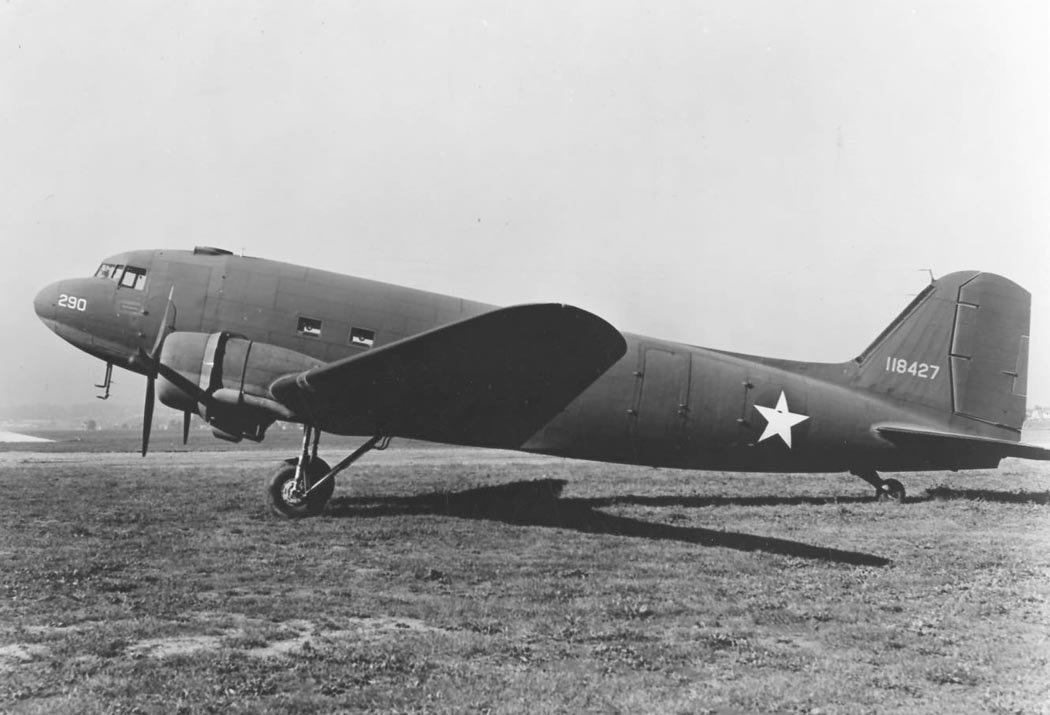 C-47 Skytrain |
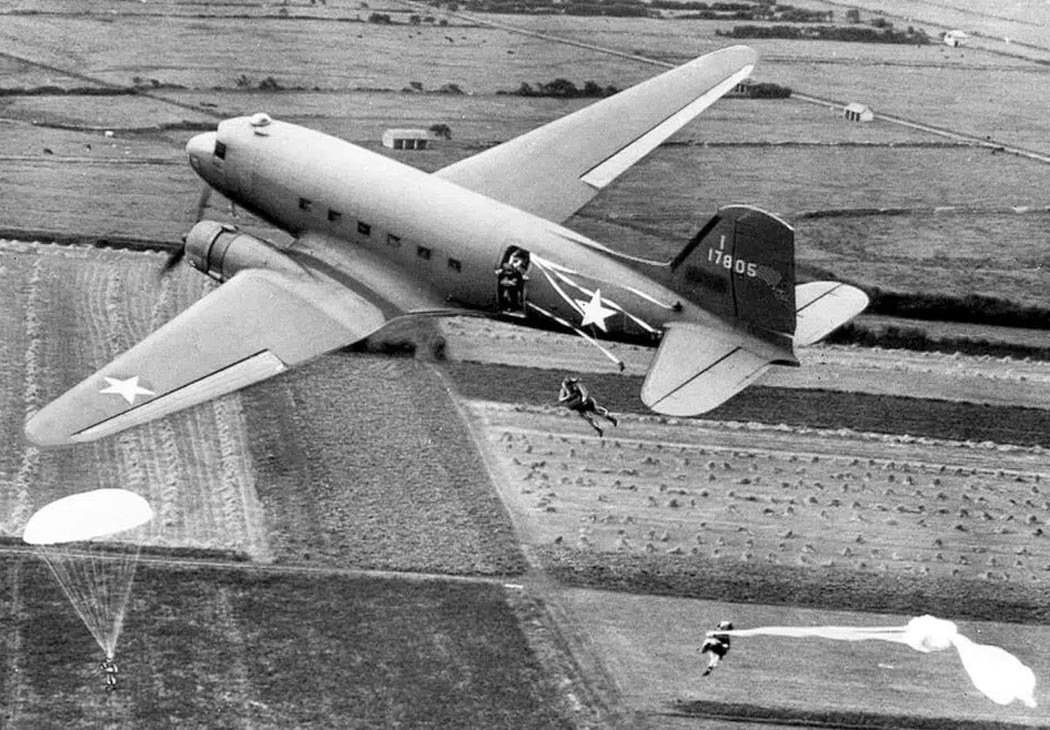 C-47 Skytrain |
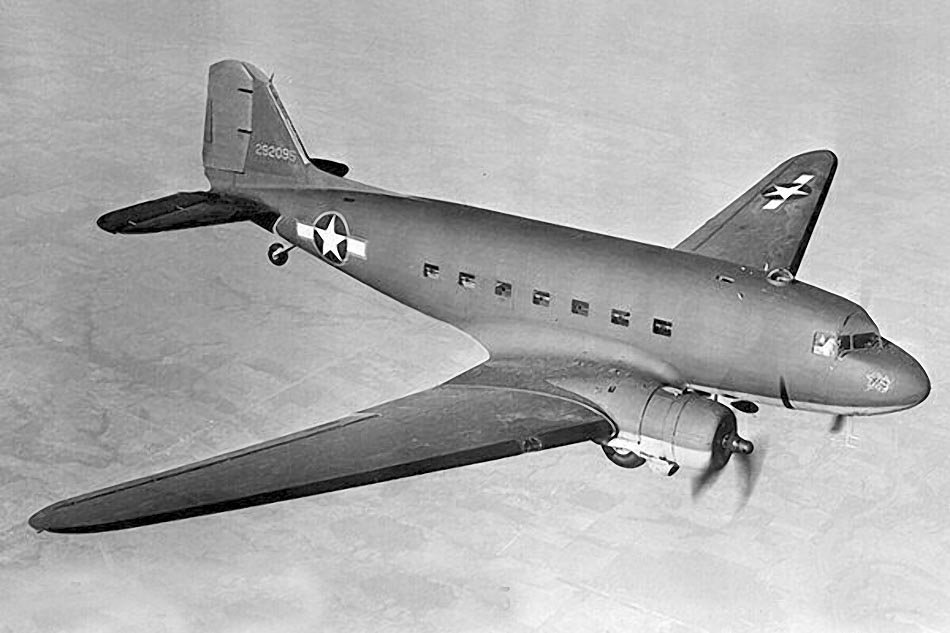 C-47 Skytrain |
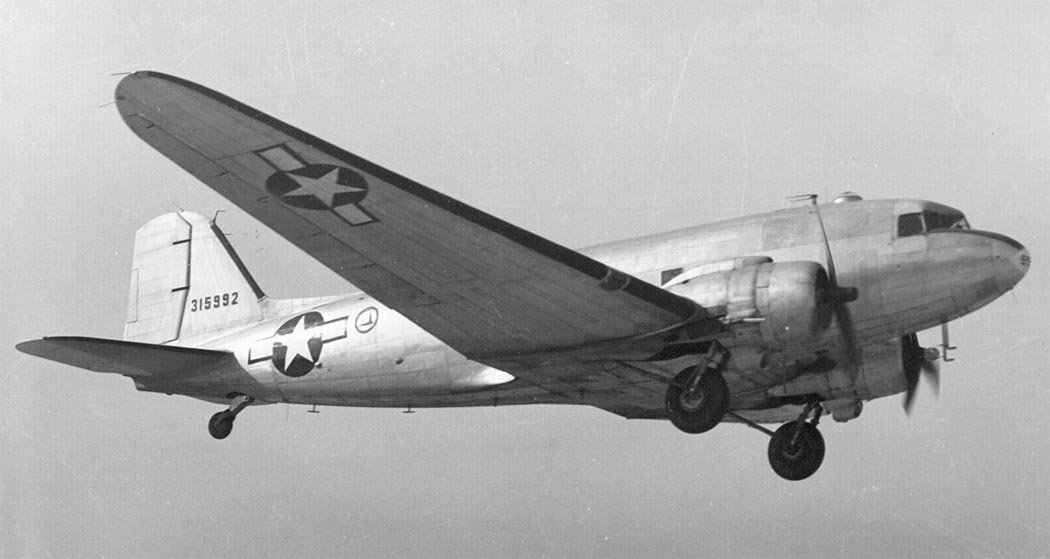 C-47 Skytrain |
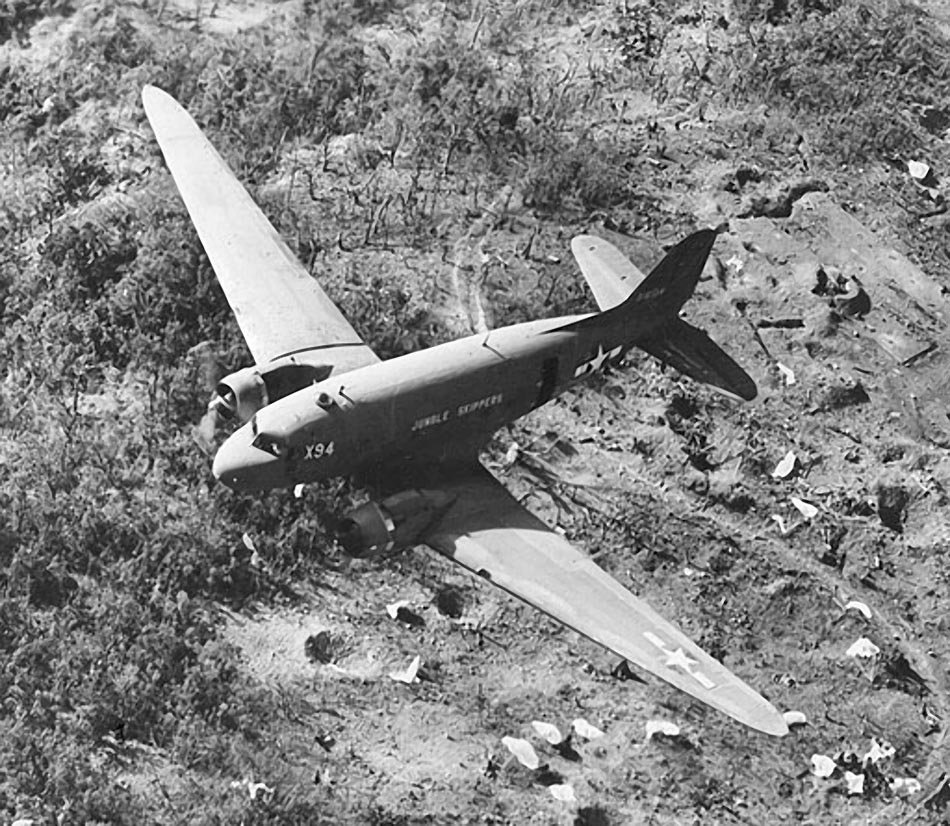 C-47 Skytrain |
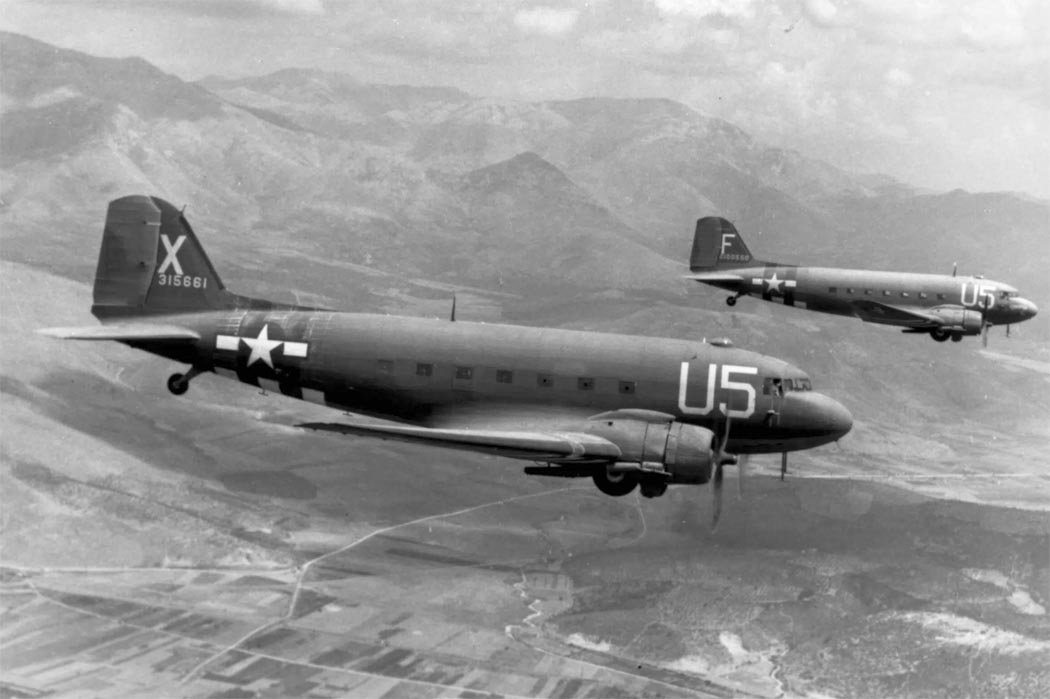 C-47 Skytrain |
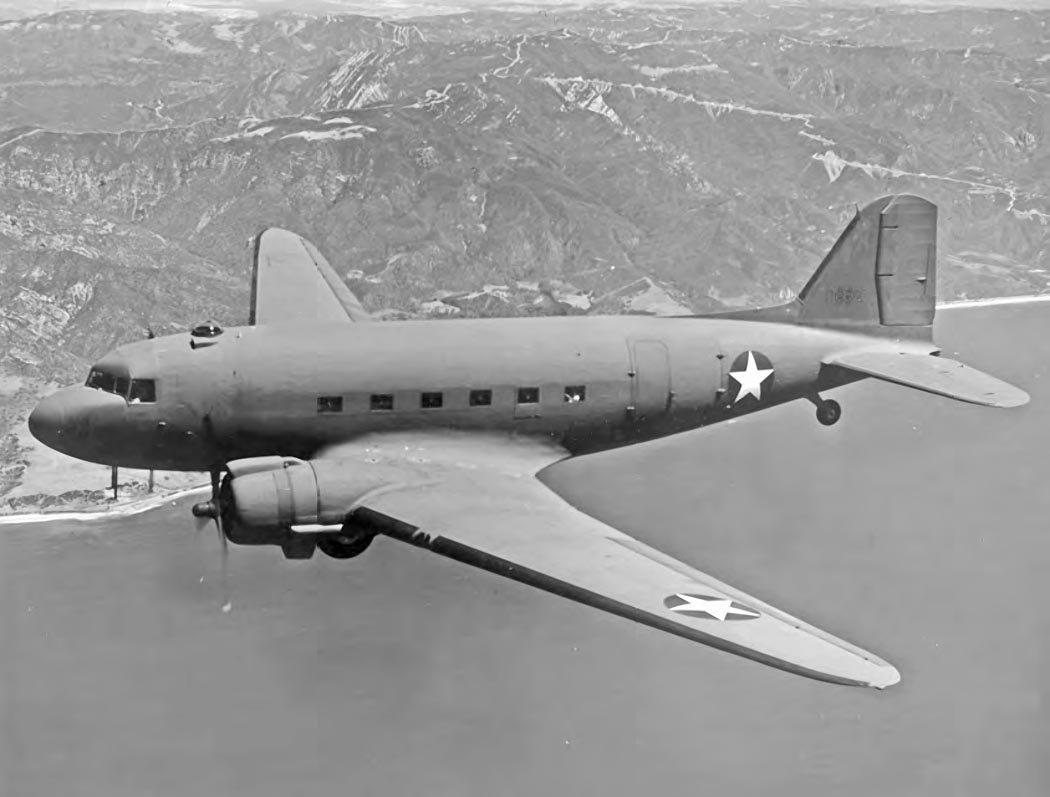 C-47 Skytrain |
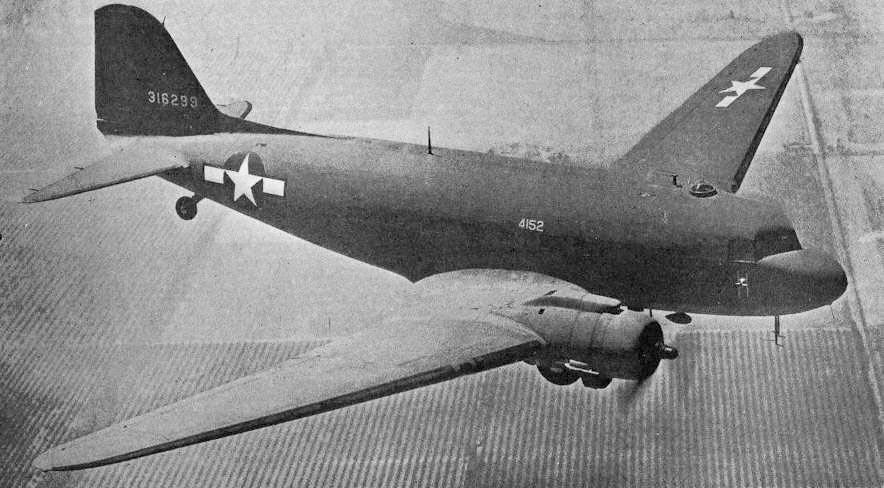 C-47 Skytrain |
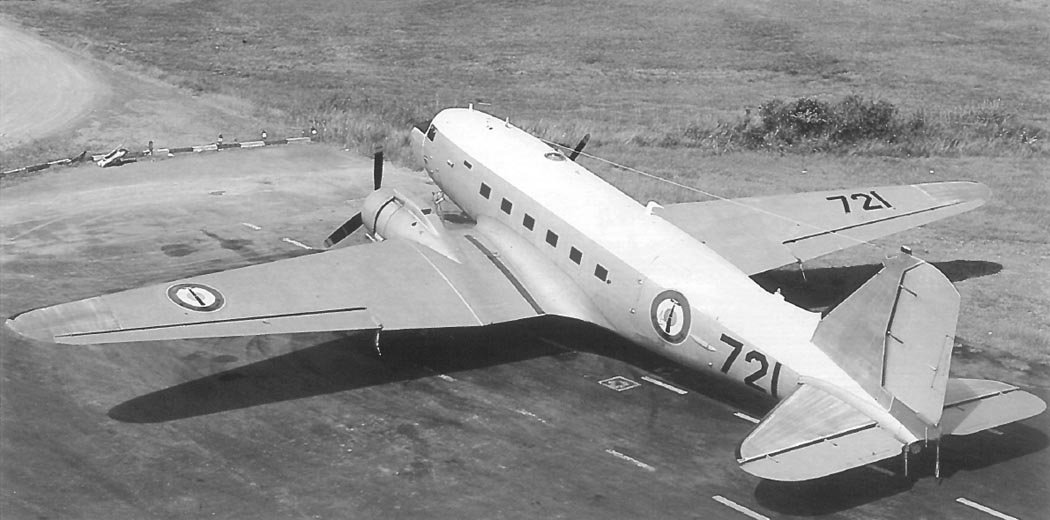 C-47 Skytrain |
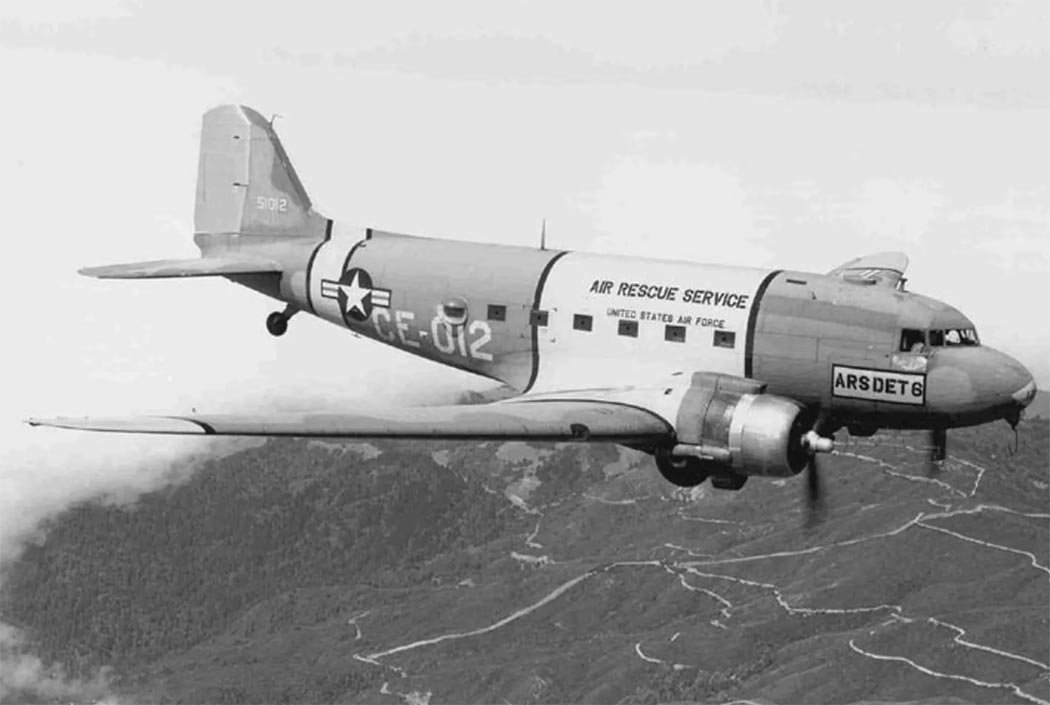 C-47 Skytrain |
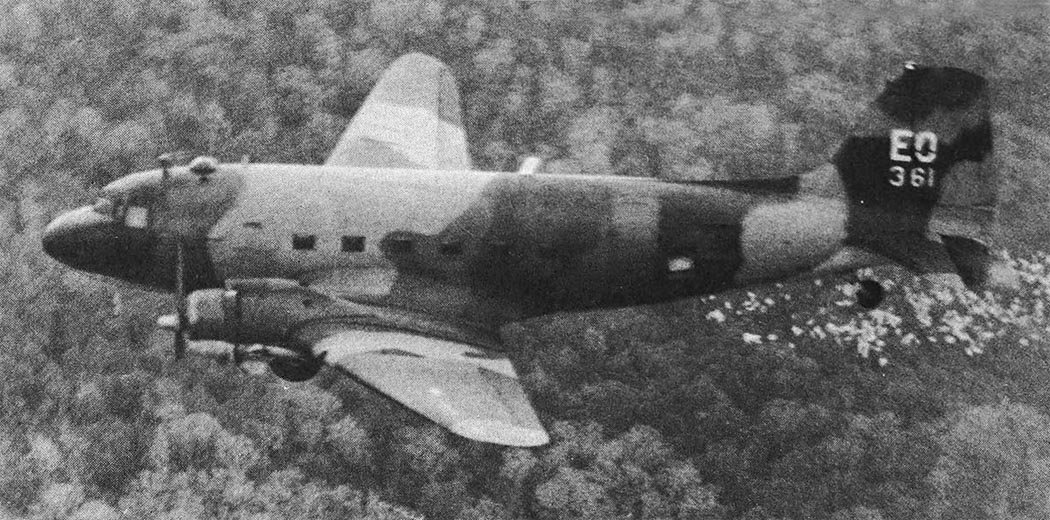 C-47 Skytrain |
 C-47 Skytrain |
 C-47 Skytrain |
 C-47 Skytrain |
 C-47 Skytrain |
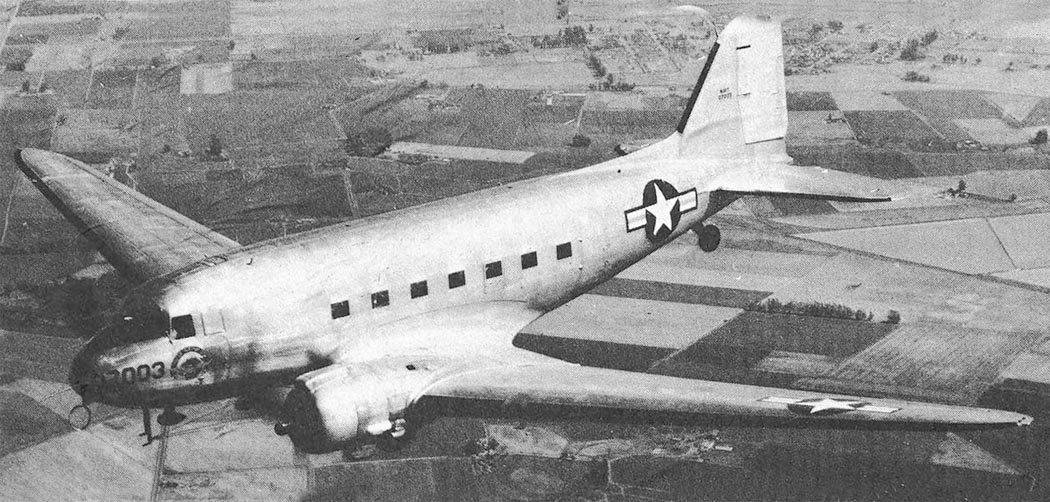 C-47 Skytrain |
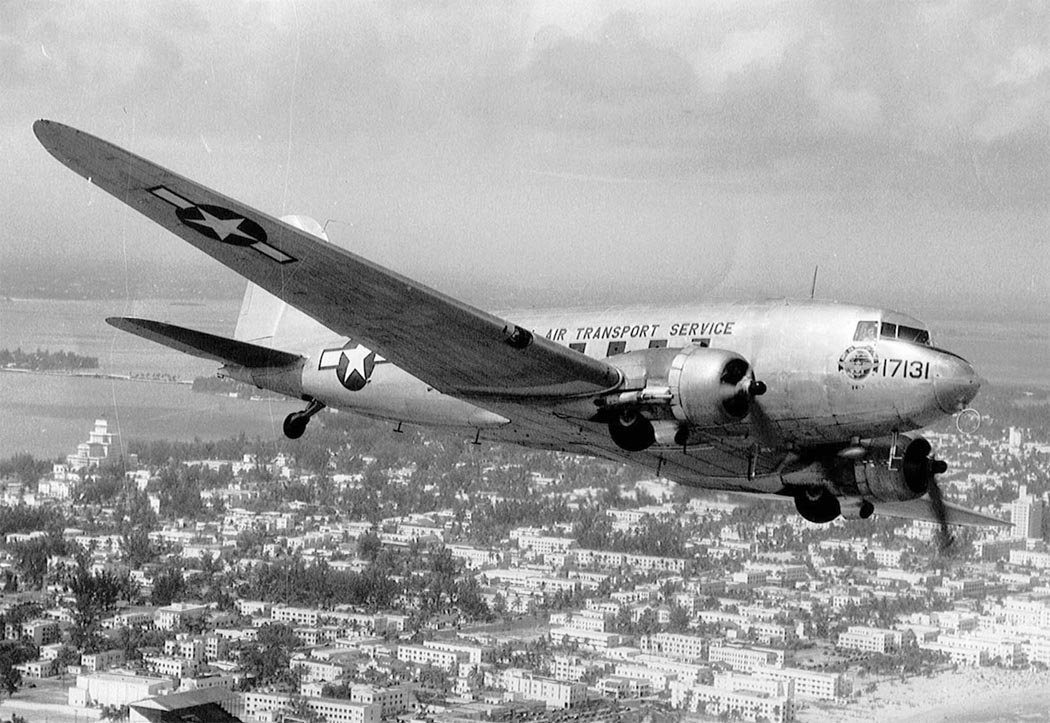 C-47 Skytrain |
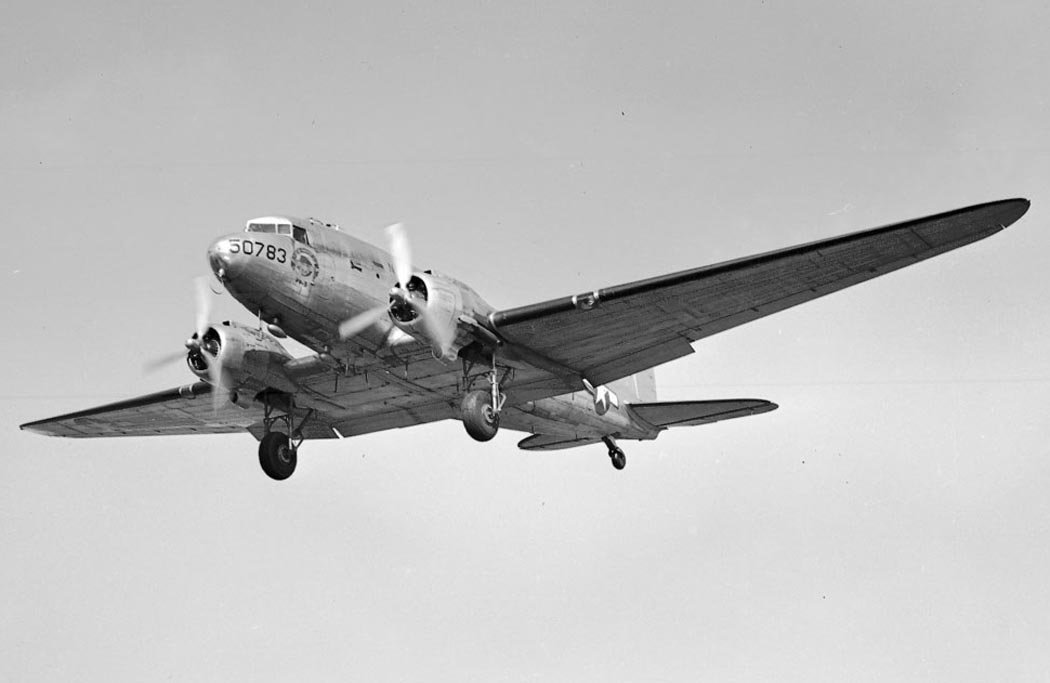 C-47 Skytrain |
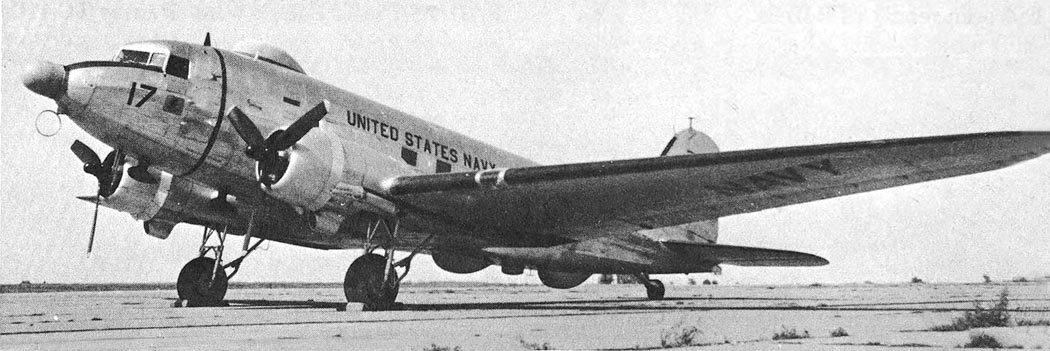 C-47 Skytrain |
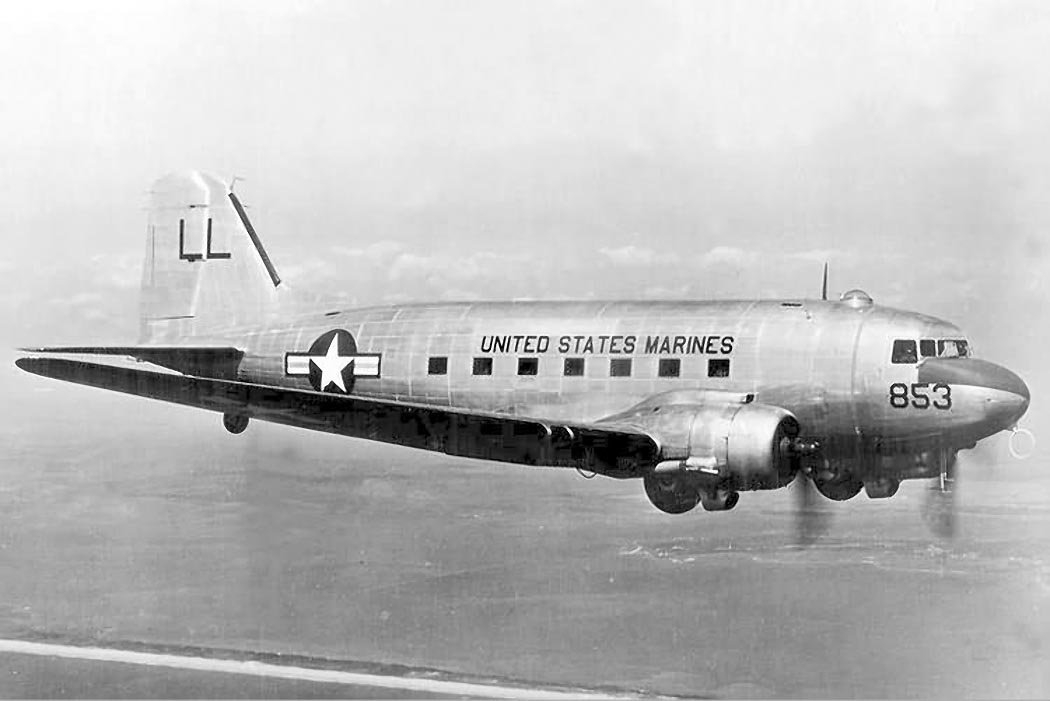 C-47 Skytrain |
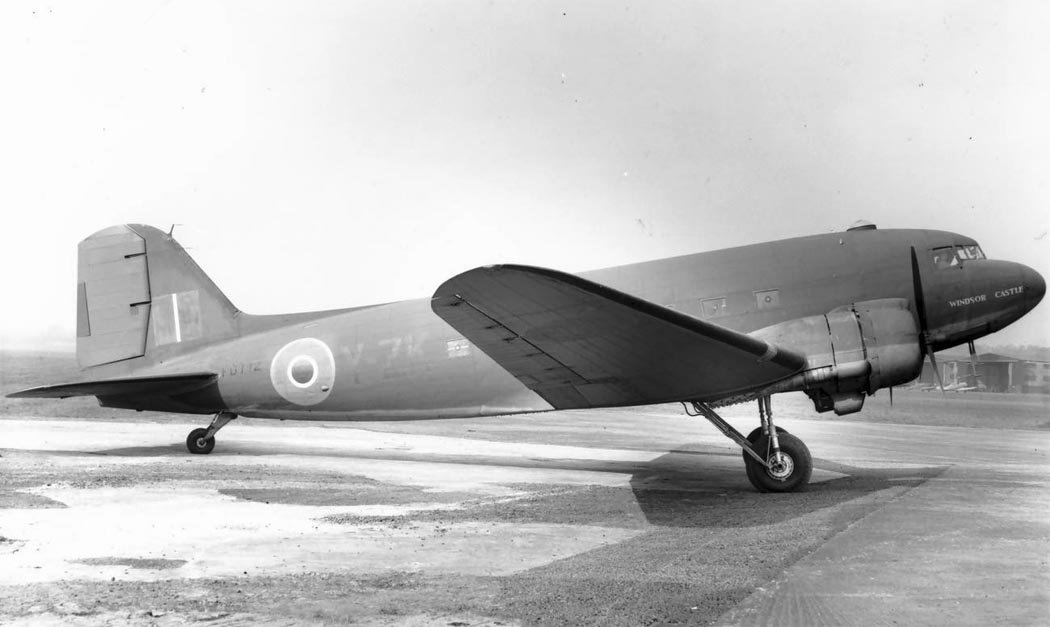 C-47 Skytrain |
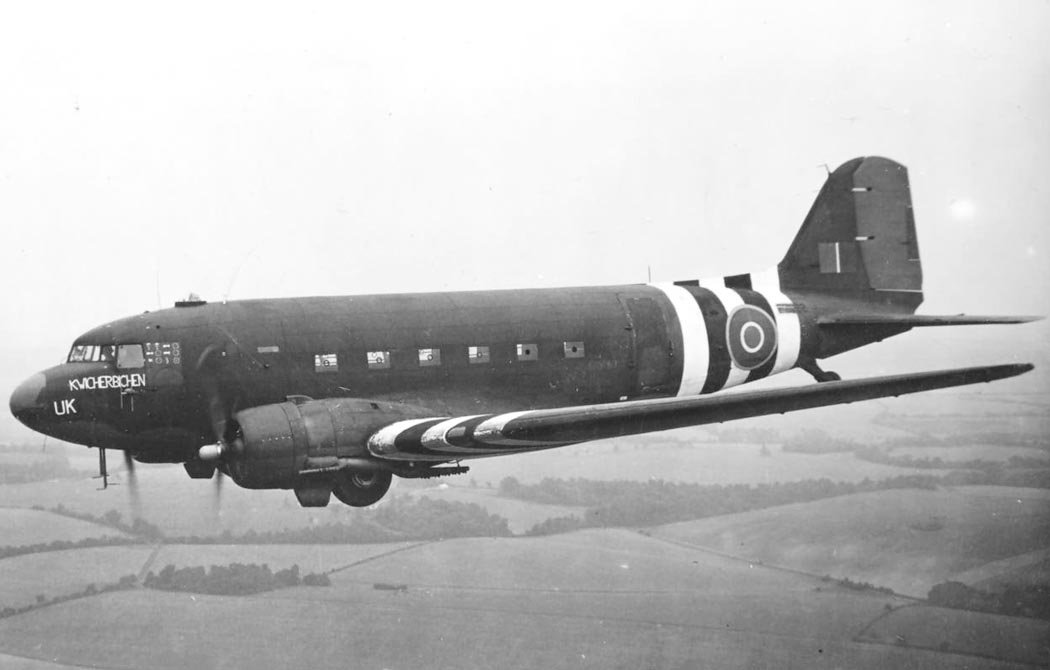 C-47 Skytrain |
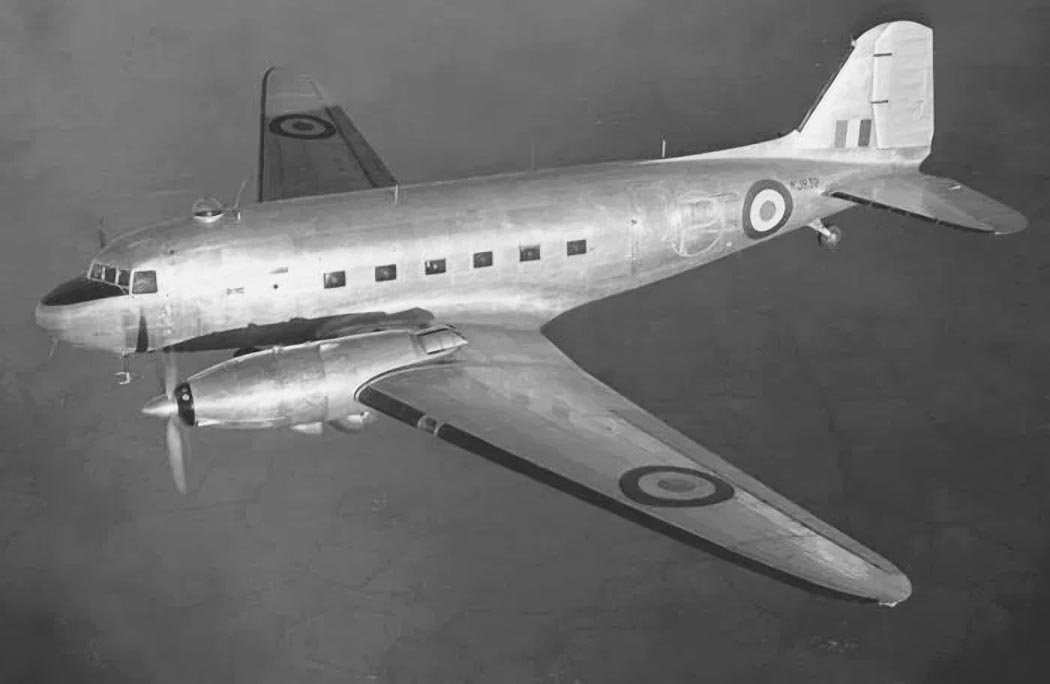 C-47 Skytrain |
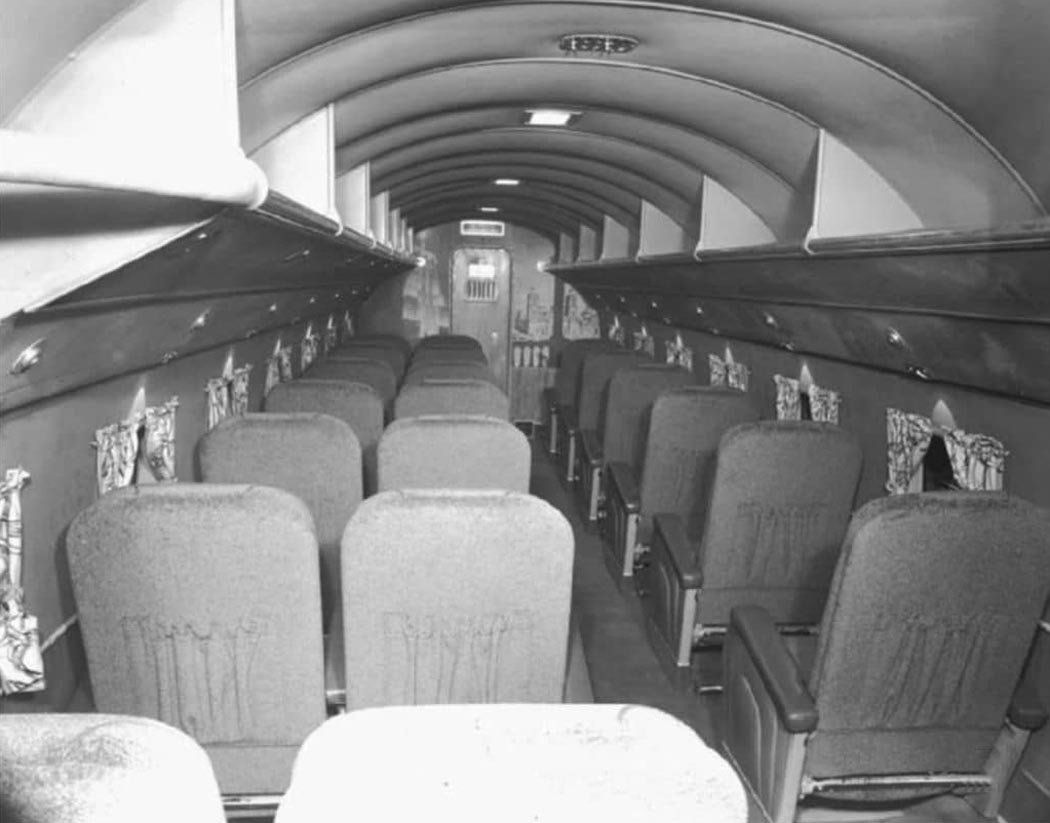 C-47 Skytrain |
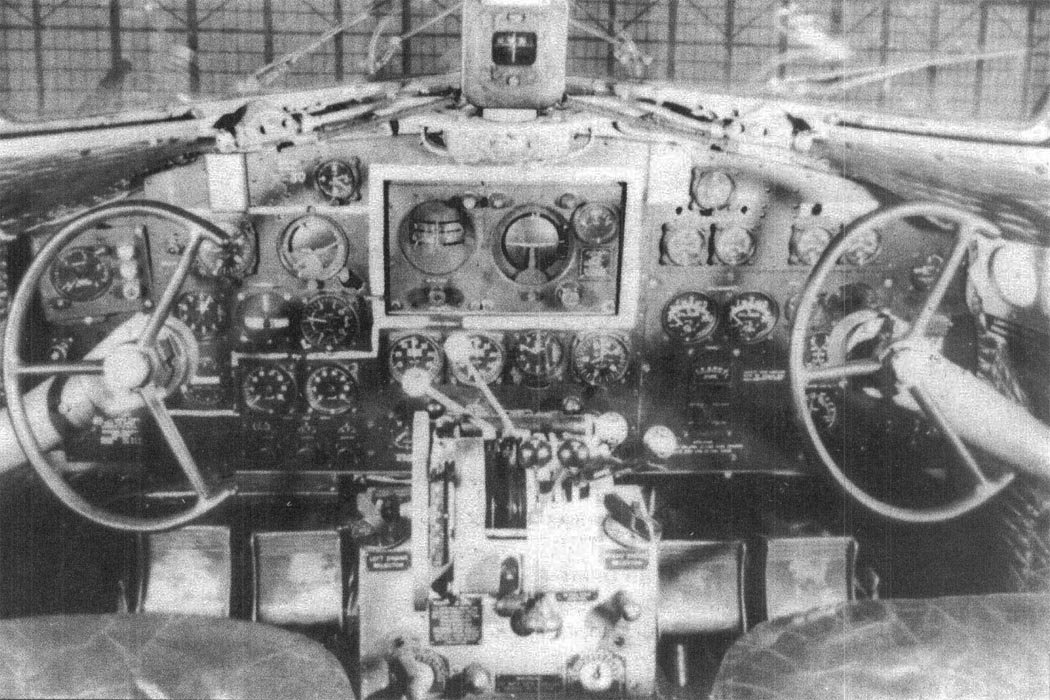 C-47 Skytrain |
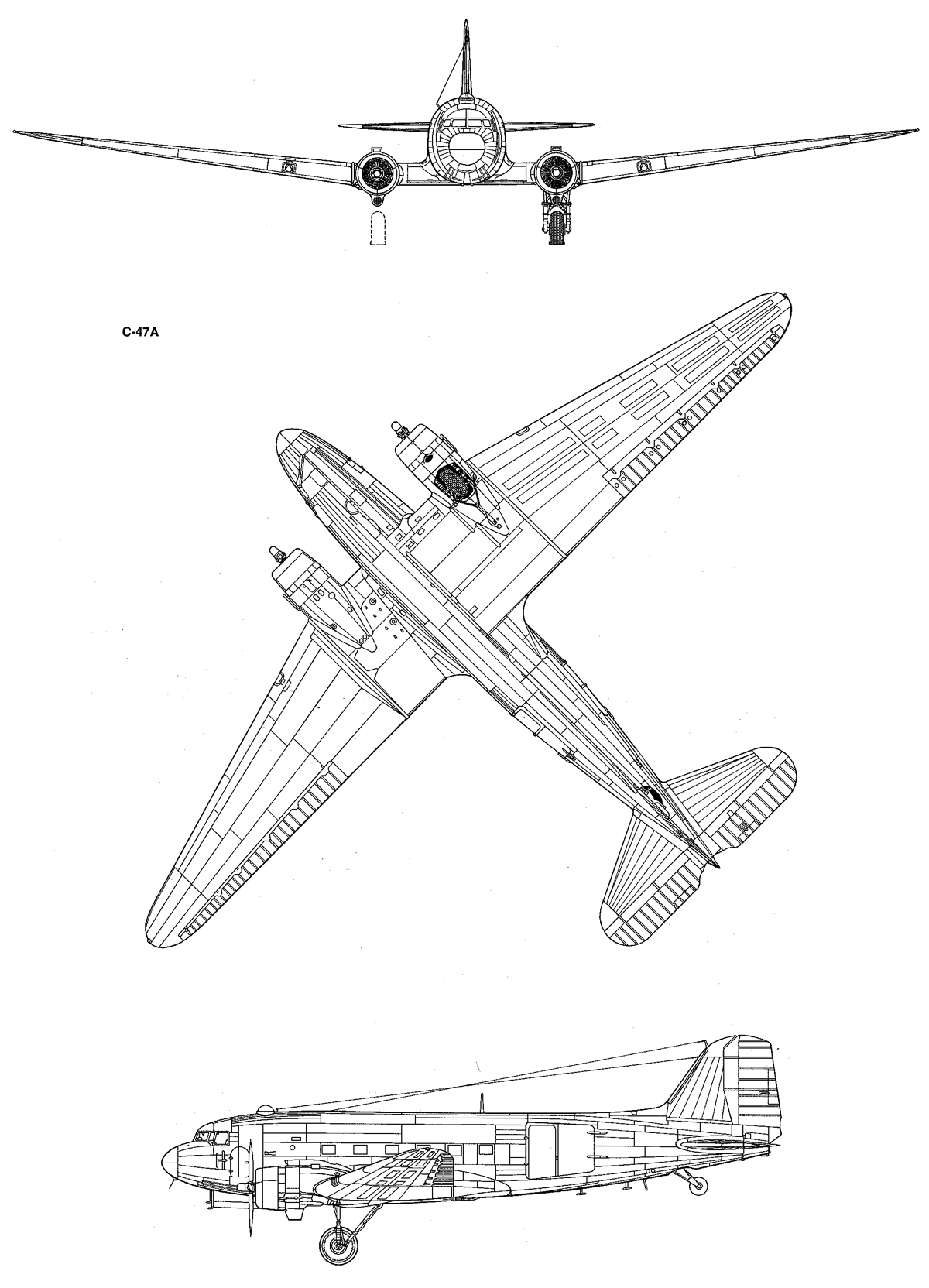 C-47 Skytrain |
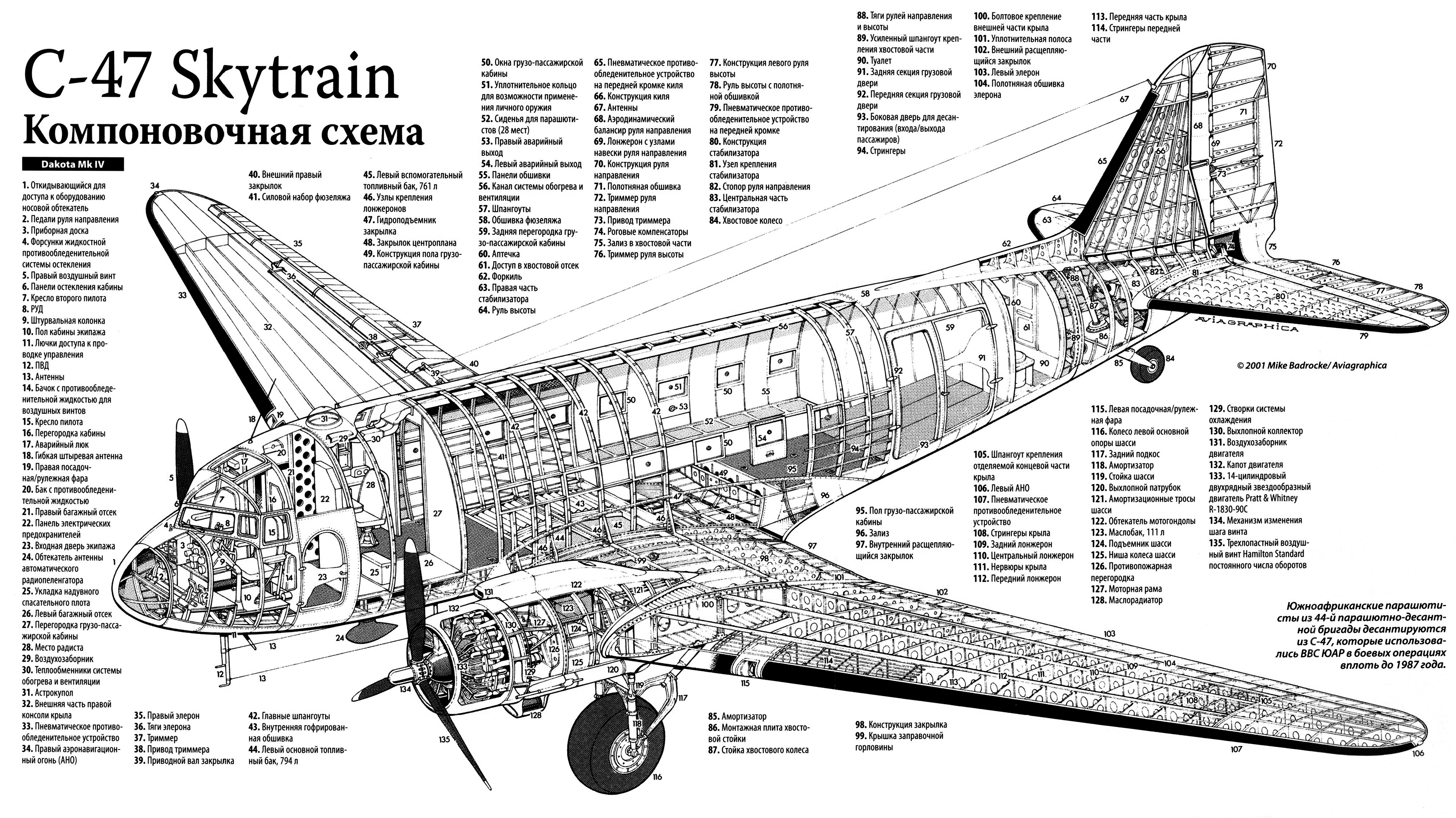 C-47 Skytrain |
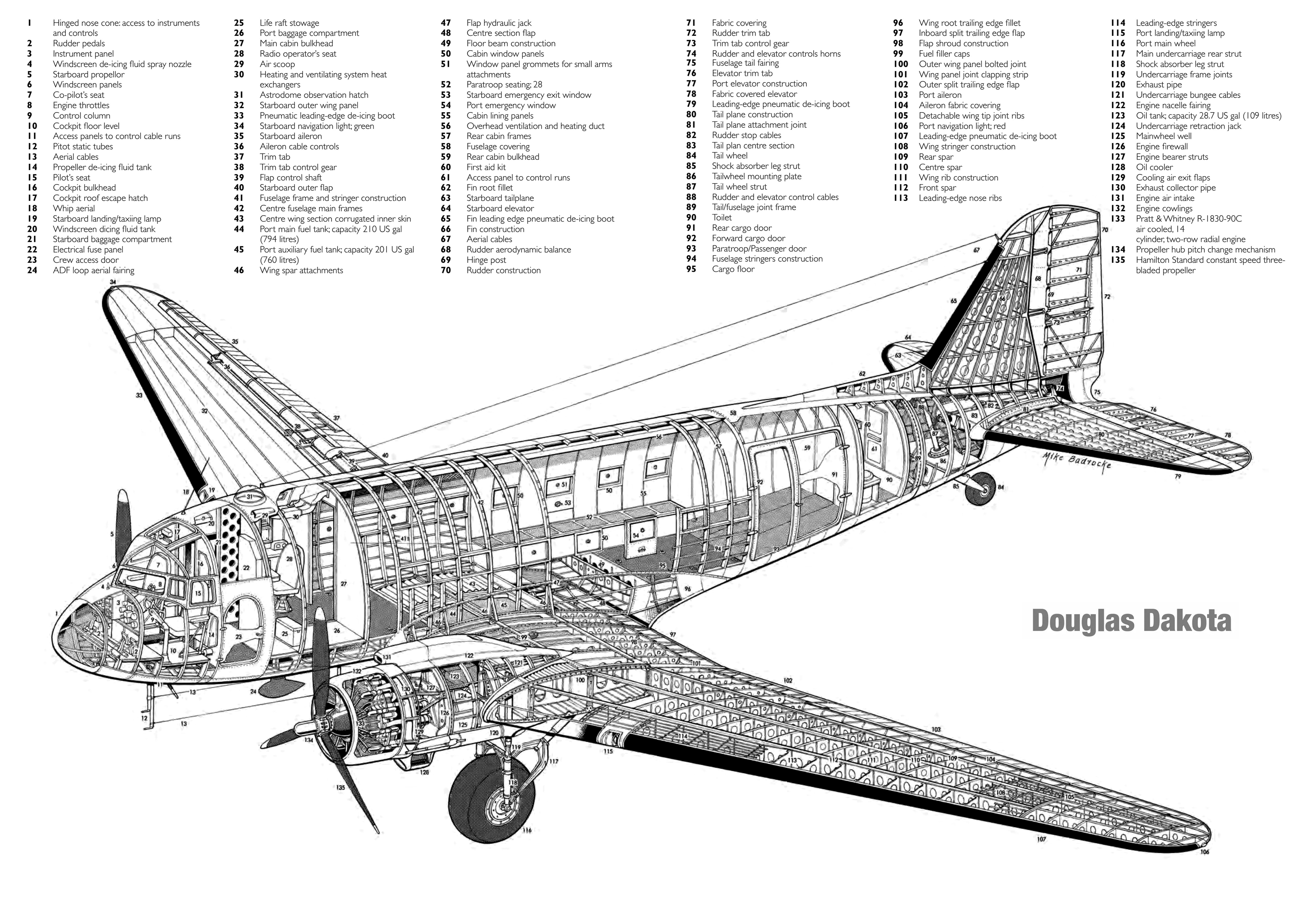 C-47 Skytrain |
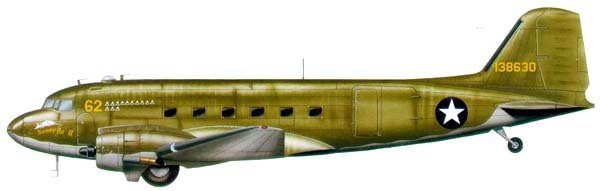 C-47 Skytrain |
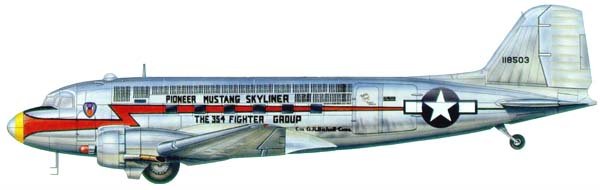 C-47 Skytrain |
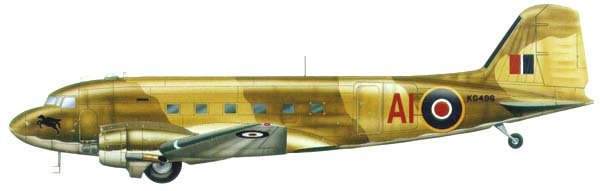 C-47 Skytrain |
 C-47 Skytrain |
 C-47 Skytrain |
 C-47 Skytrain |