
The canard scheme is rarely used in gliders, and each instance of its application deserves special attention. This time, our focus falls on the remarkable Canard 2FL from the Swiss firm Avifiber, the brainchild of Hans U. Farner, a qualified engineer and university professor, from the late 1970s. The first flight of this glider took place on September 7, 1977.
The 2FL belongs to the class of ultralight aircraft designed for foot-launch. It functions much like a hang glider but features a rigid wing. Such ingenuity allowed, for instance, pilots to operate it without obtaining flight documents, thus opening access to flying for anyone interested, free from bureaucratic hurdles.
Innovative Design and Launch Procedure
During launch, the pilot would run on their own feet. After liftoff, the legs were retracted into the fuselage, the pilot would turn horizontally, and the lower hatch (and upper canopy) would close for fuselage streamlining. Landing could be accomplished either on a skid beneath the fuselage or on the pilot’s feet.
The main wing was positioned above the fuselage on two profiled pylons, which were attached mid-span of each half-wing. This formed a closed triangular frame that also served as the vertical stabilizer. The primary goal of this arrangement was to place the wing as far as possible from the downwash zone behind the horizontal stabilizer, into undisturbed air, which is particularly crucial at high angles of attack.
The construction was fiberglass, with spars and skin formed in a matrix from fiberglass laminate, extensively using Styrofoam foam filler. Future plans included using Kevlar fiber to save two-thirds of the structural weight. For transport, the aircraft’s wing was disassembled into three 4.8-meter sections, which could be conveniently loaded onto a car roof or a trailer.
The Control System and its Tragic Fate
The control system was mixed. Longitudinal (pitch) control was of the “balance” type, similar to hang gliders, where the pilot shifted their body to change the aircraft’s center of gravity. Lateral (roll) control was achieved using ailerons and an all-moving canard (PGO); each canard surface could twist (or skew) by 5 degrees relative to the aircraft’s longitudinal axis. Additionally, air brakes were installed on the vertical stabilizer to control the rate of descent.
Ultimately, the complexity of this control system sealed the fate of the aircraft. In one of its flights, its creator, Hans U. Farner, died due to a control system failure: the pilot’s seat, located on rails, slid during takeoff, shifting the center of gravity beyond acceptable limits. After the accident, co-owner H. Bucher bought back several previously sold gliders (reportedly four) and attempted to correct the design flaw and resell them. However, another incident further ruined the design’s reputation, and the Canard 2FL faded into obscurity. One example of the glider is preserved in the Lucerne Transport Museum in Switzerland.
It seems to me that the designer, a professor, unnecessarily experimented with balance control. Had he used the canard as a pitch control surface, he might not have encountered such trouble. However, perhaps he operated under some higher principles, which we can no longer inquire about since he passed away.
Technical Specifications
| Modification | Canard 2FL |
| Wingspan, m | 13.50 |
| Length, m | 4.90 |
| Aspect ratio | 20.0 |
| Height, m | 1.80 |
| Wing area, m2 | 13.00 |
| Empty weight | 120 |
| Maximum weight | 170 |
| Maximum speed, km/h | 100 |
| MAC | 31 |
| MAC speed, km/h | 60 |
| Minimum descent rate, m/s | 0.60 |
| Speed at minimum descent rate, km/h | 50 |
| Crew | 1 |
Image and diagram gallery of the Canard 2FL
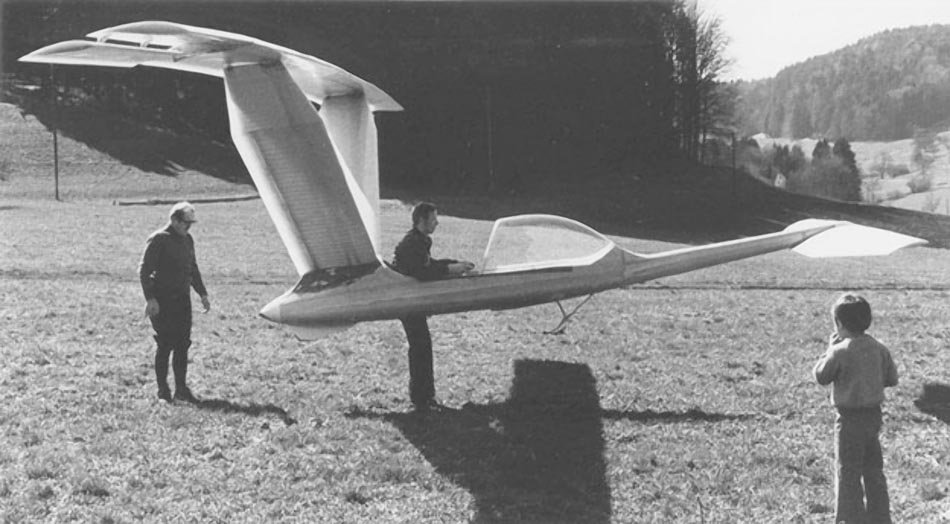 Canard 2FL |
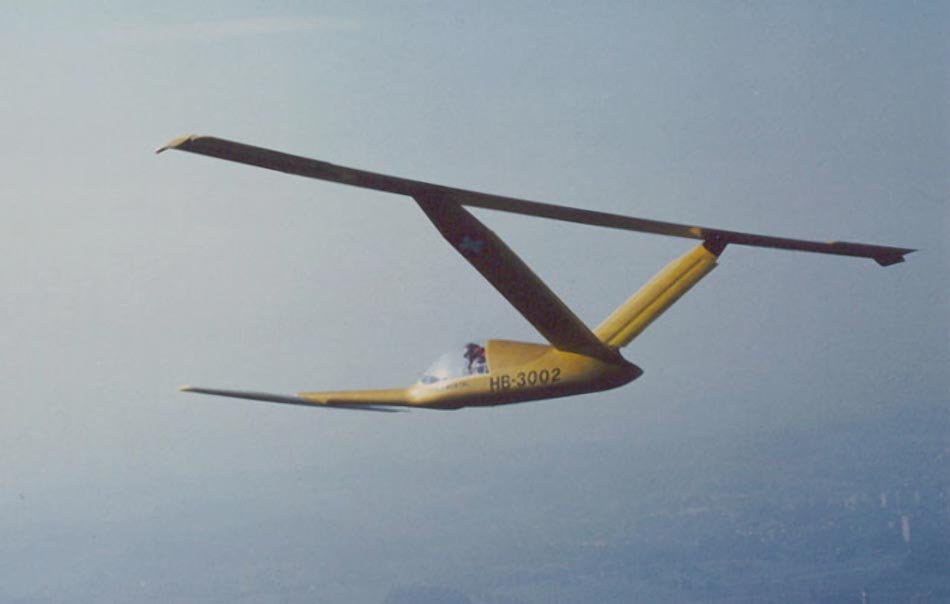 Canard 2FL |
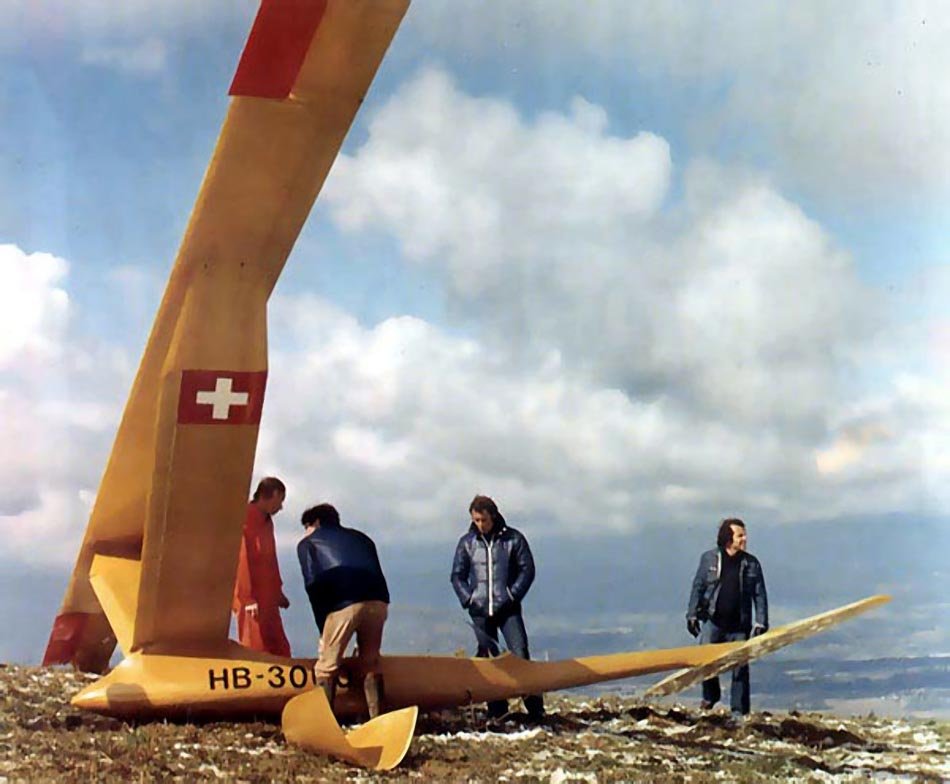 Canard 2FL |
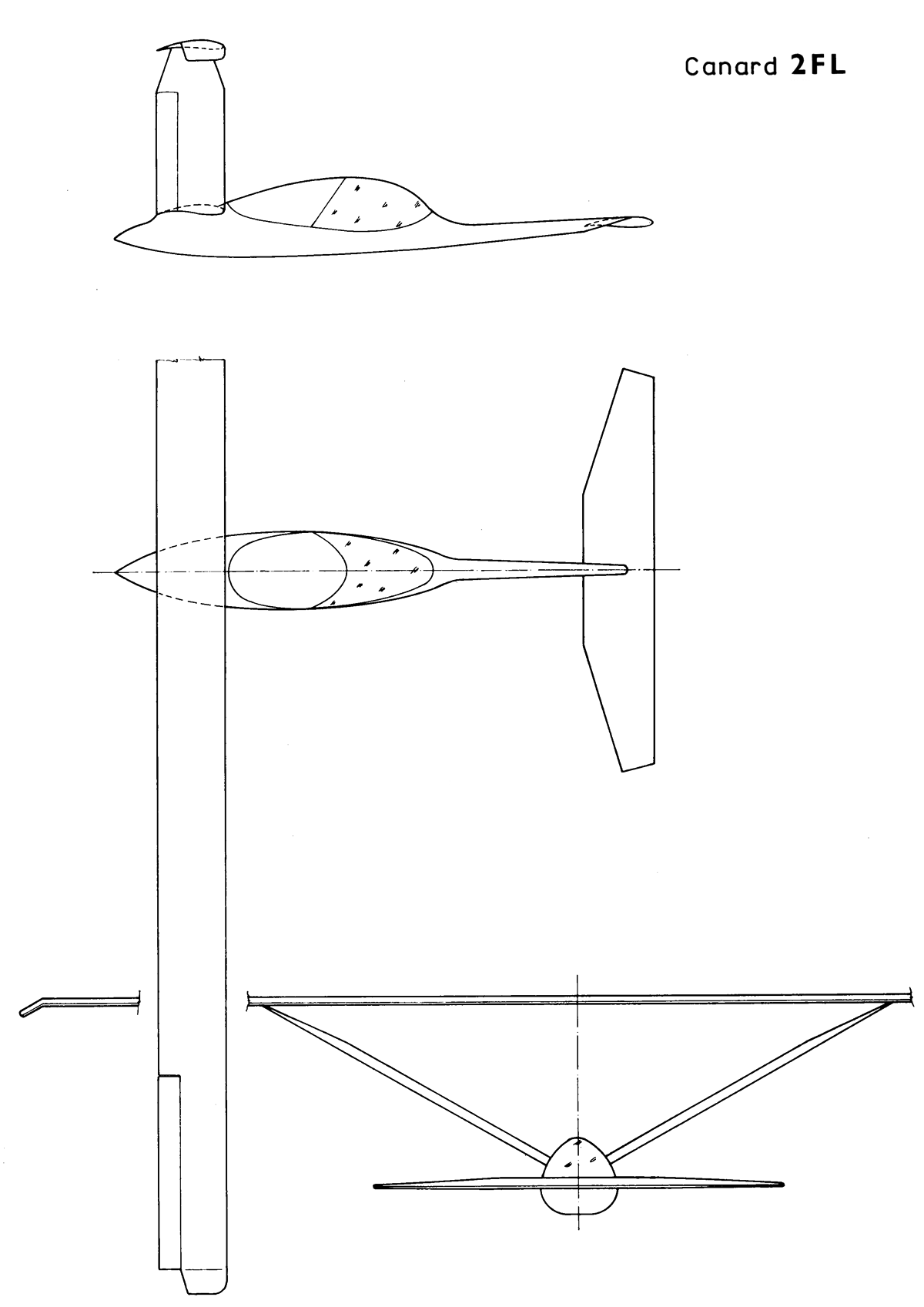 Canard 2FL |