
At the main European business aviation exhibition, EBACE 2012, held in Geneva, Switzerland, Cessna unveiled a new program. The Citation Longitude represents the American manufacturer’s latest attempt to establish a position in the super midsize class, three years after abandoning the Columbus program.
To reduce research and development costs, developers endowed the Longitude with flight performance characteristics virtually analogous to the Columbus. However, its dimensions were inherited from the Citation Latitude, a new model introduced only six months prior.
Consequently, its cabin is 15 cm narrower and 18 cm shorter than what its unsuccessful predecessor was intended to have. Cessna aimed to obtain a type certificate from the US Federal Aviation Administration (FAA) and deliver the first aircraft to customers in Q4 2017, which is three and a half years later than the Columbus was supposed to enter service.
Technical Characteristics and Design
Some structural features of the Columbus were adapted for the new model, including a large T-tail and a moderately swept wing. However, the systems and equipment will be simpler than those intended for installation on the Columbus.
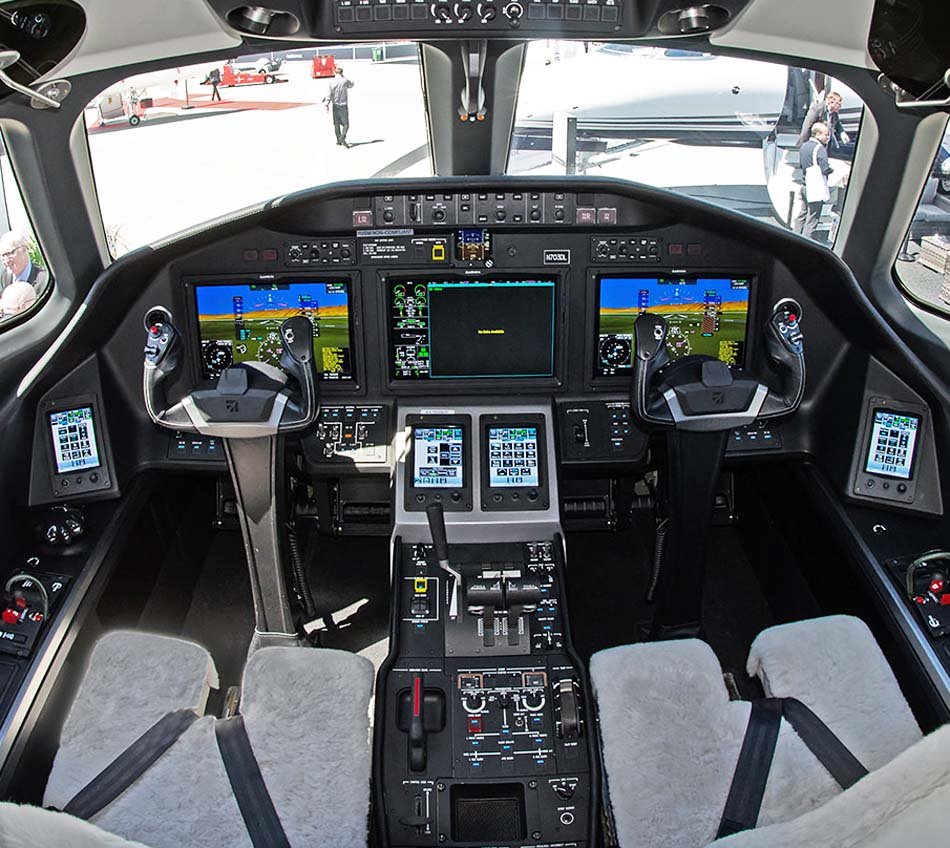
Honeywell HTF7700L turbofan engines were chosen as the powerplant. This business jet, equipped with the Garmin G5000 avionics suite, is designed to carry up to 12 passengers over a range of 6482 km.
Thanks to a new wing design and small winglets, the aircraft can achieve a cruising speed of 0.82 Mach. This translates to being 11 knots faster than the Columbus in absolute terms. Both the wing and fuselage will continue to be made from aluminum alloys.
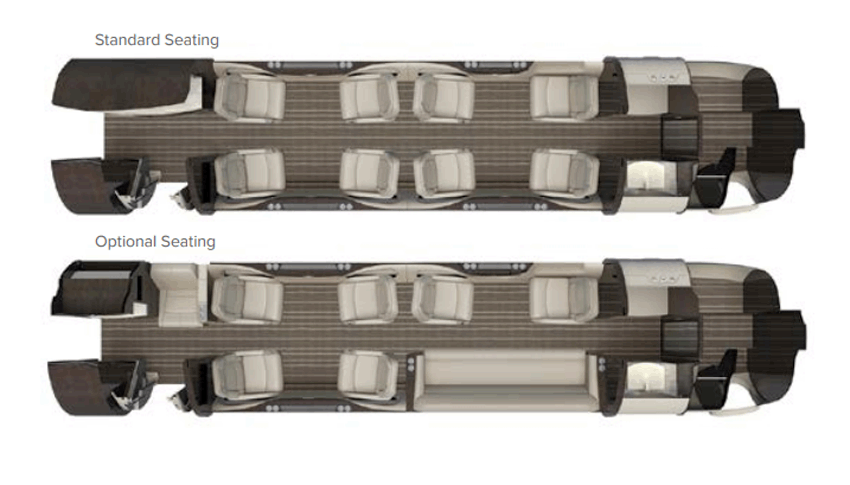
The cabin, measuring 183 cm in height (with a dropped aisle) and 195 cm in width, is designed to accommodate eight passengers.
Development and Production Milestones
On October 10, 2016, Cessna Aircraft (part of the Textron group) commenced flight testing of the new super midsize business jet, the Citation Longitude. The first test flight occurred one and a half months after the aircraft’s engines were started.
In March 2017, serial production of the Citation Longitude, developed by Cessna Aircraft (part of Textron Corporation), began in the USA. The aircraft are assembled at the factory in Wichita, Kansas, USA. According to Textron, four aircraft are currently in production.
Certification for the Citation Longitude is expected by the end of 2017. The aircraft are currently undergoing air tests. The flight program was launched in October of the previous year. The first two prototypes completed 125 flights and accumulated 250 hours. Recently, on March 20, a third prototype joined the aerial tests. It will be used to test avionics, verify the quality of system refinement, and record flight data for the flight simulator.
Market Information
The cost of the aircraft is $23.9 million. From 2017 onwards, no discounts will be offered for this aircraft. The Longitude’s main competitors include the Bombardier Challenger 605, Dassault Falcon 2000LX, and Gulfstream G450.
Technical Specifications
| Modification | Citation Longitude |
| Wingspan, m | 21. 01 |
| Aircraft length, m | 22. 30 |
| Aircraft height, m | 5. 92 |
| Wing area, m2 | 49. 91 |
| Empty weight | 15195 |
| Maximum takeoff weight | 1 7917 |
| Engine type | 2 Turbofan Honeywell HTF7700L |
| Thrust, kN | 2 x 33.6 |
| Maximum speed, km/h | 882 |
| Cruising speed, km/h | 830 |
| Practical range, km | 6482 |
| Service ceiling, m | 14 000 |
| Crew, crew members | 2+1 |
| Payload | from 8 to 12 passengers |
Image and diagram gallery of the Cessna Citation Longitude
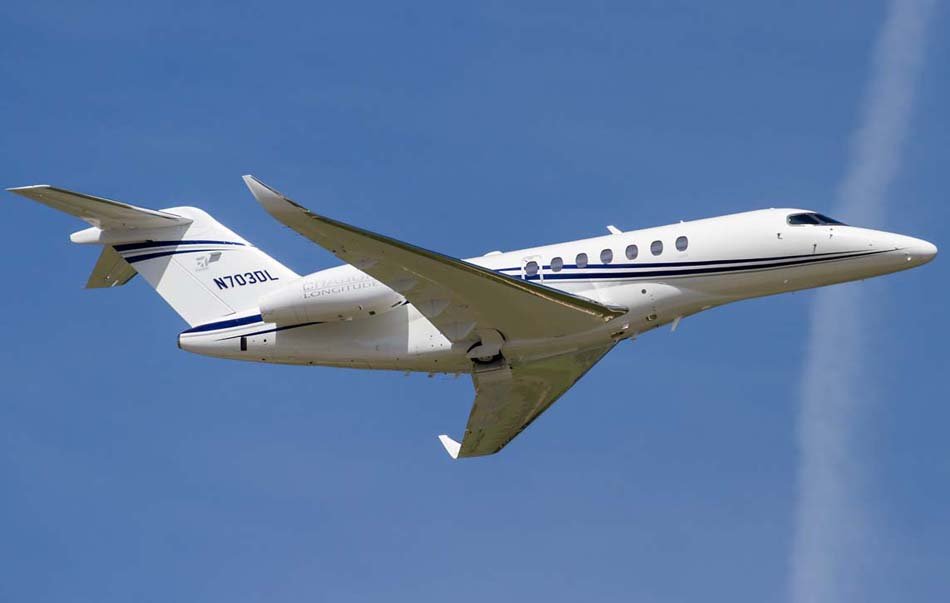 Cessna 700 Citation Longitude |
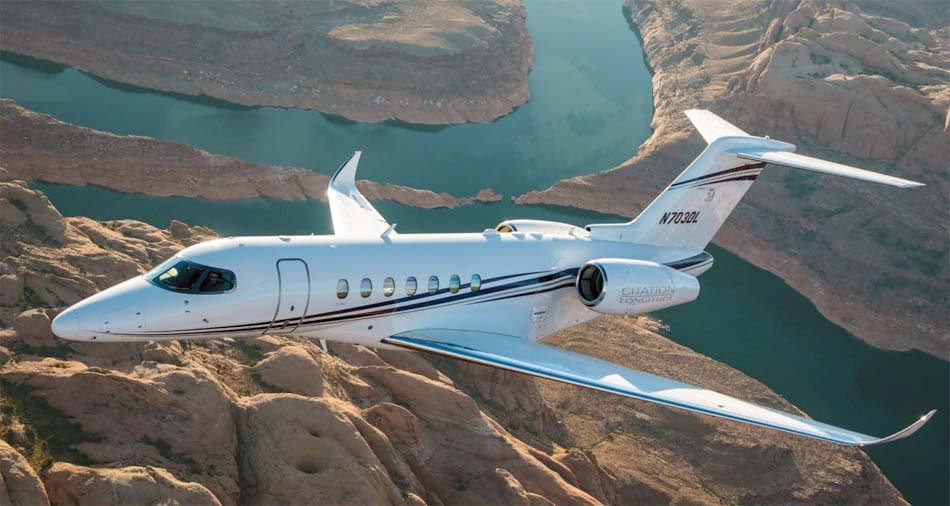 Cessna 700 Citation Longitude |
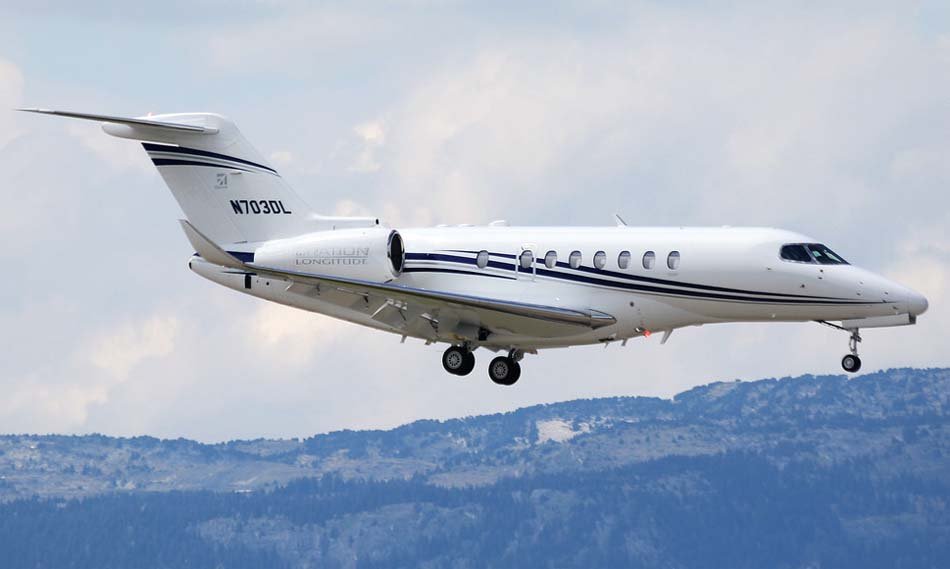 Cessna 700 Citation Longitude |
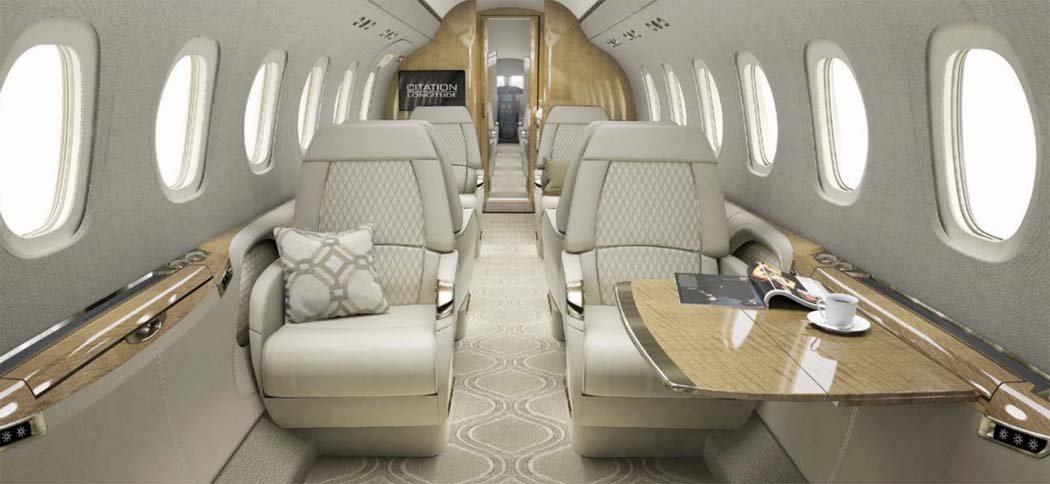 Cessna 700 Citation Longitude |
 Cessna 700 Citation Longitude |
 Cessna 700 Citation Longitude |