
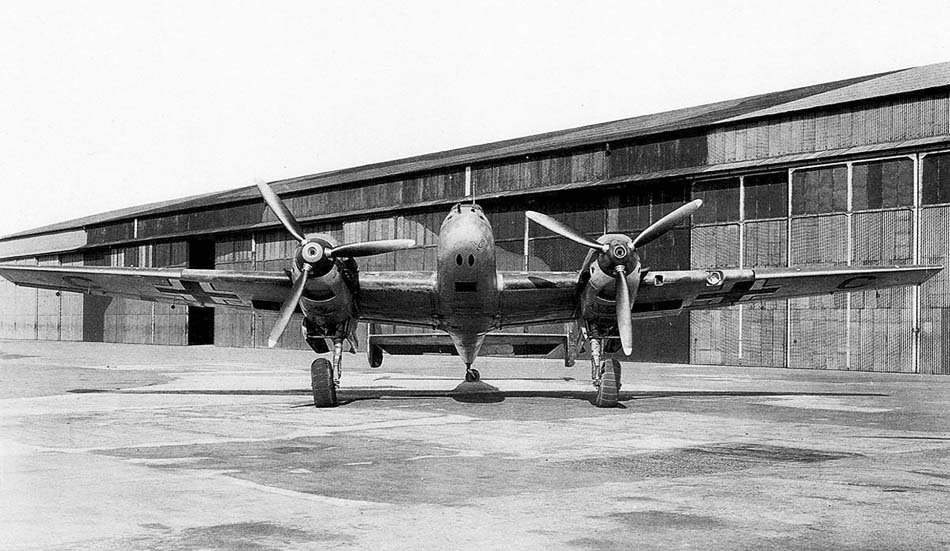
While the “hunter” awaited solutions to engine supply problems, Messerschmitt designers in Augsburg continued to refine the aircraft. The radiators under the engine nacelles were replaced with narrow underwing glycol radiators, regulated by hydraulically actuated exhaust flaps. Small oil coolers with manual flap adjustment were placed under the nacelles.
These new radiators necessitated a change in the wing design, which entered production at the end of 1938, once the DB 601A-1 flight engines finally became available. The production program for the “hunter” was given top priority. Deliveries of the DB 601A engines allowed for the rearmament of the “hunter” groups, as the “heavy” fighter groups were known from January 1, 1939.
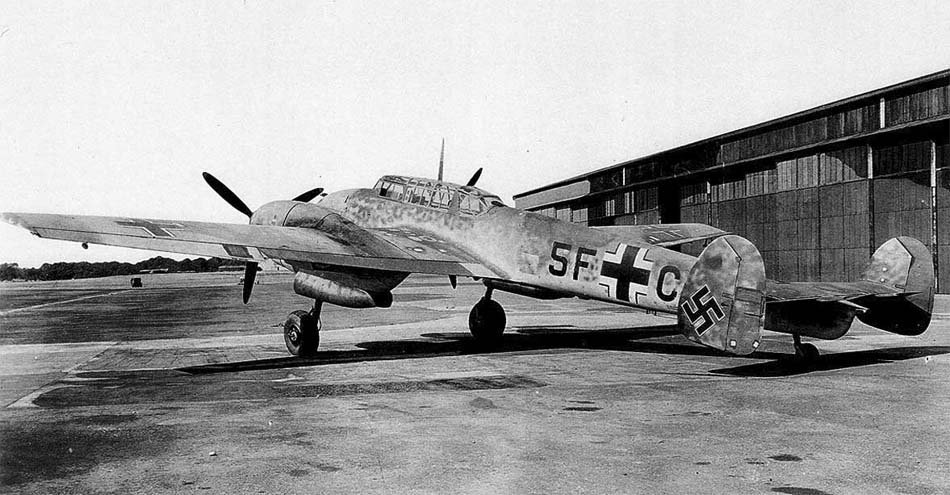
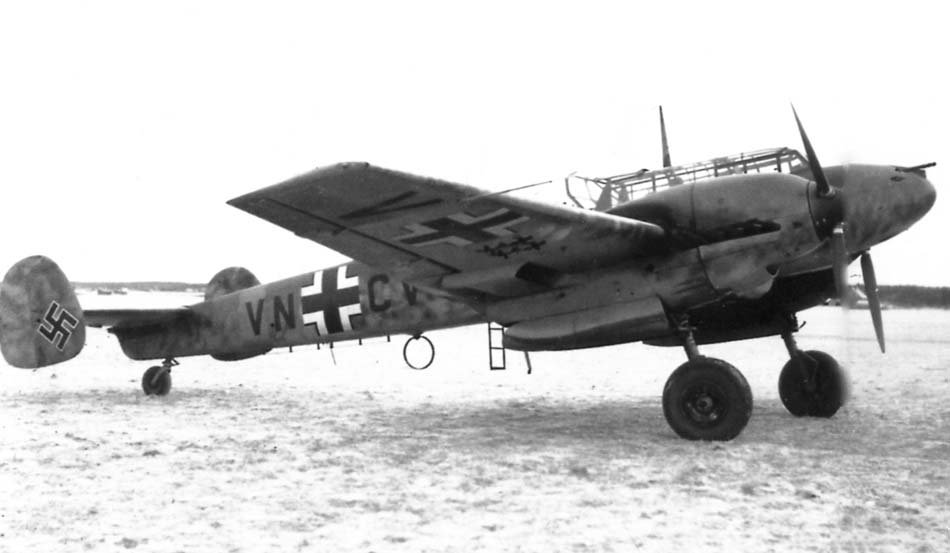
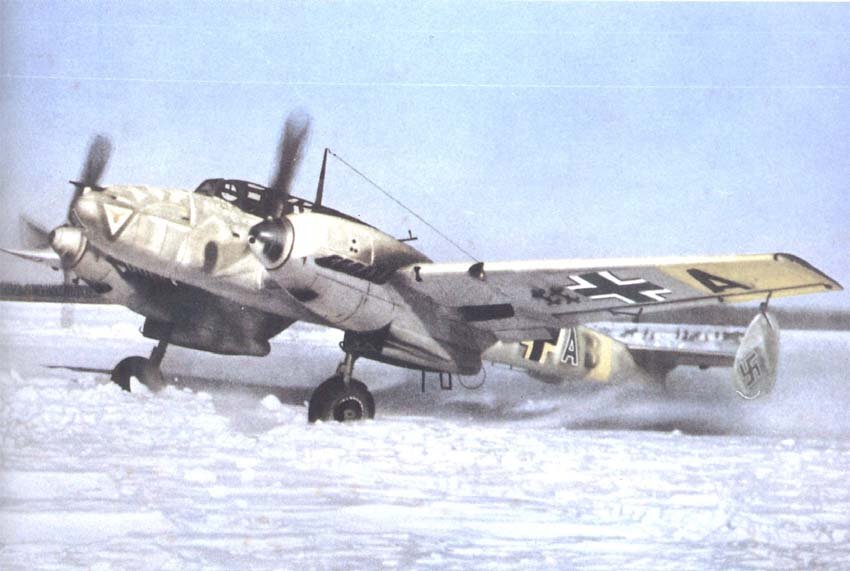
The Messerschmitt fighter variant equipped with DB 601 engines was designated Bf 110C. Apart from the engine installation, it was virtually identical to the Bf 110B, also featuring “clipped” wingtips, which slightly reduced the wingspan. However, the aircraft’s flight performance improved noticeably. In subsequent years, Allied propaganda worked hard to claim that the aircraft’s tactical and technical characteristics were poor, but at the time of its entry into service, the Bf 110 with DB 601A engines was considered outstanding by German aviation circles.
Of course, the “hunter’s” maneuverability was criticized by those who believed that a twin-engine fighter would always be inferior to a single-engine one, but this drawback was intended to be compensated by developing acceptable air combat tactics. This belief persisted until the summer of 1940.
Early Development and Production
10 pre-production Bf 110C-0s entered the Luftwaffe in January 1939. By the end of the month, deliveries of production Bf 110C-1s began to I(Z)/LG 1. In the spring and early summer, the aircraft was supplied to I/ZG 1 and I/ZG 76. By August 15, these three groups each had two squadrons with Bf 110C-1s and a training squadron with Bf 110B-3s.
Maximum speed varied with altitude from 470 km/h at ground level to 538 km/h at 6000 m. Cruising speed was 420 km/h at ground level and 485 km/h at 5000 m. The flight performance of the Bf 110C-1 was on par with the best single-engine fighters. Its range at 350 km/h at 4200 m reached 1100 km. Additional tanks under the wing panels extended this figure to 1400 km.
Thanks to the high priority of the Bf 110 production program, several firms joined its manufacture. Focke-Wulf and Gothaer Waggonfabrik began preparing for Bf 110C-1 production, delivering their first machines in early summer. MIAG was simultaneously brought in. By August 31, 1939, 159 Bf 110Cs had been accepted, though just over half were delivered to “hunter” groups.
Combat Debut: The Polish Campaign
According to General Staff headquarters data, 27 Bf 110Bs and 68 Bf 110Cs were in service, of which 23 of the former and 59 of the latter were combat-ready. The production rate reached 30 machines per month, and by the end of the year, another 156 aircraft were delivered (43 in September, 34 in October, 42 in November, and 37 in December). Total output for 1939 was 315 Bf 110Cs, or an average of 26 machines per month.
All three Bf 110 groups – I(Z)/LG 1, I/ZG 1, and I/ZG 76 – were involved in the invasion of Poland. By the start of the campaign, I and II/ZG 26 were awaiting rearmament from Bf 109 to Bf 110. All other “hunter” groups were armed with single-engine fighters and temporarily received fighter group designations.
Bf 110C-1s from I(Z)/LG 1 and I/ZG 1 were integrated into the 1st Air Fleet – the first into the “instructor” squadron, and the second into the 1st Air Division. Bf 110C-1s from I/ZG 76 operated within the 4th Air Fleet as part of the 2nd Air Division. From the very first hours of the war, “hunter” groups were used to escort bombers.
Units of I(Z)/LG 1 were deployed to cover bomber groups in the raid on Warsaw, while I/ZG 76 covered I and III/KG 4 in the raid on Krakow. They were also used in support of raids on Poznań and other sectors of the front. Their first encounter with Polish Air Force PZL P.11 fighters occurred in the afternoon when Bf 110C-1s from I(Z)/LG 1 were covering He 111Ps from KG 27.
The Bf 110s dived on the P.11s climbing for interception, which, using their maneuverability advantage, evaded the attack. However, in the subsequent general “dogfight,” Bf 110C-1s shot down five P.11s without suffering losses. The engagement of Bf 110C-1s from 1. and 2./ZG 76 over Łódź was not as successful: three Bf 110s were lost while destroying two P.11s.
But on September 3, during the second raid on Warsaw, I(Z)/LG 1 fighters shot down five P.11s, losing one Bf 110C-1. As Polish fighter opposition weakened, Bf 110s increasingly switched to ground attack roles, and total losses for the Polish campaign from September 1 to 28, 1939, amounted to only 12 aircraft.
The Luftwaffe High Command considered that the “hunter” had fully justified itself in the Polish campaign. The “hunter’s” shortcomings in fighter-versus-fighter combat, which were so feared, proved not to be so terrible, although the primary combat opponent was an outdated type. The “hunter’s” offensive armament proved to be extremely effective, but this advantage was difficult to exploit in air combat against more agile single-engine fighters.
Western Front Engagements and Limitations
While air combat against more maneuverable single-engine fighters raised doubts, the Bf 110’s ability to successfully intercept bombers was effectively demonstrated on December 18, 1939. The day before, Bf 110C-1s from I/ZG 76 had been transferred from Bonninghardt to Jever to reinforce the so-called “Schumacher” squadron, which covered the Heligoland Bight area.
When British Wellingtons from the 9th, 37th, and 149th squadrons attempted armed reconnaissance of Schillig Roads, the Jade estuary, and Wilhelmshaven, they were intercepted by Bf 110s. The result was disheartening for the British. Out of 24 Wellingtons, at least 12 were lost, and nine of them were credited to Bf 110C-1s from 1. and 2./ZG 76.
By early 1940, Bf 110C-1 production sharply increased (monthly output reached 102-103 aircraft), and accordingly, the strength of the “hunter” groups also grew. I and II groups of ZG 26 were completely rearmed. In spring-summer, II/ZG 76 entered service, I and II/ZG 2 were armed, and III group of ZG 26 was formed. A second “hunter” group – V(Z)/LG 1 – was formed within the “instructor” squadron.
During the “Phoney War,” Bf 110C-1s were used only sporadically on the Western Front, but the “veterans” – I/ZG 1 and I/ZG 76 – were stationed in Barth and Westerland to participate in the Scandinavian campaign – Operation Weserübung, which began on April 9, 1940. Despite the “hunters” encountering relatively weak opposition (almost all Norwegian aviation was immediately destroyed, and 10 of 18 Gladiators of the RAF’s 263rd squadron were burned on the ground on its first day of engagement), losses quickly grew, totaling 25 Bf 110s in April, mainly in Norway.
During the following month, fighting in Norway was overshadowed by the German offensive in the West. As of May 10, 1940, the Luftwaffe had 355 Bf 110C-1s and C-2s (the latter differing only in the replacement of the FuG IIIaU radio with FuG 10 and an improved gunner’s position), of which 248 were part of the 2nd and 3rd Air Fleets.
Despite achieving air superiority, during battles in France and neutral countries, “hunter” groups lost about 35% of their strength. For May, losses (including in Norway) amounted to 82 Bf 110Cs. In battles over France, “hunters” encountered relatively modern fighters. As a result of these battles, no one doubted that the Bf 110 could not fight on equal terms with a single-engine fighter, which is why sometimes during battles in France (over England this already became common practice), when encountering enemy fighters, Bf 110s would form a defensive circle. In doing so, the rear aircraft always covered the tail of the front one with fire, while simultaneously firing at enemy fighters outside the circle.
Technical Specifications
| Modification | Bf 110c-1 |
| Wingspan, m | 16.20 |
| Length, m | 12.10 |
| Height, m | 4.10 |
| Wing area, m2 | 38.40 |
| Empty weight | 4430 |
| Normal takeoff weight | 6040 |
| Maximum takeoff weight | 6755 |
| Engine type | 2 Piston engines Daimler-Benz DB 601A-1 |
| Power, hp | 2 x 1050 (1100) |
| Maximum speed at sea level, km/h | 420 |
| Maximum speed at altitude, km/h | 485 |
| Most economical speed, km/h | 350 |
| Range at cruising speed, km | 900 |
| Range at most economical speed, km | 1090 |
| Maximum rate of climb, m/min | 660 |
| Service ceiling, m | 10000 |
| Crew, crew members | 2-3 |
| Armament | two 20-mm MG FF cannons with 180 rounds per gun and four 7.9-mm MG 17 machine guns with 1000 rounds per gun in the forward section, and one 7.9-mm MG 15 machine gun on a flexible mount in the rear of the cockpit. |
Image and diagram gallery of the Messerschmitt Bf 110C
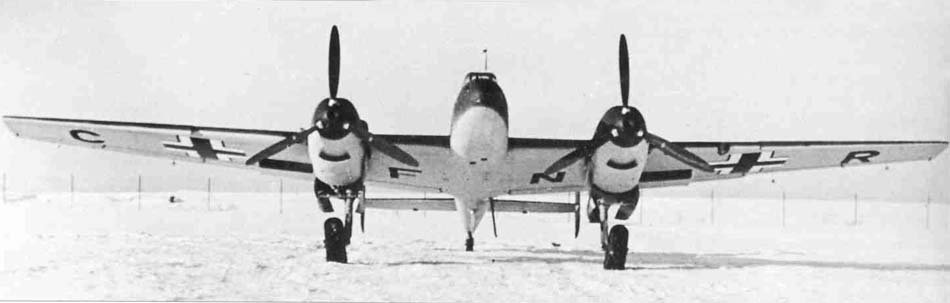 Bf.110C |
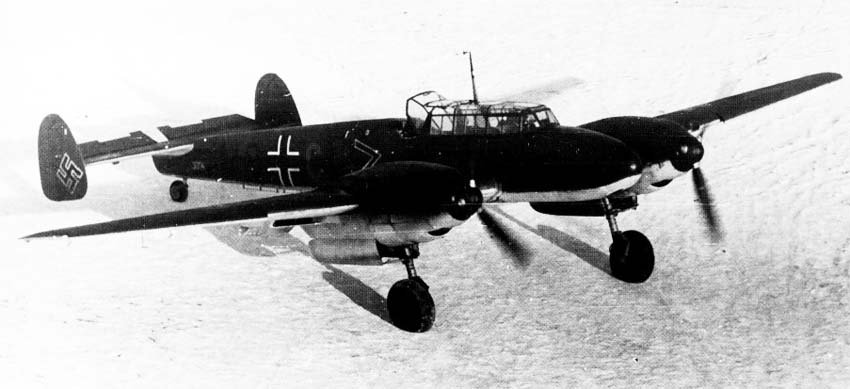 Bf.110C |
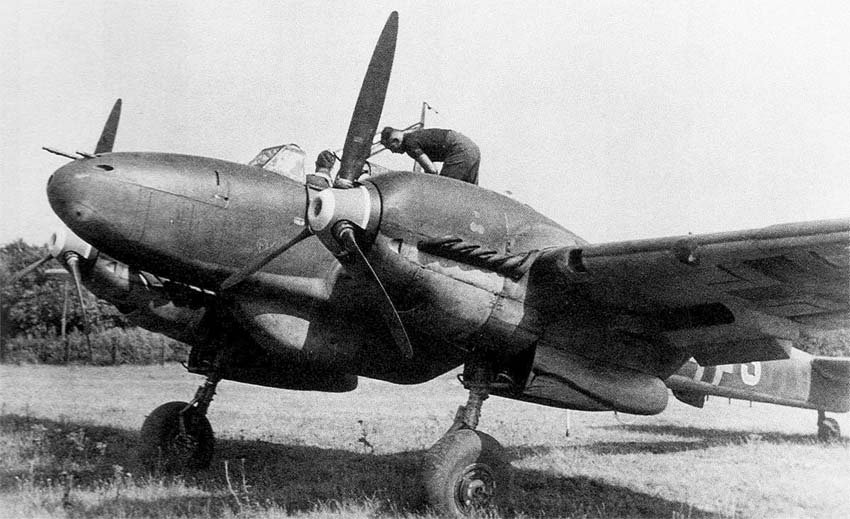 Bf.110C |
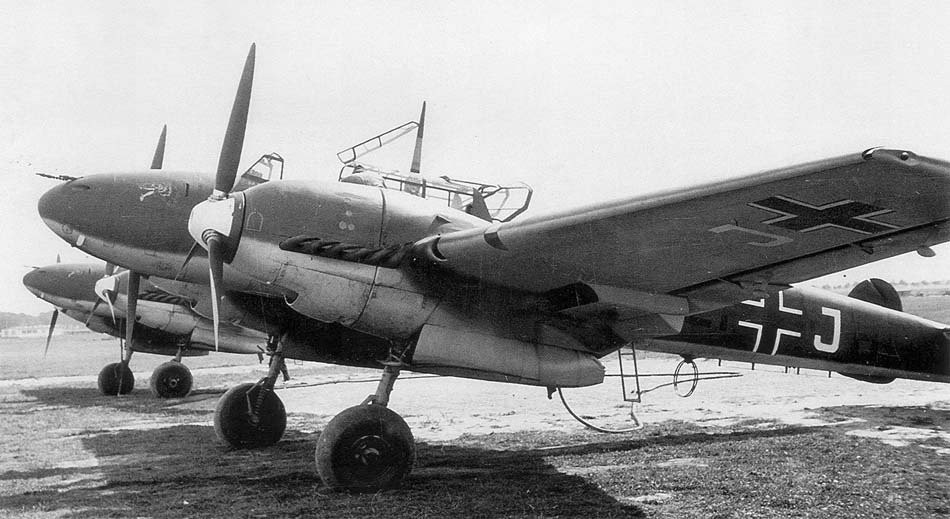 Bf.110C |
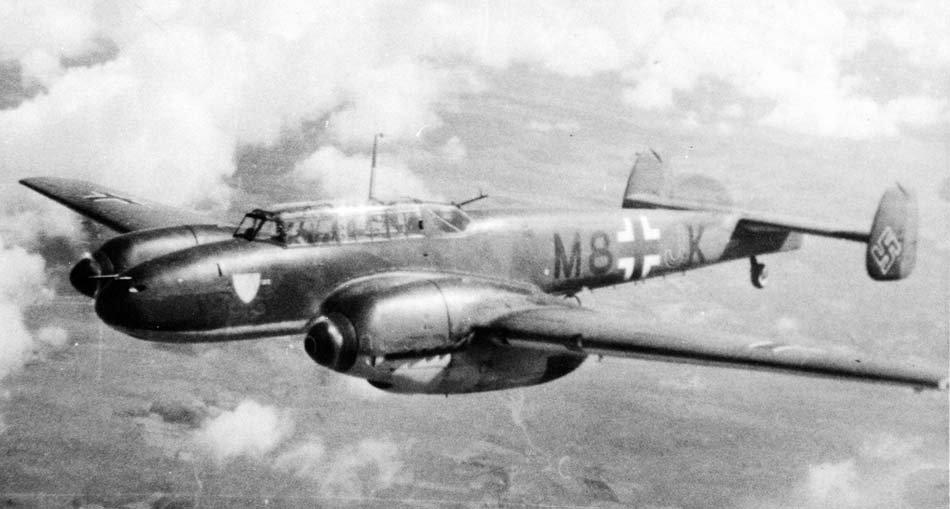 Bf.110C |
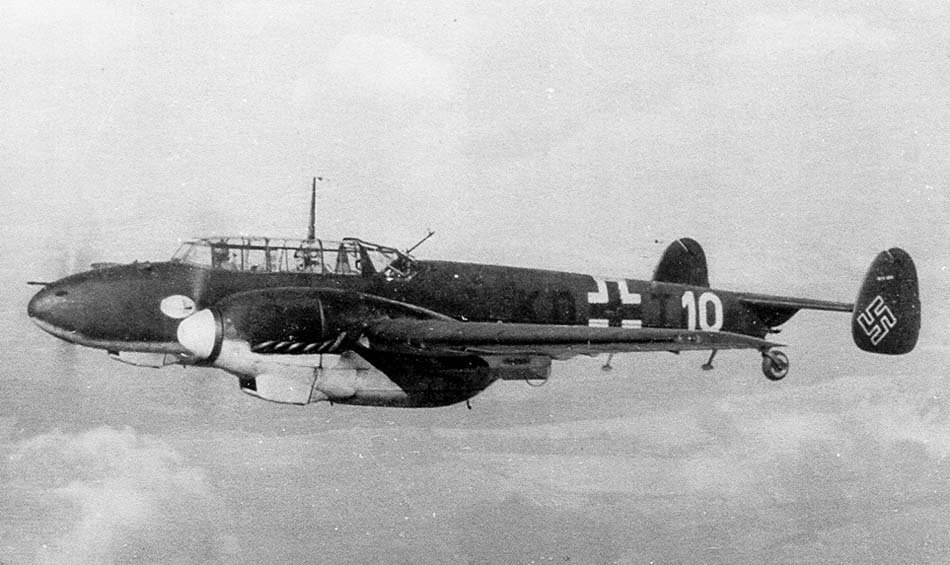 Bf.110C |
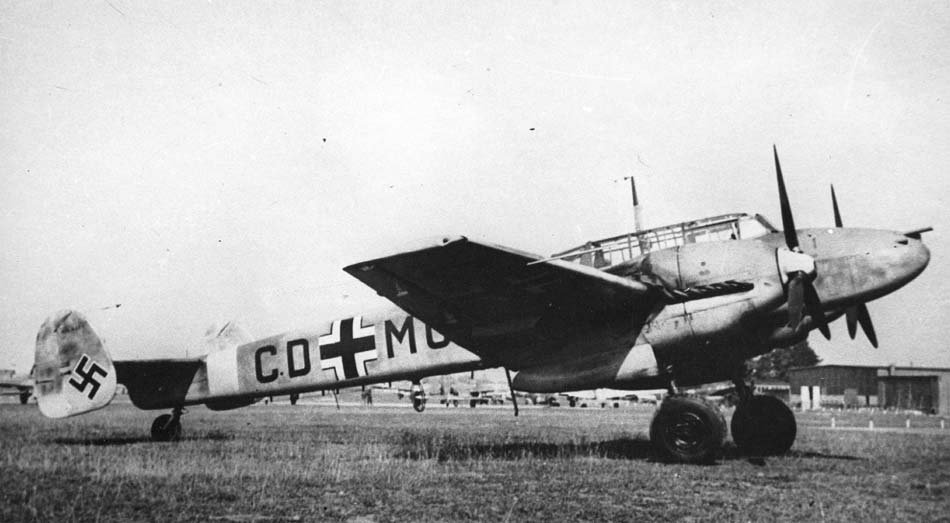 Bf.110C |
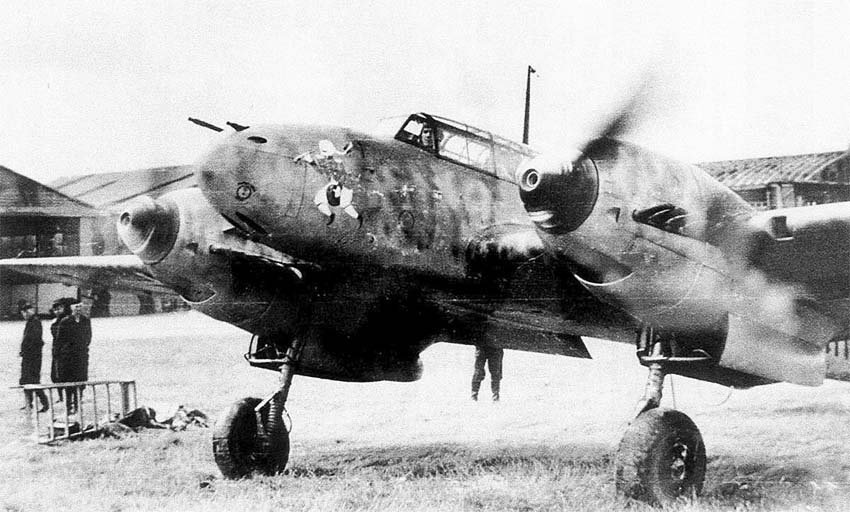 Bf.110C |
 Bf.110C |
 Bf.110C |
 Bf.110C |
 Bf.110C |
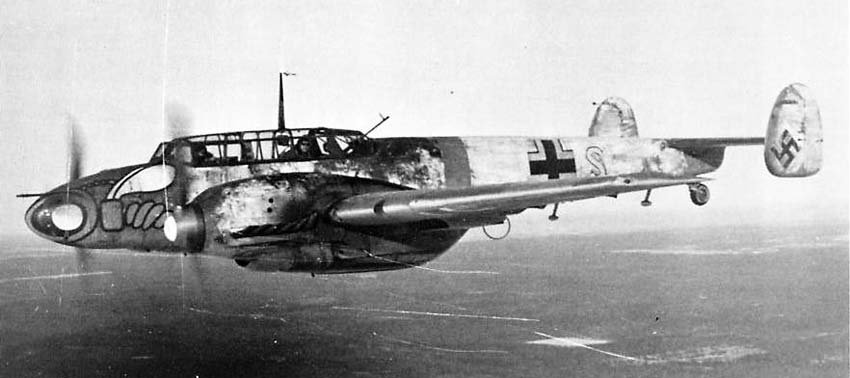 Bf.110C |
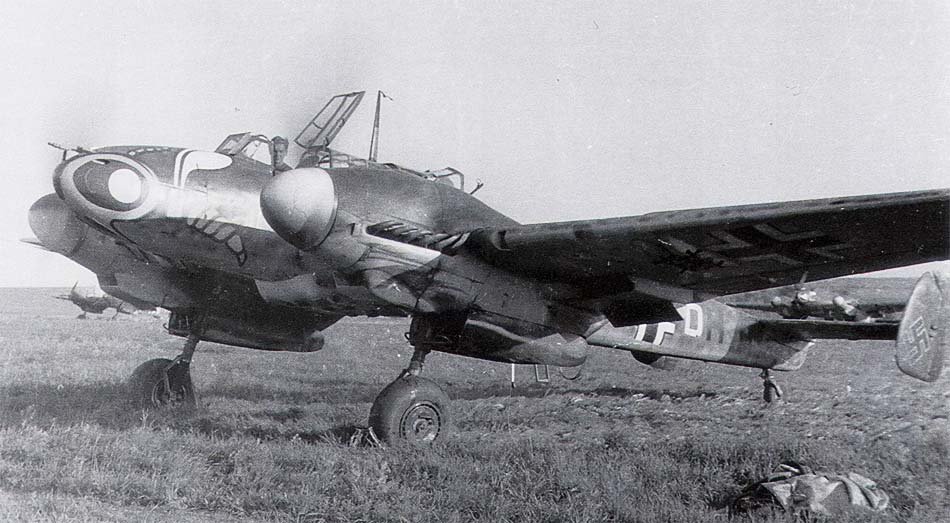 Bf.110C |
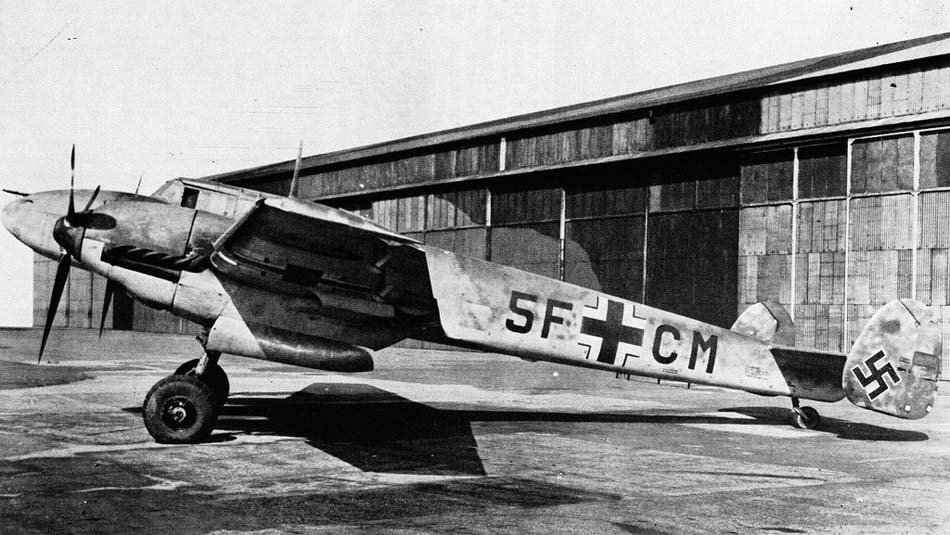 Bf.110C |
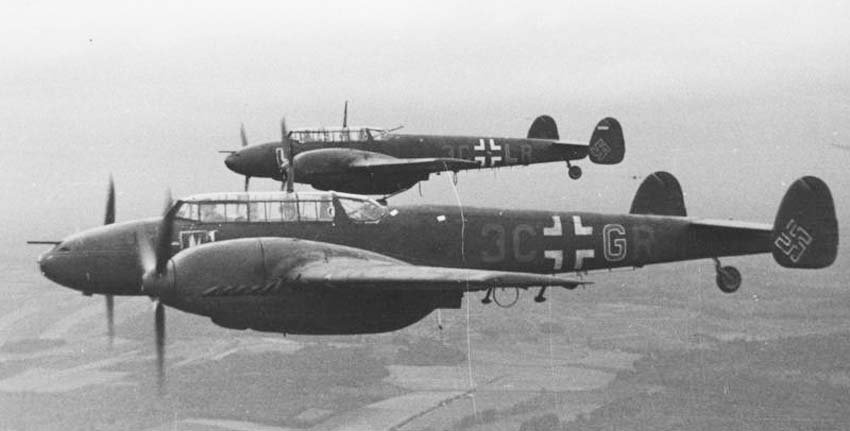 Bf.110C |
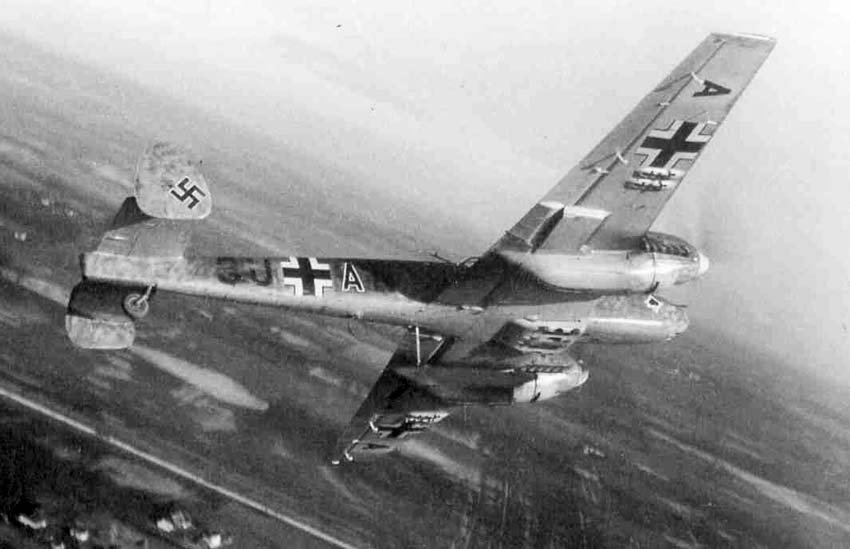 Bf.110C |
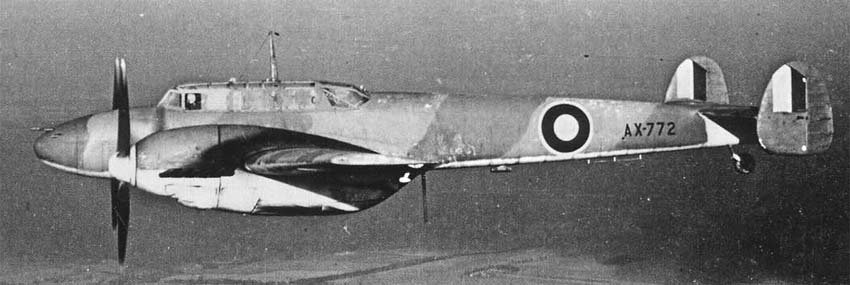 Bf.110C |
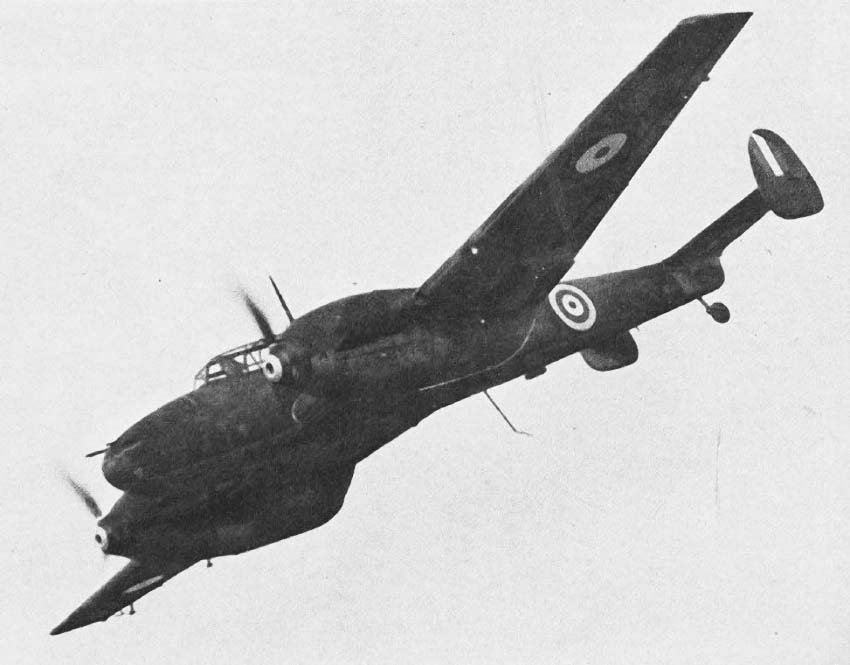 Bf.110C |
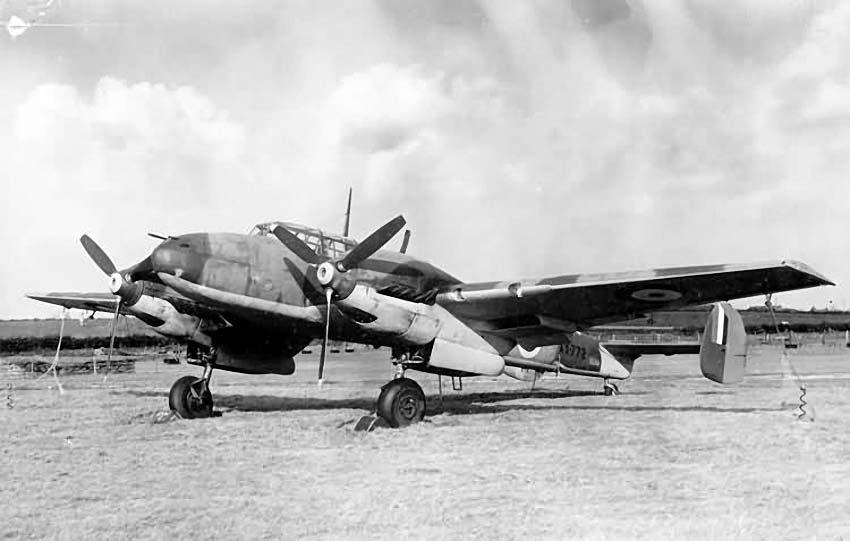 Bf.110C |
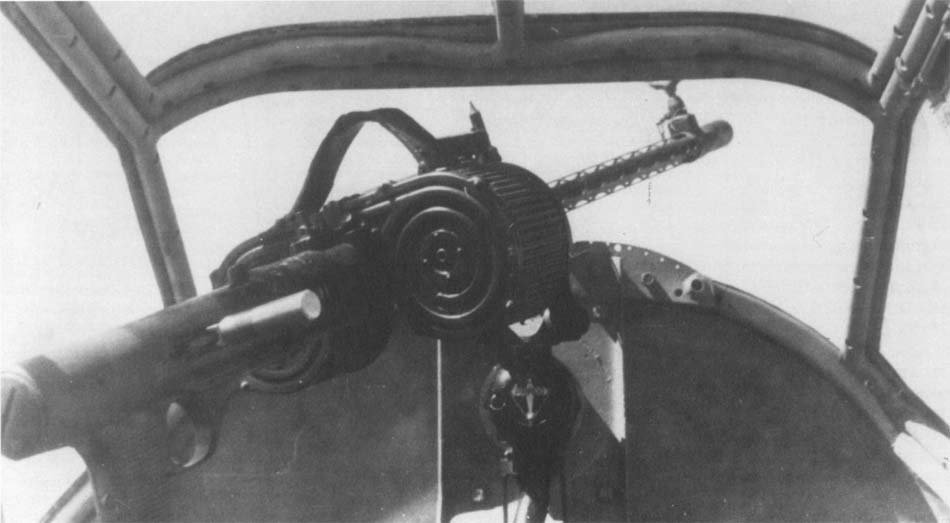 Bf.110C |
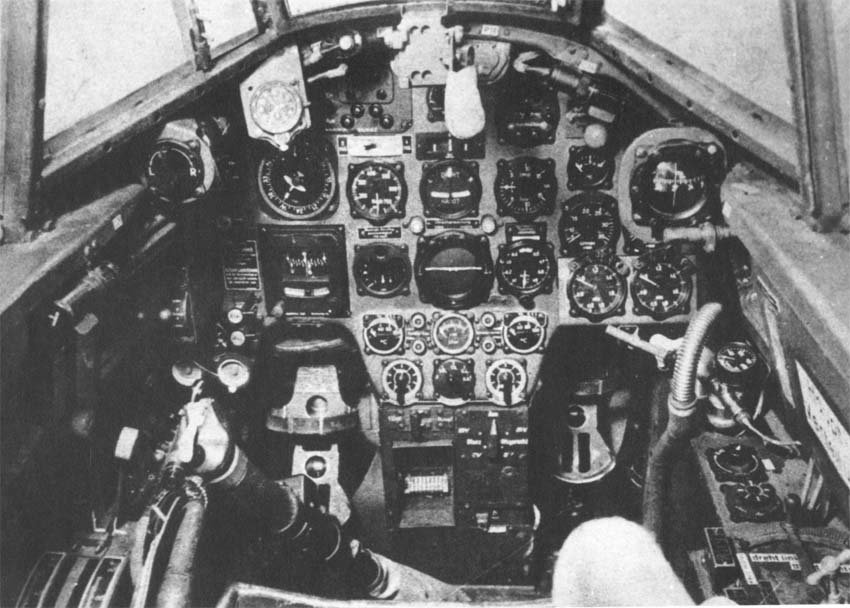 Bf.110C |
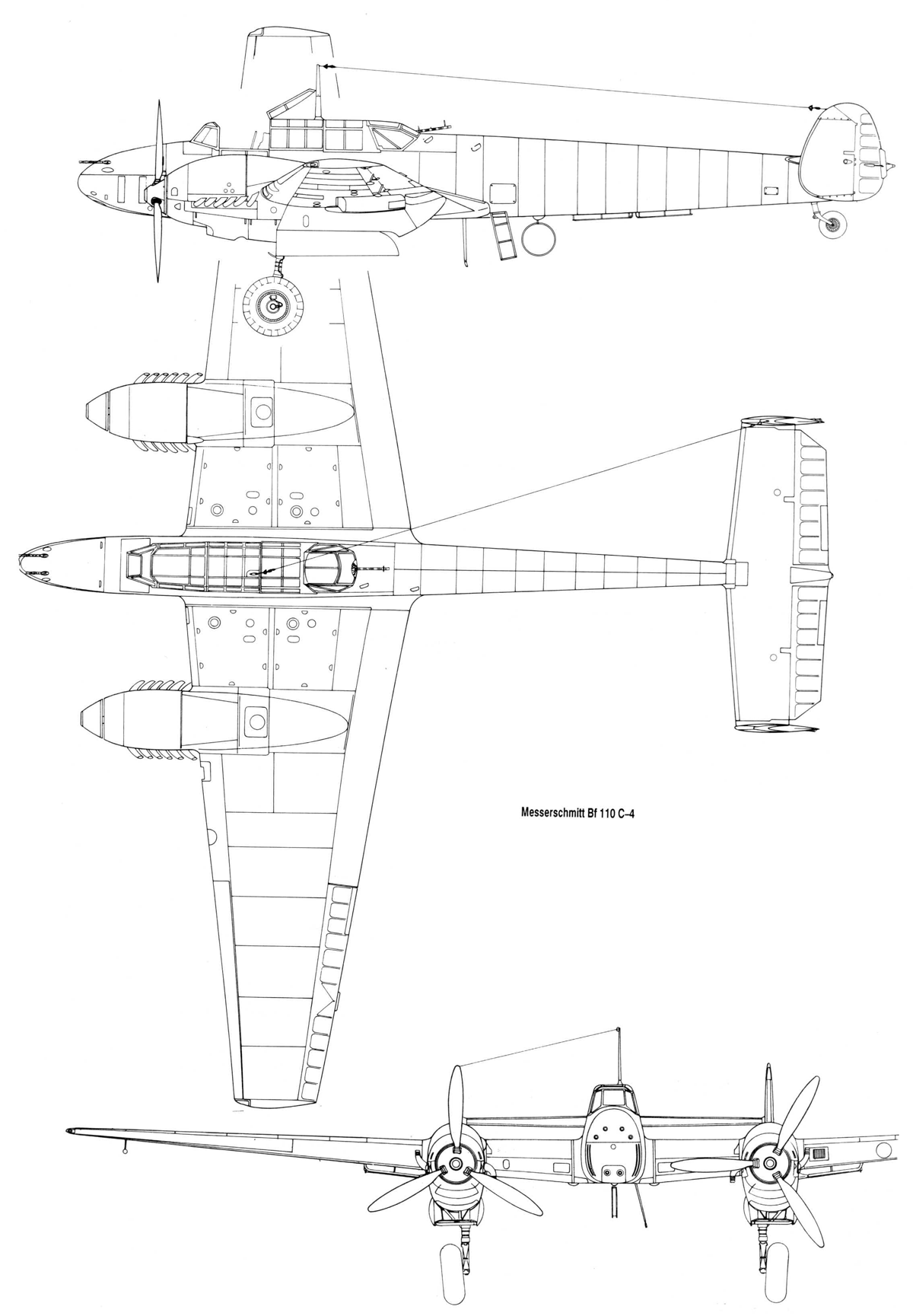 Bf.110C |
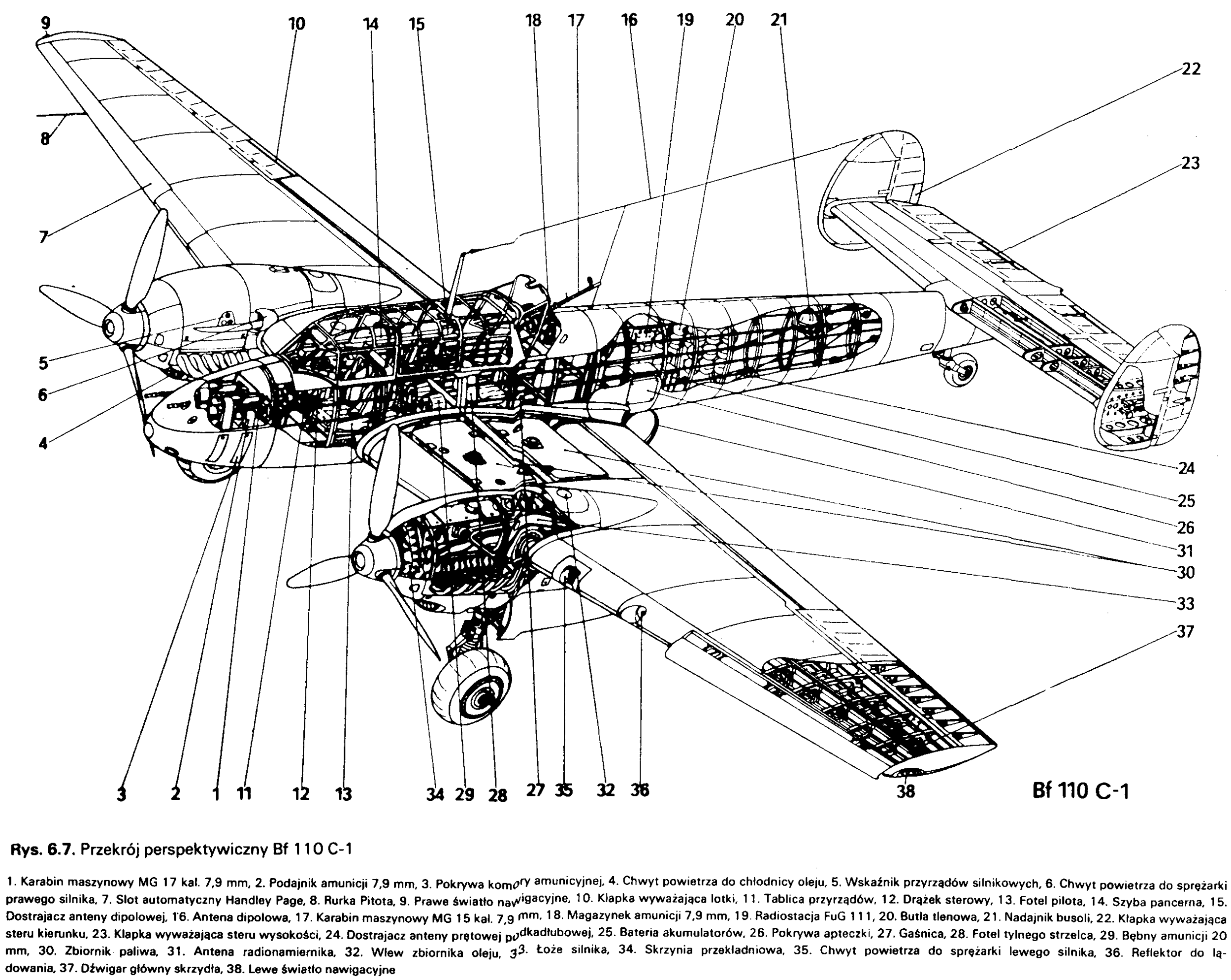 Bf.110C |
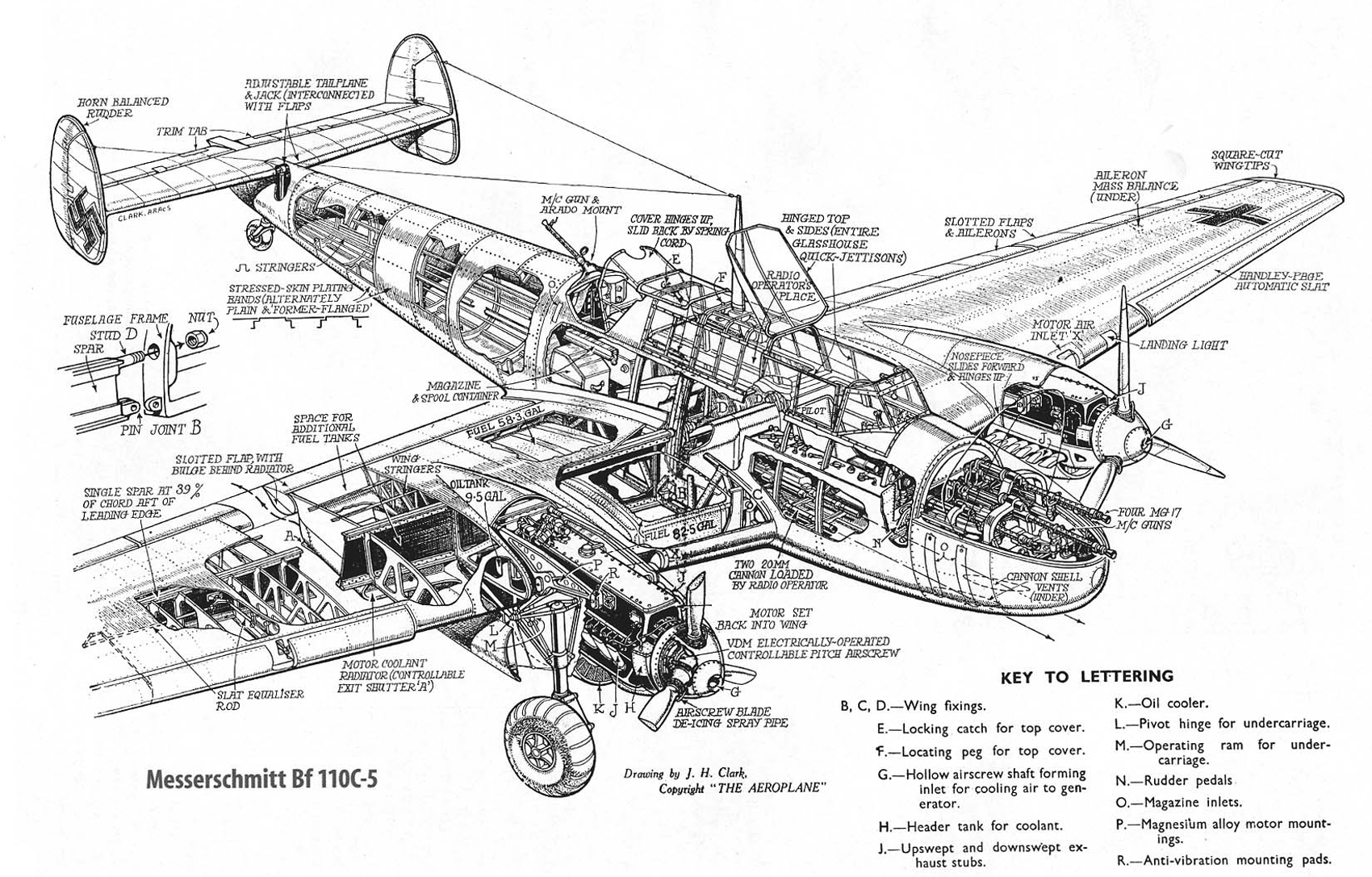 Bf.110C |
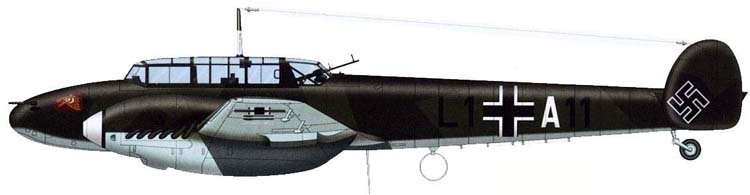 Bf.110C |
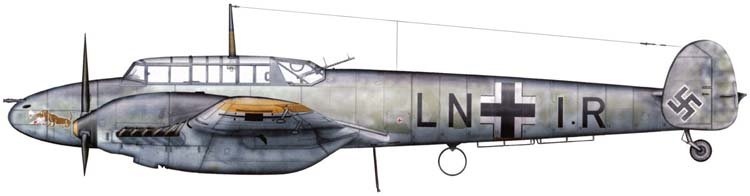 Bf.110C |
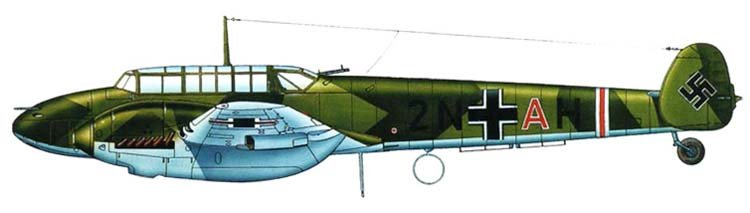 Bf.110C |
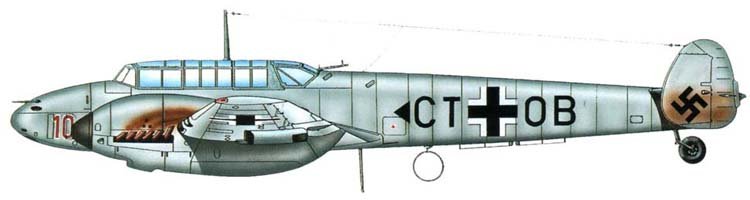 Bf.110C |
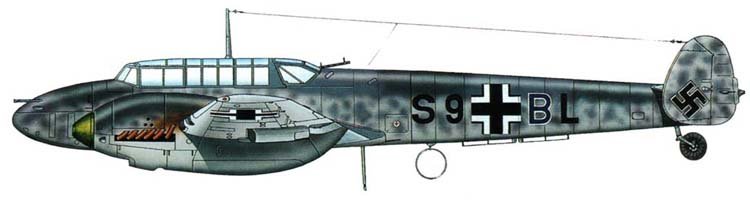 Bf.110C |