
The appearance of long-range reconnaissance aircraft in the Army Air Force caused envy among the Imperial Navy command. The Army and Navy in Japan always competed, demonstrating independence from each other. Things reached the point of absurdity: the sailors ordered their own tanks, while the army ordered aircraft carriers.
Both the Army and Navy had their own aviation, but the aircraft of both departments differed in everything – their own types of engines, radio stations, and machine guns. Of course, the same firms made them, so the underlying designs were the same. However, due to differences in requirements, products for different customers never duplicated each other.
Imperial Aviation Rivalry
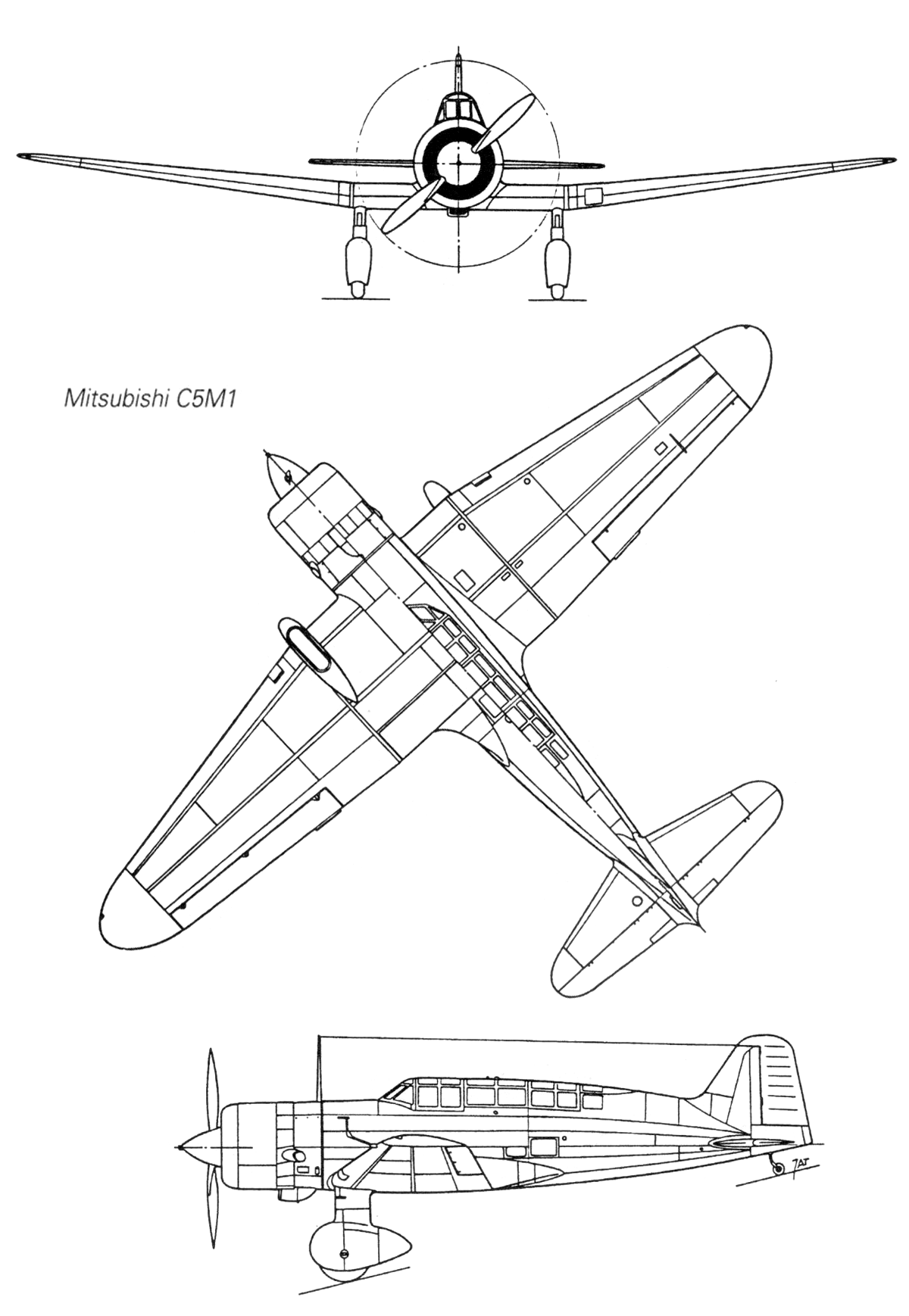
Thus, the C5M1, ordered by naval aviation similarly to the Ki.15-II, did not fully correspond to it. It was equipped with an 875 hp “Zuisei 12” engine, and a number of changes were made to its equipment. Externally, however, the C5M1 was practically indistinguishable from the Ki.15-II.
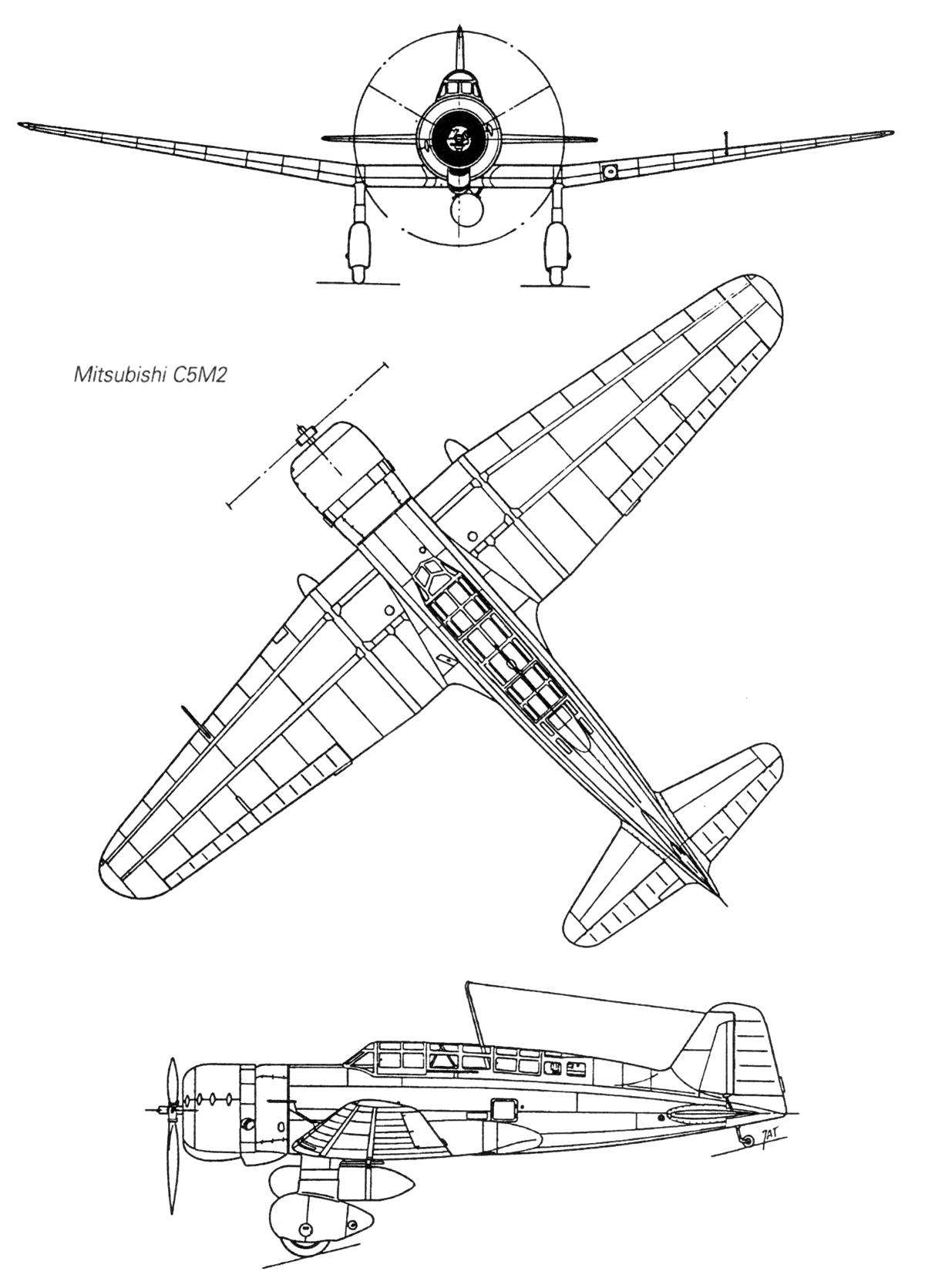
A total of 20 C5M1s were built. In 1940, the fleet command requested 30 more improved C5M2 type aircraft with a more powerful 950 hp Nakajima “Sakae 12” engine and a three-blade variable-pitch propeller.
C5M Variants and Development
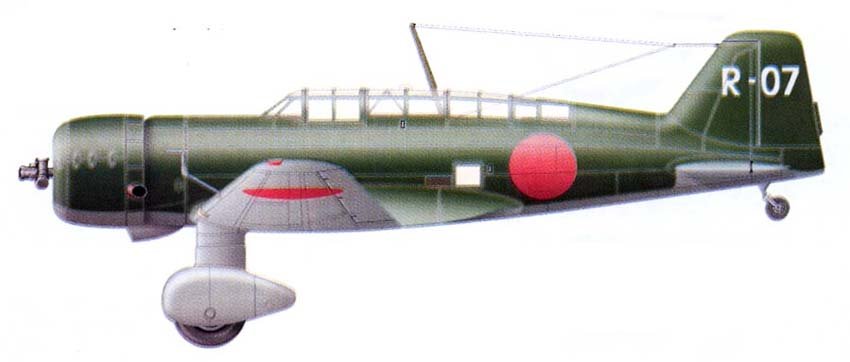
This modification lacked a spinner on the propeller hub. The cowling was made somewhat more rounded, and the radio antenna mast was moved from the front part of the fuselage to the fuel tank cover in the cockpit. The mast, tilted forward, passed straight through the fixed section of the canopy. The glazing of the rear cockpit was slightly enlarged, extending backward. The order for the C5M2 series was completed in 1940-41.
The C5M naval reconnaissance aircraft were actively used in China alongside the Army’s Ki.15s. Various air flotillas received five to six of these machines. For example, the 2nd Air Flotilla, operating on the central China front near the Yangtze River, had six C5M1s; the 3rd in the south had another six.
Specifically, they conducted reconnaissance before a series of naval bomber raids on Nunchi in September 1940. On September 13, one C5M1 guided a group of Japanese A6M2 “Zero” fighters to the positions of Chinese I-16s and I-15bis. The Japanese managed to destroy 13 aircraft and damage 11 more. The Chinese lost 10 killed and 8 wounded.
Operational Deployment in China and Indochina
However, there were far fewer C5M1s on the front than Ki.15s. The latter were deployed in significant numbers in Japan itself, China, Korea, and the puppet state of Manchukuo (Manchuria) at the time.
From May to September 1939, they participated in the battles on the Khalkhin-Gol River. Production of the C5M2 ceased in early 1941. In total, 50 C5Ms were manufactured.
Technical Specifications
| Modification | C5M1 |
| Wingspan, m | 12.00 |
| Length, m | 8.70 |
| Height, m | 3.24 |
| Wing area, m2 | 20.36 |
| Empty weight | 1592 |
| Normal takeoff weight | 2189 |
| Maximum takeoff weight | 2481 |
| Engine type | 1 Piston engine Nakajima Sakae 12 |
| Power, hp | 1 x 950 |
| Maximum speed, km/h | 487 |
| Cruising speed, km/h | 386 |
| Practical range, km | 1500 |
| Rate of climb, m/min | 686 |
| Practical ceiling, m | 9580 |
| Crew | 2 |
| Armament | one 7.7-mm Type 92 machine gun on a flexible mount in the rear cockpit. |
Image and diagram gallery of the Mitsubishi C5M
 C5M |
 C5M |
 C5M |
 C5M |
 C5M |
 C5M |
 C5M |
 C5M |
 C5M |