
Origin and AMST Program
The experience of the Vietnam War convinced Americans that existing transport aircraft were performing their duties poorly. The problem was that constructing normal-length runways in front-line conditions was simply not feasible. Therefore, in 1968, the AMST (“Advanced Medium STOL Transport”) program was initiated.
It envisioned the creation of a medium transport aircraft with a payload capacity of about forty tons, but capable of operating from a standard fighter strip 2000 feet (approximately 690 meters) long. In the early 1970s, “McDonnell Douglas” was one of five American companies to submit proposals for the US Air Force tender for a medium short take-off and landing transport aircraft.
In late 1972, the company received a contract to build two prototypes of such an aircraft, designated YC-15, and “Boeing” received a similar contract to build two of its YC-14 prototypes. The YC-15 prototype made its first flight on August 26, 1975.
Design and Technical Challenges
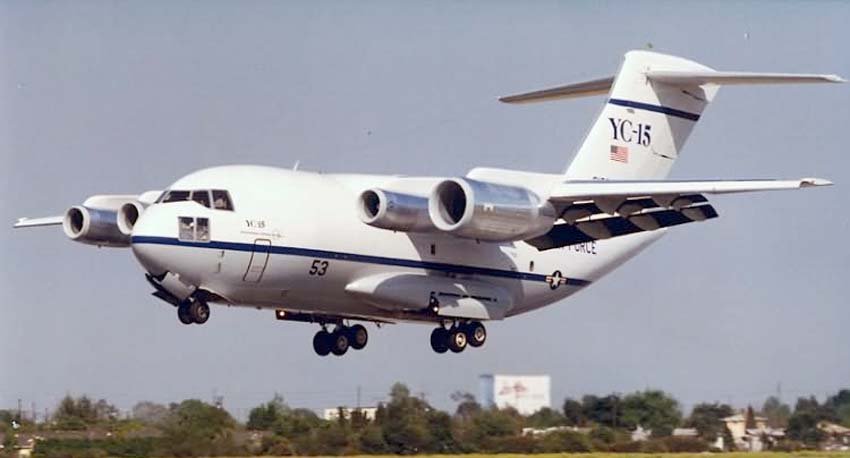
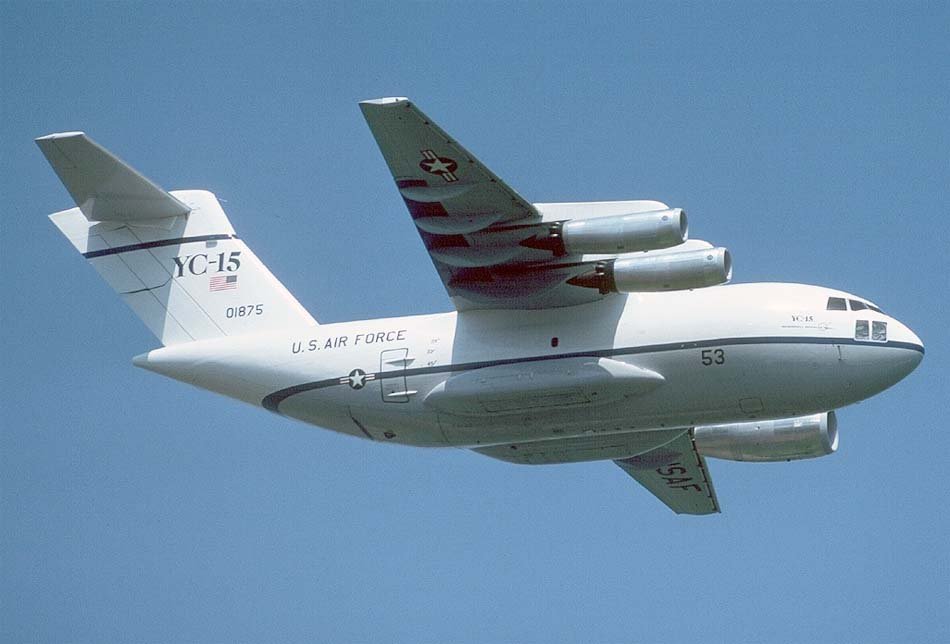
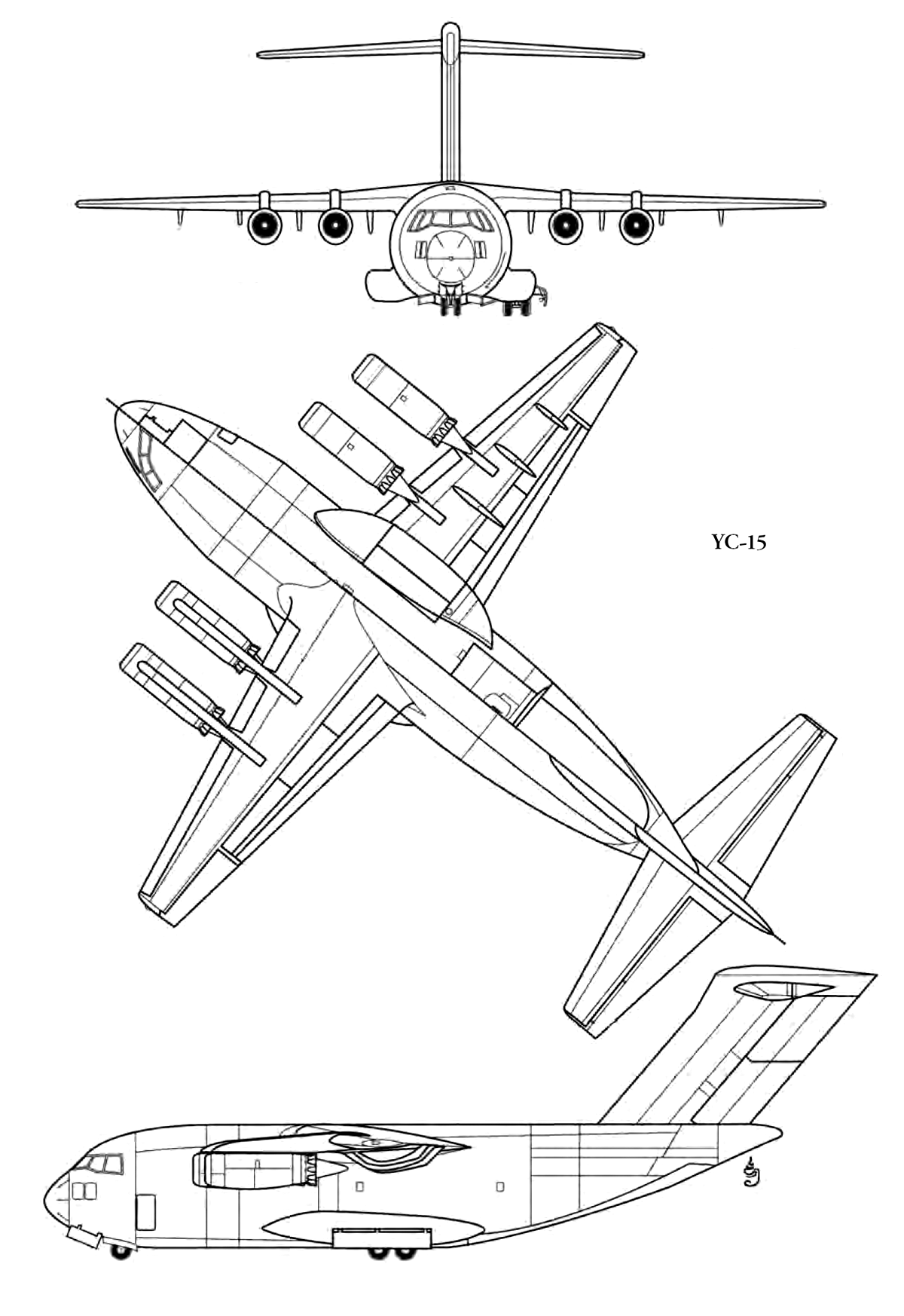
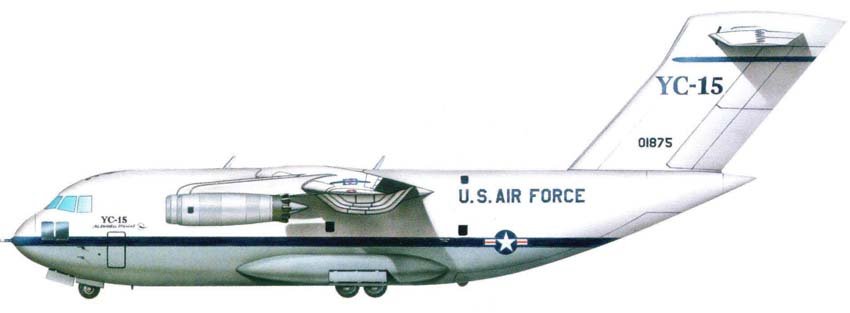
The basis of “McDonnell Douglas'” new machine, which ensured high take-off and landing performance, was a newly designed engine and wing. The YC-15A was a conventional transport aircraft with a characteristic fuselage, featuring a rear cargo door-ramp, high-strength retractable landing gear, and a high T-shaped tail empennage.
Short take-off and landing capability was provided by the interaction of the wing and the power plant. The wing profile included twin-slotted flaps over 75% of the wing’s span. When fully deflected, the flaps were blown by the jet stream from four Pratt & Whitney JT8D-17 turbofan engines, mounted on the wing, each with a thrust of 71 kN.
The aircraft flew reasonably well, but it did not meet the specified parameters; either the load was smaller, or it didn’t fit on the runway. The problem, obviously, was that the power of the four Pratt & Whitney JT8D-17 engines, each with 7.25 tons of thrust, was insufficient. The logical solution was to “try a more powerful engine,” and they found one: the Franco-American CFM56-2 with nearly ten tons of thrust.
However, they did not risk changing all four tested engines for the new one. A new wing with increased area was installed, one engine was replaced, and testing began. It turned out not badly, but unfortunately for the company, the Vietnam War had already ended.
Cancellation and Legacy
The YC-15s were no longer needed by the military. No more jungle wars were foreseen, and in the conditions of the European theater of operations, there were no such strict restrictions on runway length, and therefore no need for specialized aircraft. As a result, the entire AMST program was closed.
Nevertheless, none of the tender participants ever received a serial order. “McDonnell Douglas” made changes to the aircraft’s design, intending to bring the machine to the civilian market. However, the aircraft also had no commercial success, and the project was finally closed.
Interestingly, 19 years after being stored in a desert facility, the YC-15 was restored to airworthiness in 1997. “Boeing” used it as a demonstrator for a prospective transport aircraft program, planning for it to be used in work on the civilian variant of the C-17A Globemaster III, designated BC-17X (originally MD-17), and on the Advanced Theater Transport (ATT) program, which could combine the distinctive features of the YC-15 with technologies used in the creation of tiltrotors.
The aircraft made its first flight in its updated form on April 11, 1997, but on July 11, 1998, it suffered serious damage to its power plant. Inspection confirmed the possibility of restoration, but this required very serious funds and a lot of time. Ultimately, it was decided to retire the aircraft; since 2008, the YC-15 has been on display at the museum at Edwards Air Force Base.
Technical Specifications
| Modification | YC-15 |
| Wingspan, m | 40.41 |
| Aircraft length, m | 37.87 |
| Aircraft height, m | 13.21 |
| Wing area, m2 | 242.06 |
| Maximum takeoff weight with STOL | 99418 |
| Maximum takeoff | 4 Pratt Whitney JT8D-17 Turbofans |
| Engine type | 4 x 71.00 kN |
| Maximum speed, km/h | 805 |
| Cruising speed, km/h | 661 |
| Practical range, km | 1931 |
| Service ceiling, m | 9144 |
| Crew, crew members | 3 |
| Payload | 150 paratroopers |
Image and diagram gallery of the YC-15
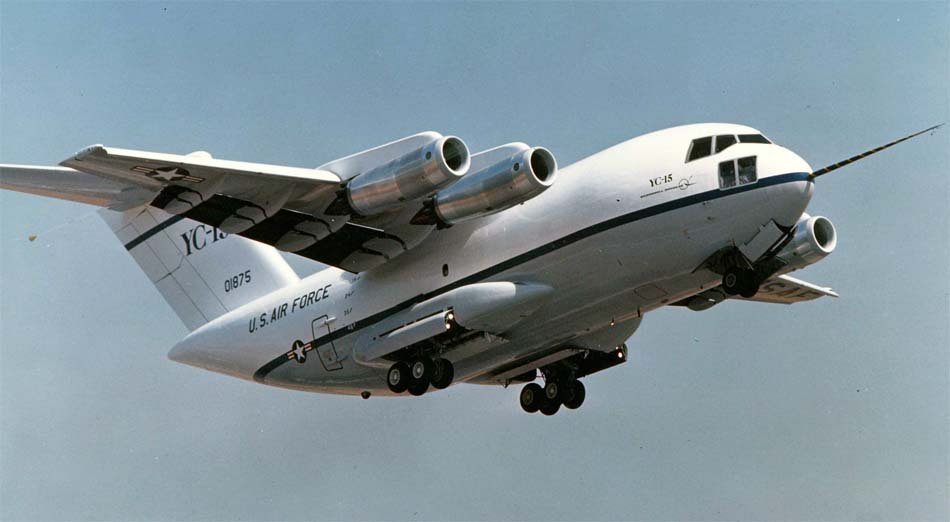 C-15 |
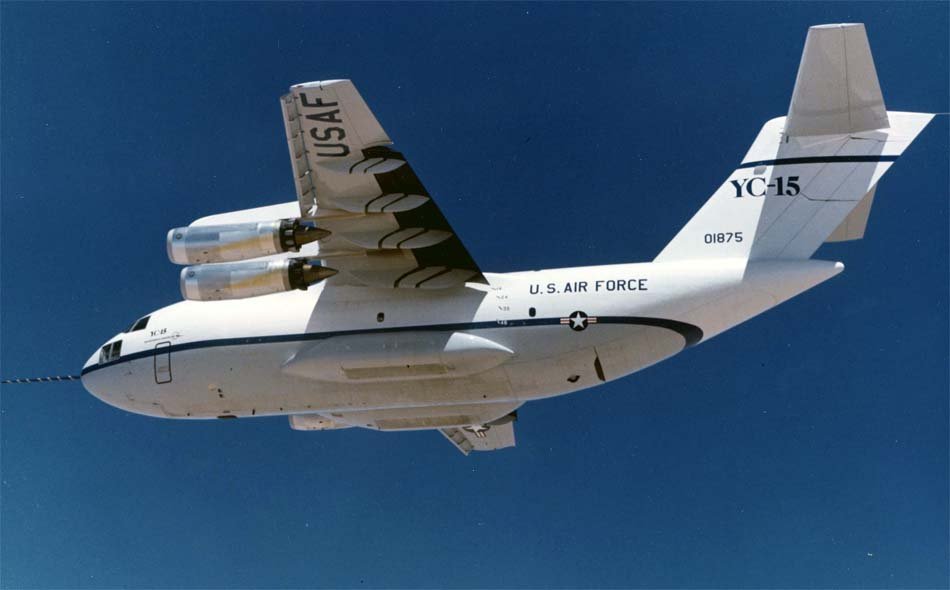 C-15 |
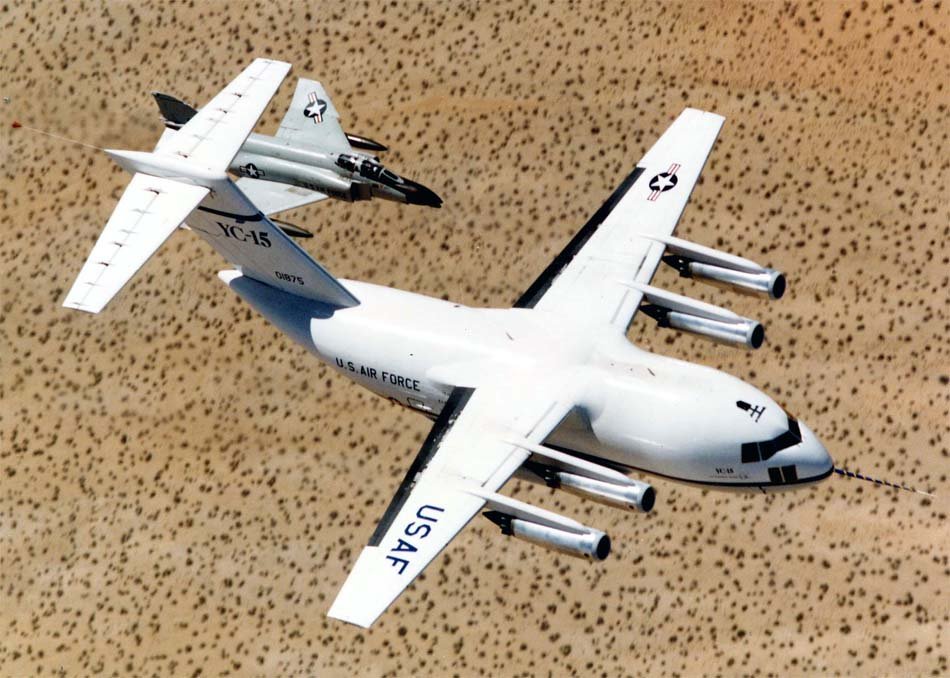 C-15 |
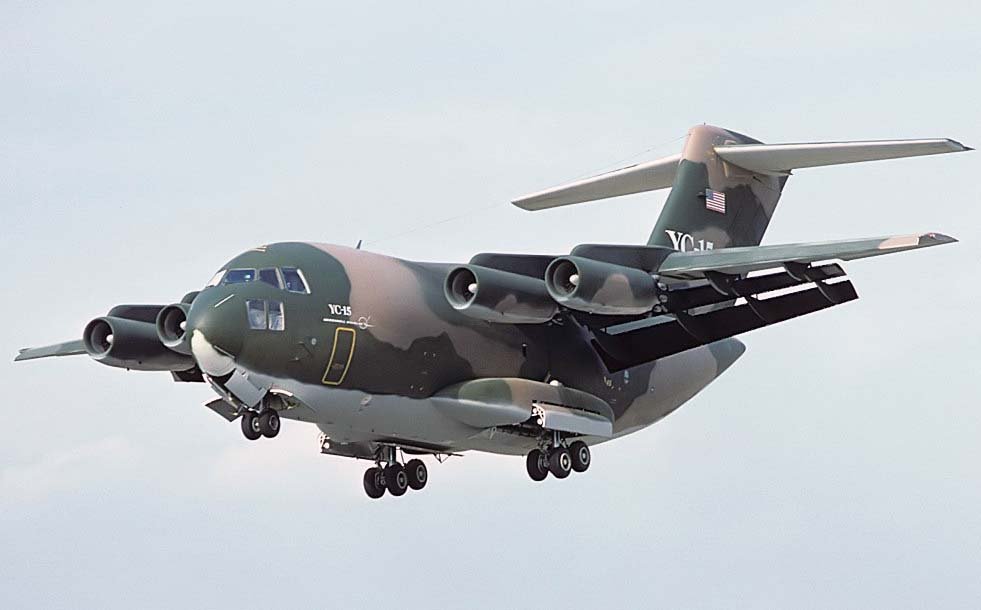 C-15 |
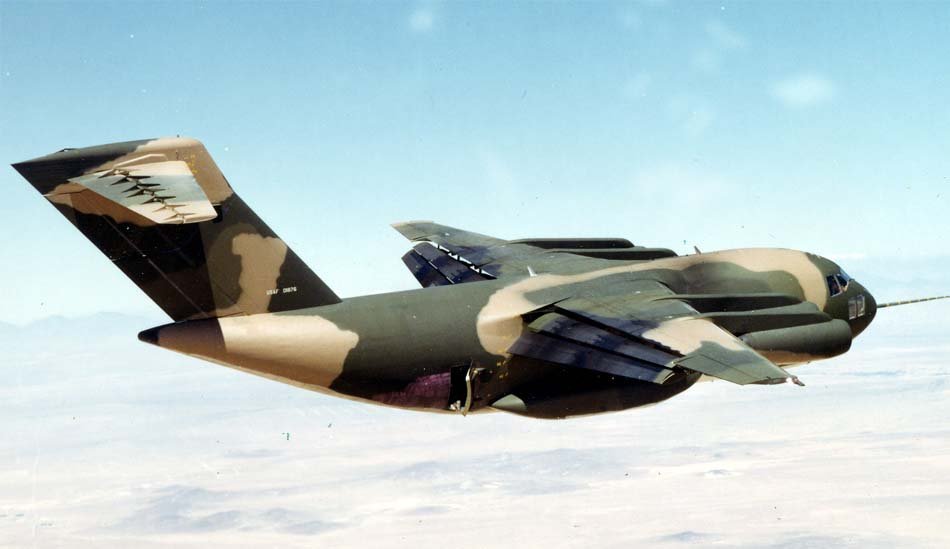 C-15 |
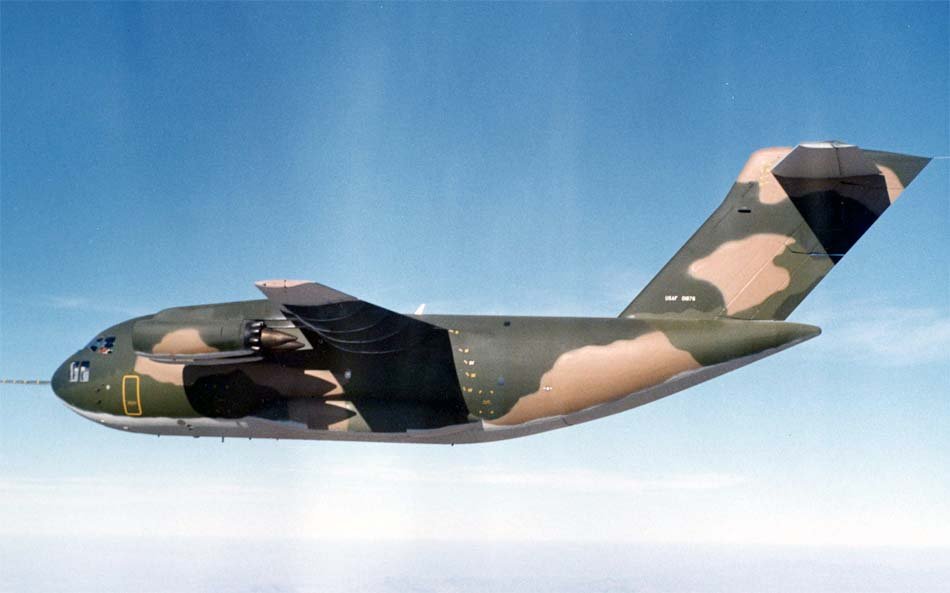 C-15 |
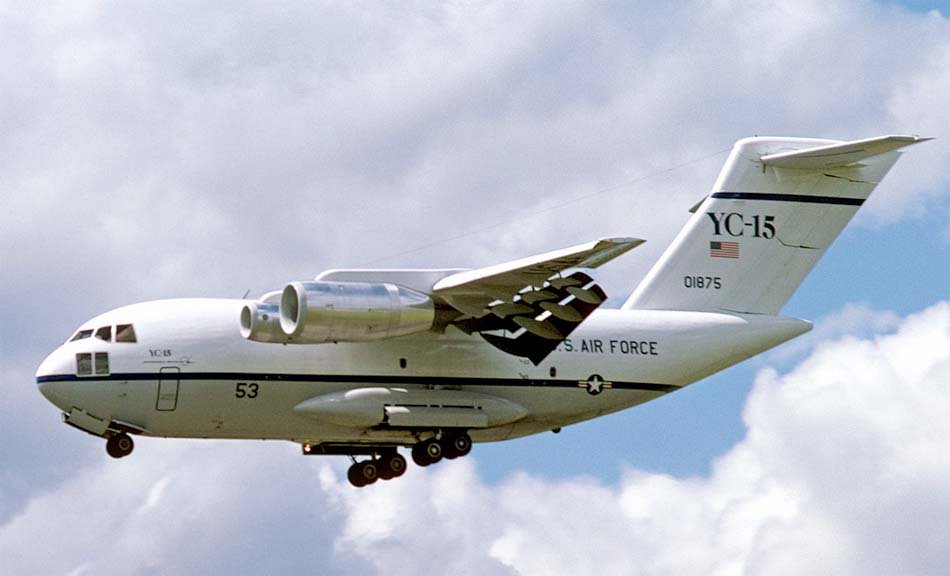 C-15 |
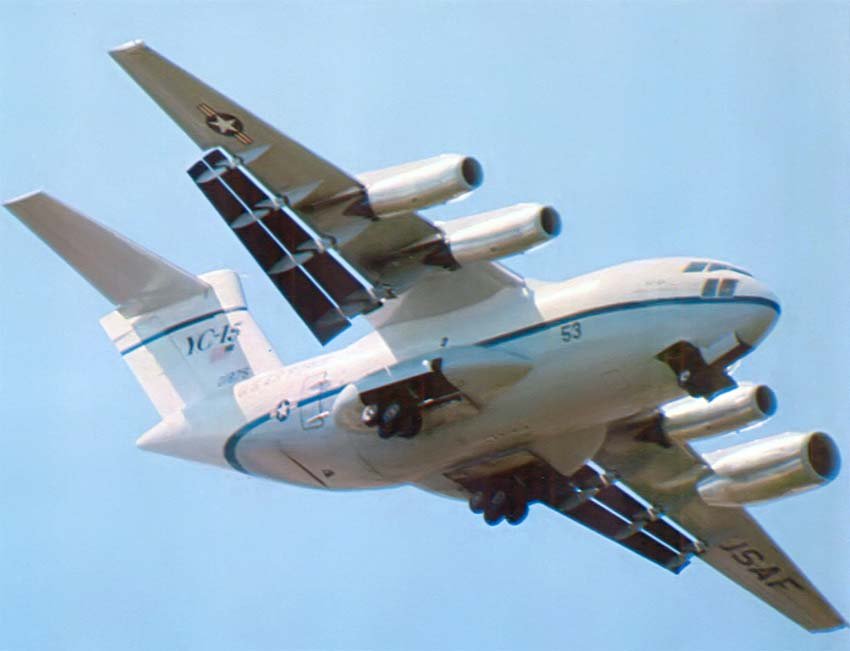 C-15 |
 C-15 |
 C-15 |
 C-15 |
 C-15 |