
From Italy’s entry into the war, the weakness of the Italian air force’s armament immediately became apparent. The first aerial battles highlighted the absence of aircraft cannons on Italian fighters. It cannot be said that Italian industry was unable to produce a viable aircraft cannon; experimental 20mm automatic cannons had been developed by the Scotti firm in the first half of the 1930s.
Similarly, Breda, the main supplier of Italian armaments, had been continuously developing its Breda 20/65 mod.35 automatic weapon, releasing several prototypes by the late 1930s specifically designed for aircraft installation. However, Benito Mussolini’s authoritarian leadership of the Air Ministry, who considered aircraft cannons an unnecessary indulgence, forced developers to treat the topic as a secondary priority, ultimately delaying the process until Italy no longer had time for new developments.
Italian Aerial Armament Shortcomings
In November 1941, when urgency became paramount, a specification was issued for the development of a universal 20mm automatic cannon. It was intended for use as both an aircraft cannon and an anti-aircraft weapon, capable of replacing the serial Breda 20/65 mod.35 in service. The technical requirements stipulated a rate of fire of at least 600 rounds/min for the aviation version and 220 rounds/min for the anti-aircraft version.
The weight of the weapon body was specified at 42 kg and 69 kg respectively, with recoil forces set at 900 kg for the aircraft version and 3000 kg for the anti-aircraft version. Strictly speaking, these specifications were largely drawn from an experimental Breda automatic weapon prototype developed in early 1941. Breda had been experimenting with aircraft cannon designs since 1939, which were logical descendants of their production 20/65 mod.35 automatic weapon.
In March 1941, two aircraft cannon prototypes were developed: the CL-20, designed for engine mounting with a 90-caliber barrel, and a 70-caliber version suitable for wing installation. The latter was chosen as the model for the prospective automatic cannon.
Development and Competition for the Breda 20/70
The development specification was sent to four companies. Besides Breda, the competition invited Scotti, who had systematically developed their 20mm 70-caliber design, as well as Ansaldo and Grandi. Grandi presented a 70-caliber automatic weapon structurally similar to Scotti’s designs, some samples of which were installed on Gucci tricycles and used for territorial defense.
Nothing is known about the Ansaldo project; it most likely did not progress beyond the paper stage. Breda, as in all previous competitions, having been informed in advance of the tender conditions, had already worked out its design and presented ready-made prototypes.
As noted, the project was based on the 1941 experimental aircraft cannon, designed for the powerful “Long Solothurn” 20x138B ammunition. While the aviation version utilized a metal disintegrating belt, two feeding options were developed for the anti-aircraft version: 20-round top-insertable box magazines for army use and 50-round open drum magazines for naval applications.
Deployment and Technical Challenges
Priority in development was given to the naval anti-aircraft version, the Breda 20/70 mod 1941, for which a range of single, dual, quad, and six-barreled installations were developed. The six-barreled setups proved particularly potent, achieving a combined rate of fire of up to 3600 rounds per minute. Plans included installing 22 such units on the aircraft carrier “Aquila”, then under construction.
Additionally, two twin mounts were successfully fitted to four “Ciclone”-class destroyers and possibly several torpedo boats. However, the “Aquila” remained unfinished, and the limited number of automatic cannons issued to troops suffered from barrel overheating, caused by the excessively high rate of fire and forced ballistics. The overly powerful cartridge also prevented its adoption as an aircraft cannon.
At 600 rounds per minute, the recoil and, consequently, the load on the airframe, were deemed excessive. A transition to a less powerful cartridge for the aviation version, or a reduced rate of fire for the anti-aircraft version, might have resolved these issues. However, Italy ultimately ran out of time for further experimentation.
Technical Specifications
| Modification | 20/70 mod.41 |
| Caliber, mm | 20 |
| Type of automation | gas-operated |
| Mass, kg | 42 (gun body) 69 (in anti-aircraft configuration) |
| Barrel length, mm | 1400 |
| Rate of fire, rounds/min | 600 |
| Muzzle velocity, m/s | 820 |
| Magazine capacity | 20 or 50 rounds (in aviation version – belt) |
| Projectile mass, g. | 134-140 |
| Ammunition type | “Long Solothurn” 20x138B |
Image and diagram gallery of the Breda 20/70
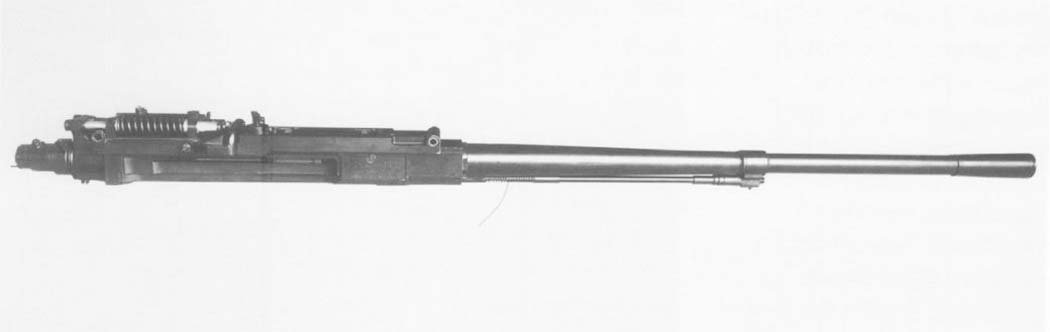 Breda 20/70 |
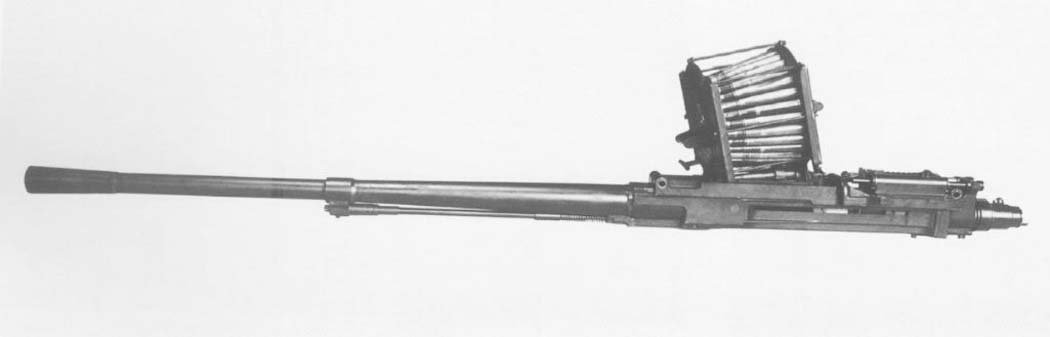 Breda 20/70 |
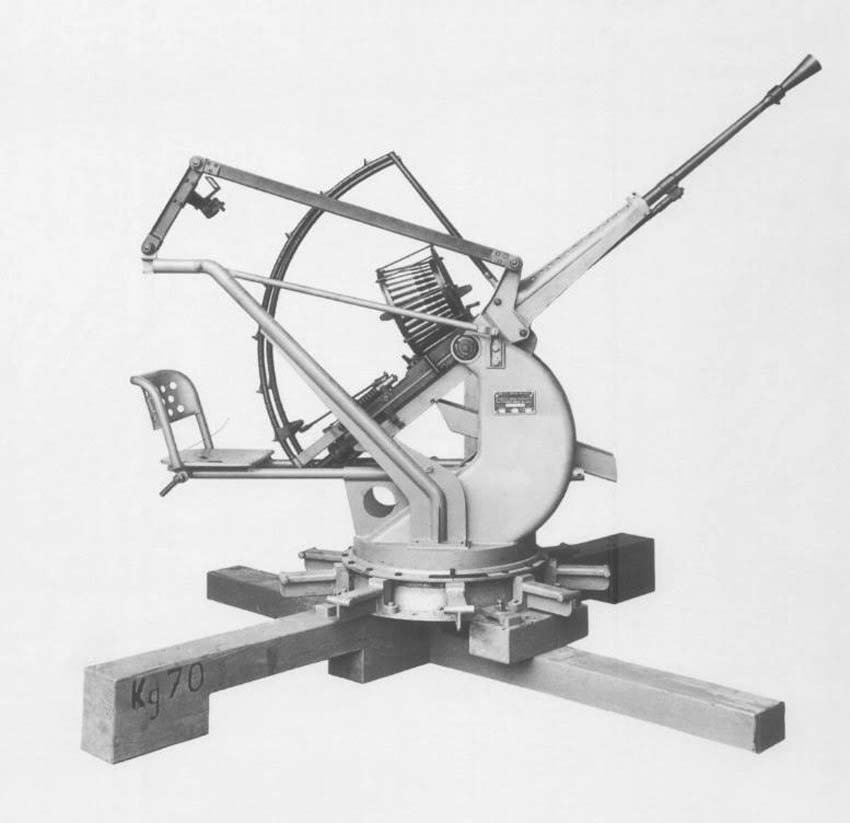 Breda 20/70 |
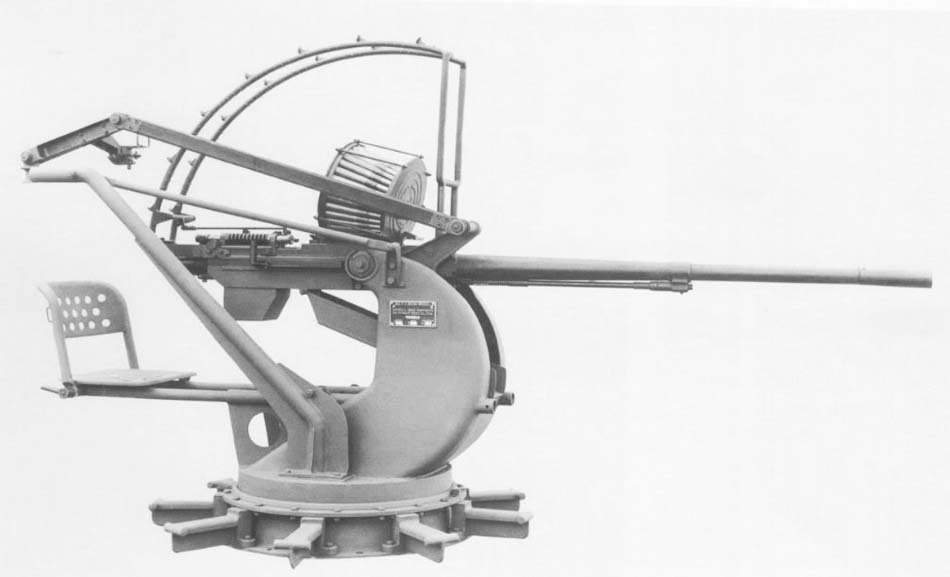 Breda 20/70 |
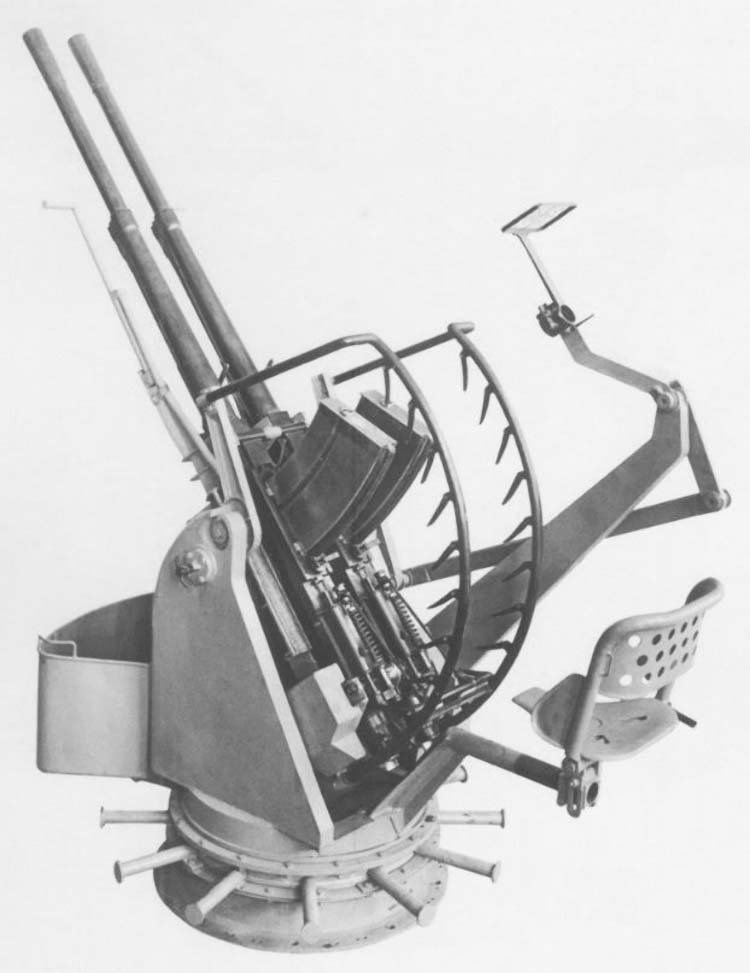 Breda 20/70 |
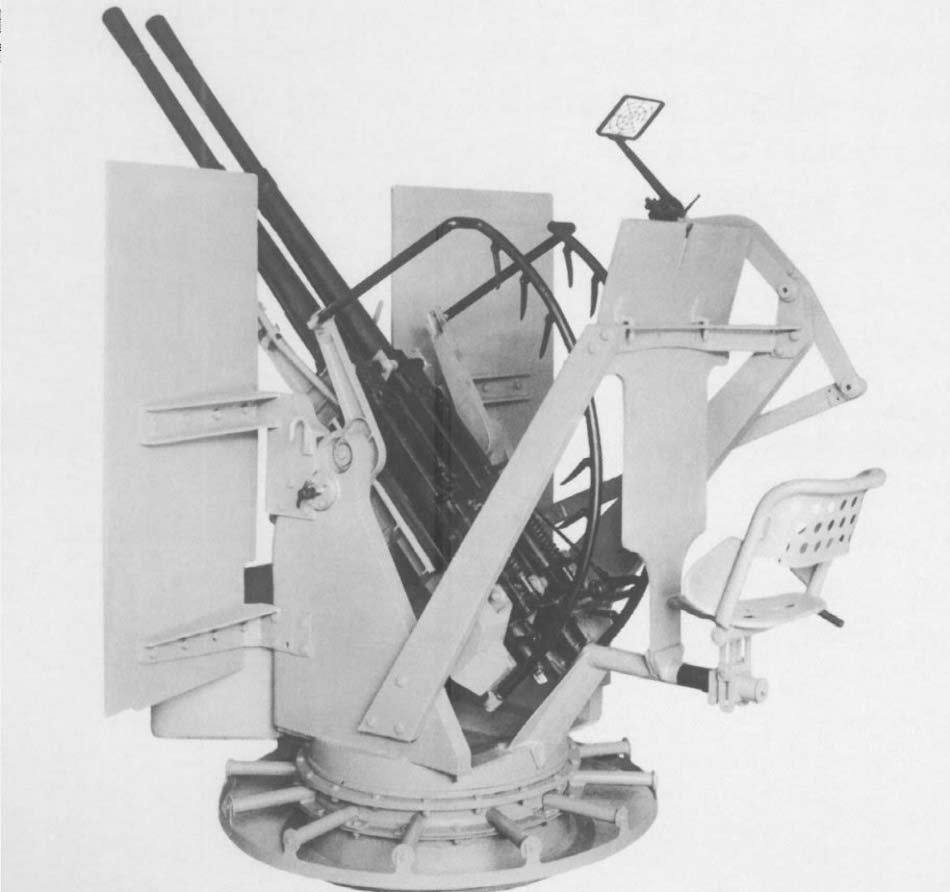 Breda 20/70 |
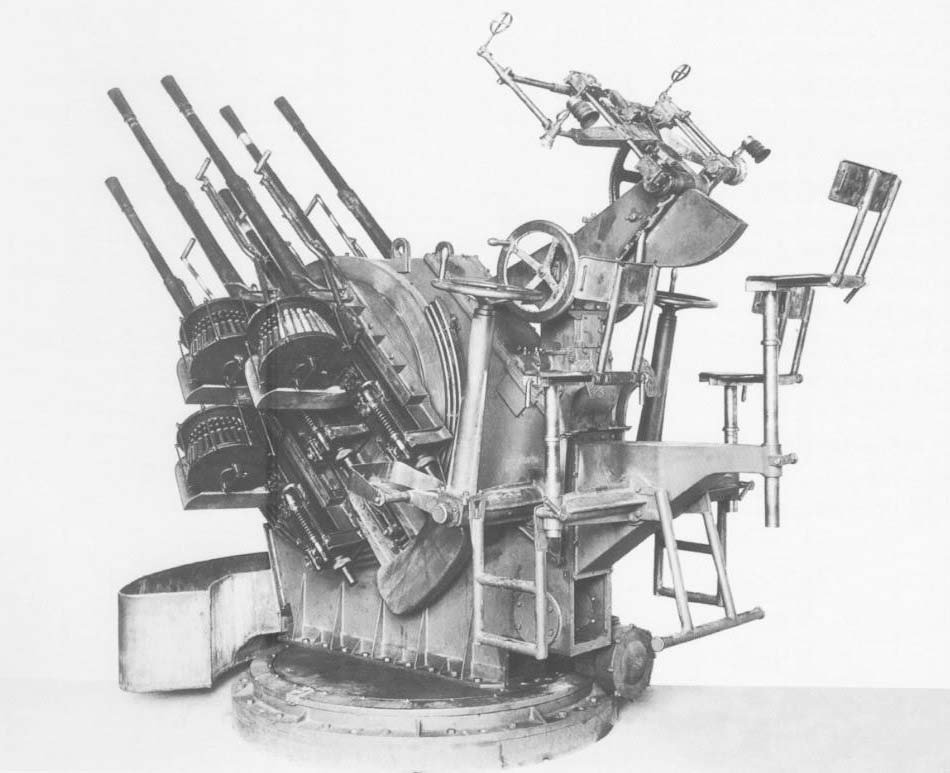 Breda 20/70 |
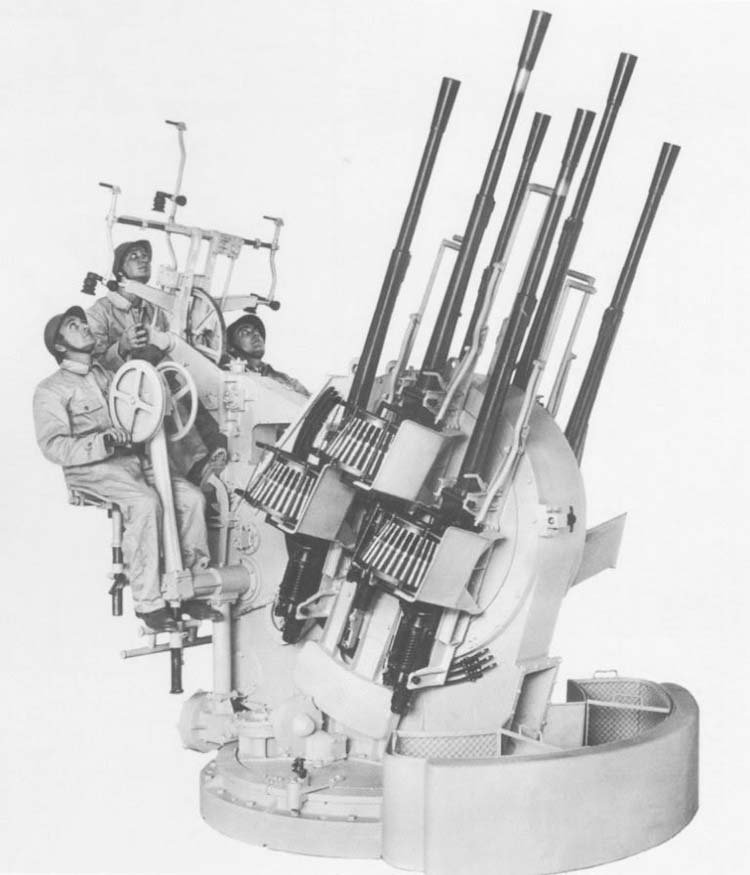 Breda 20/70 |