
In 1913, Louis Blériot developed his next design, the Bleriot XL. This aircraft was first unveiled at the Turin exhibition in May 1913, showcasing a new direction for the renowned French designer. It represented a unique attempt to innovate in early aviation.
Design Features
The Bleriot XL was a two-seater, single-strut biplane, powered by an 80 hp seven-cylinder Gnome 7A radial engine with a pusher propeller. Its innovative layout positioned the observer in the front cockpit, with the pilot situated directly behind, optimizing visibility for reconnaissance tasks.
Unsuccessful Military Proposal
Later that year, the aircraft was offered to the military as a reconnaissance and observation plane. However, this new scout failed to attract the interest of the armed forces. Consequently, the Bleriot XL remained a sole prototype, never entering series production.
Technical Specifications
| Modification | Bleriot XL |
| Wingspan, m | 12.70 |
| Length, m | 9.15 |
| Wing area, m2 | 38.00 |
| Empty weight | 390 |
| Maximum takeoff weight | 690 |
| Engine type | 1 Piston engine Gnome 7A |
| Power, hp | 1 x 80 |
| Maximum speed, km/h | 90 |
| Cruising speed, km/h | 75 |
| Crew | 2 crew |
Image and diagram gallery of the Bleriot XL
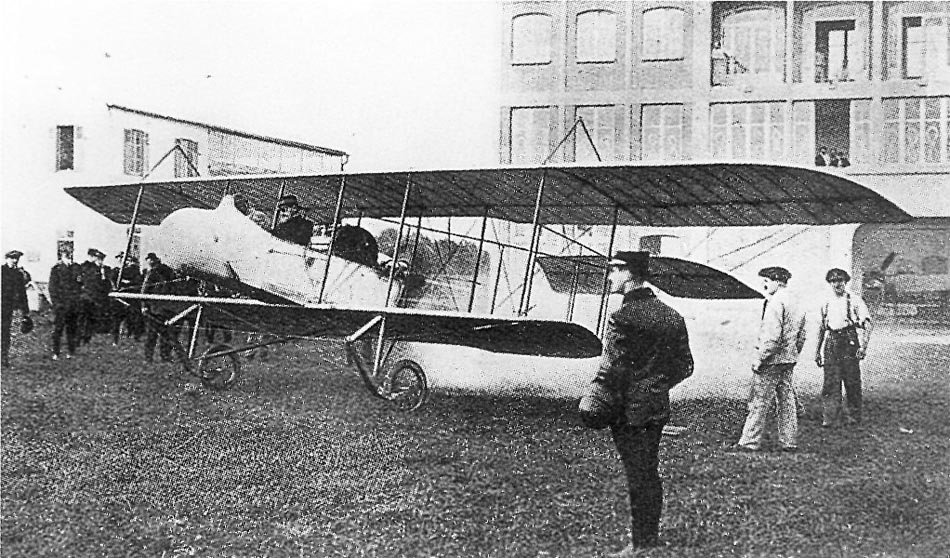 Bleriot XL |
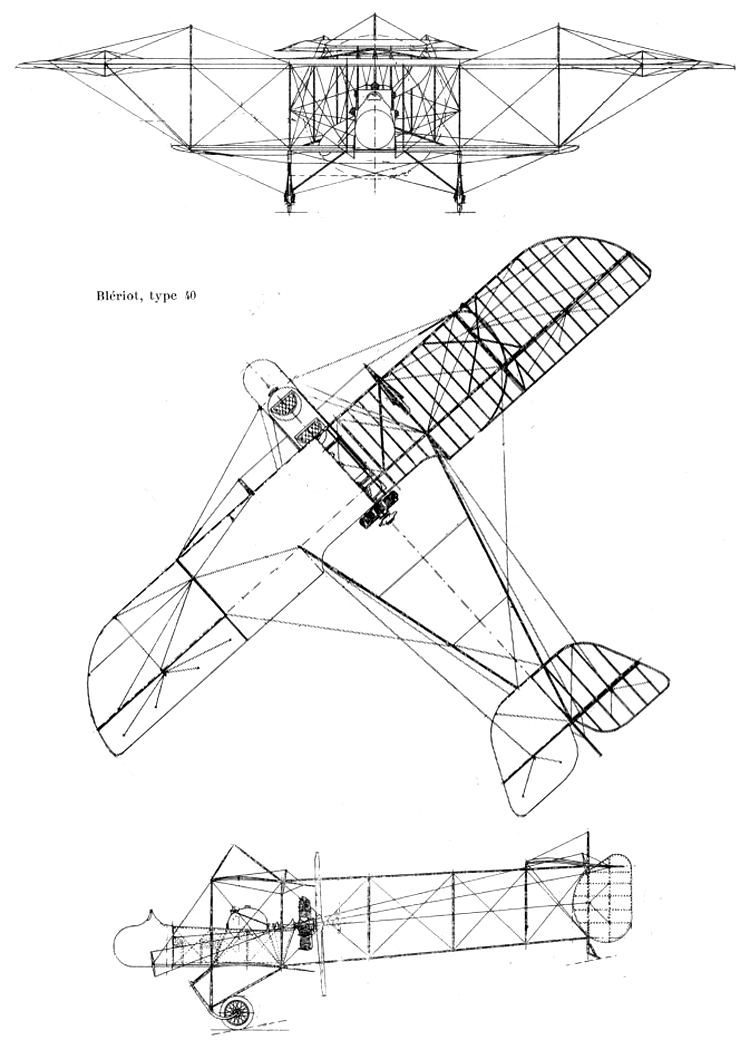 Bleriot XL |