
The twin-engine “Caproni” aircraft were successfully operated in Libya, leading the Italian colonial aviation administration to order an improved model from the company. At the Bergamo factory, under the leadership of chief engineer Cesare Pallavicino, development of the Ca.309 aircraft began. The “Three Hundred Nine,” a scout-bomber and light transport, was well-prepared for basing in the desert sands.
The wing’s mechanization included flaps and slats, with ailerons on the outer sections. The rudders featured servo-compensators. The wooden wing structure was covered with plywood, and partially with fabric. The fuselage frame, welded from steel tubes, had a plywood-duralumin covering forward and fabric towards the tail. The use of simple materials lightened the structure and accelerated airframe repairs in the field. The fixed landing gear was covered, except for the tail wheel, by teardrop-shaped fairings. The Ca.309’s power plant consisted of two Alfa-Romeo A-115 Series I or II engines (185-200 hp), with tanks holding 740 liters of gasoline.
Design and Technical Features
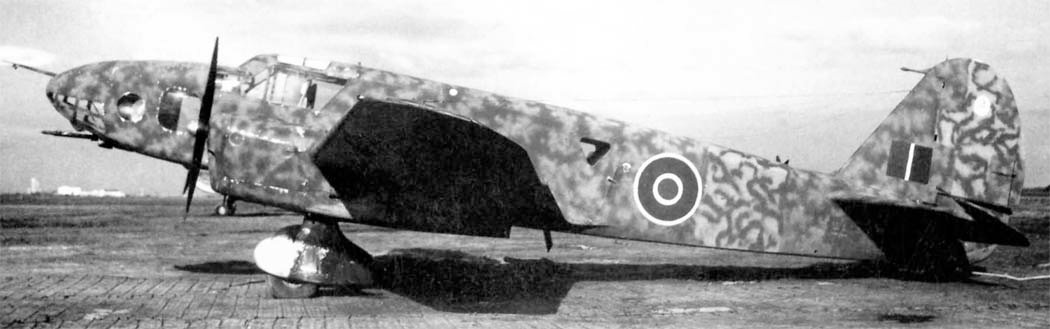
The fuselage of the new “Caproni” turned out to be somewhat narrower and longer than that of the Ca.308. This was due to the nose gunner-bombardier’s cockpit, which had side windows and glazing underneath. The Ca.309 was armed with three machine guns: two 7.7 mm “Breda-SAFAT” were installed in the wing roots, and a third “Lewis” was on a turret in the front cockpit. Each gun had 500 rounds of ammunition.
The aircraft was equipped with photographic equipment, bomb racks, or a cassette for 336 kg of small bombs. When needed, it could carry six passengers. The minimum crew consisted of a pilot and a radio operator-observer.
Operational History and Variants
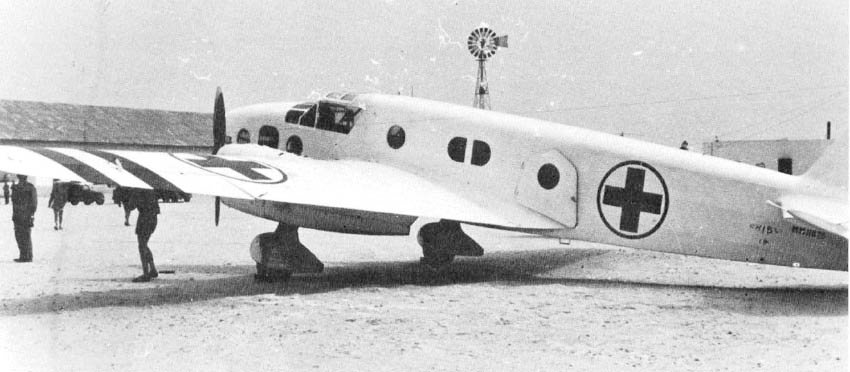
The Ca.309 prototype was first flown in late August 1936 and given the name “Ghibli” (desert wind). Serial production began at the Ponte San Pietro factory in October. A total of 243 aircraft of nine series were manufactured. Most of the “Three Hundred Nines” were sent to units stationed in Libya. A sanitary “Ghibli,” a version with numerous portholes, flew from 1940. These light “Caproni” aircraft also served in Italy itself.
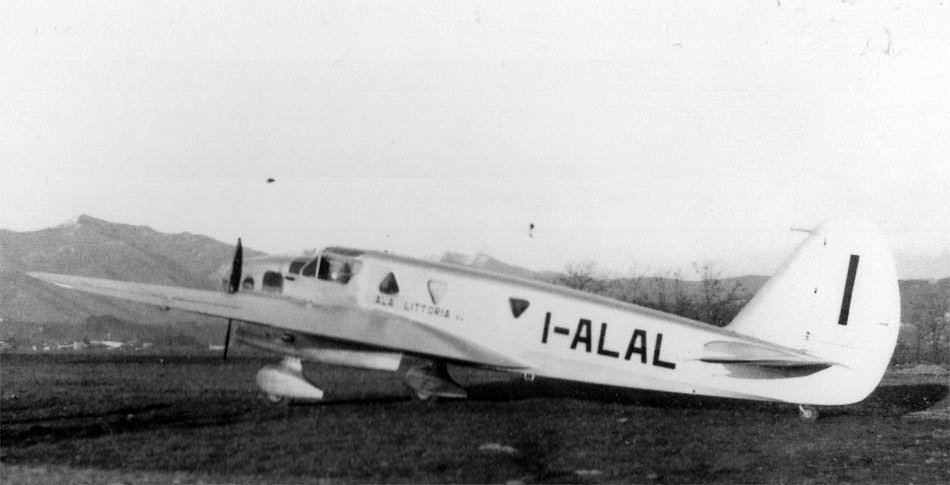
In March 1939, pilots Krone and Fioravanti, flying a Ca.309, won the IV Air Rally across the Sahara, which confirmed the machine’s good reputation. Three main variants were produced: a colonial scout-bomber with Alfa Romeo 115-I engines (later Alfa Romeo 115-II), a glazed nose, faired wheels, armament, and a crew of two; Series VI was a close support aircraft with enhanced armament. A light transport aircraft for six passengers (crew of two) with an unglazed nose and no armament was also produced, along with the Bulgarian KB-309 with As 10C engines and no landing gear fairings. Finally, a light transport aircraft without armament, for a crew of three and six passengers.
Service in World War II
By June 10, 1940, when Italy entered World War II, the Fascist Air Force had 93 twin-engine “Caproni” of various modifications. At that time, the identification mark of Italian military aircraft was the “fasces” —three bundles of rods and axes, instruments of punishment symbolizing power in Ancient Rome—.
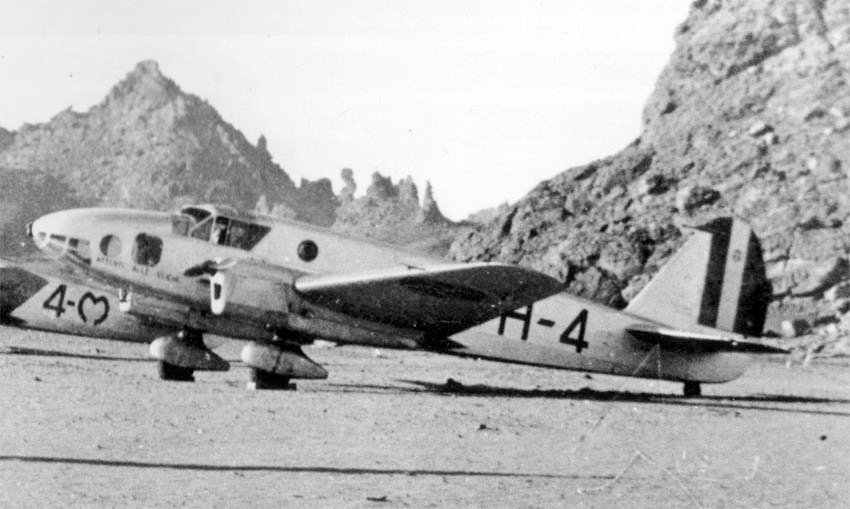
The Ca.309 “Ghibli,” as befitted “colonial” aircraft, were based in Libya at the airfields of El-Adem, Kufra, Hon, and Tripoli-Mellaha. Thirty-one “Capronis” were in service with seven squadrons of the 50th Mixed Air Regiment (or “stormo” in Italian). In addition to the “Three Hundred Nines,” the regiment also operated 24 Ca.310 “Libeccio,” which had replaced the outdated single-engine Breda Ba.65 reconnaissance aircraft in the 12th Group (Division) at Sorman airbase.
The combat tasks of the first month of the war included patrolling and reconnaissance, with routes over Tunisia and the Mediterranean coast. Soon, the “Capronis” participated in battles, attacking British strongholds and convoys in the Sahara sands. The “Three Hundred Nines” were not suitable as attack aircraft. Therefore, the Ca.309 Series VI was tested with a 20mm Breda cannon installed in the nose, which significantly over-weighted the aircraft.
As transport aircraft, they were operated until January 1943 in North Africa, and later in Italy itself. The Bulgarian “parrots” (KB-309s) served only as staff and liaison aircraft. Production in Bulgaria ceased in 1941, and in Italy in 1942. By the time of the country’s surrender in September 1943, the Italian Air Force had lost almost all aircraft of this type.
Technical Specifications
| Modification | Ca.309 |
| Wingspan, m | 16.20 |
| Length, m | 13.30 |
| Height, m | 3.25 |
| Wing area, m2 | 38.70 |
| Empty weight | 1745 |
| Normal takeoff weight | 2695 |
| Engine type | 2 Piston engines Alfa Romeo 115-II |
| Power, hp | 2 x 200 |
| Maximum speed, km/h | 250 |
| Cruising speed, km/h | 210 |
| Practical range, km | 670 |
| Practical ceiling, m | 4500 |
| Crew | 2-3 crew |
| Armament | Three 7.69-mm machine guns (on series VI – one 20-mm cannon and two 7.69-mm machine guns), bombs up to 336 kg – only in the colonial reconnaissance-bomber variant. |
| Payload | 6 passengers |
Image and diagram gallery of the Ca.309 Ghibli
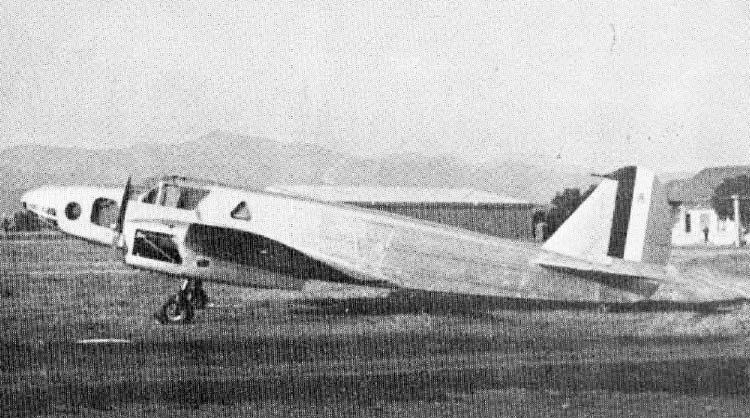 Ca.309 Ghibli |
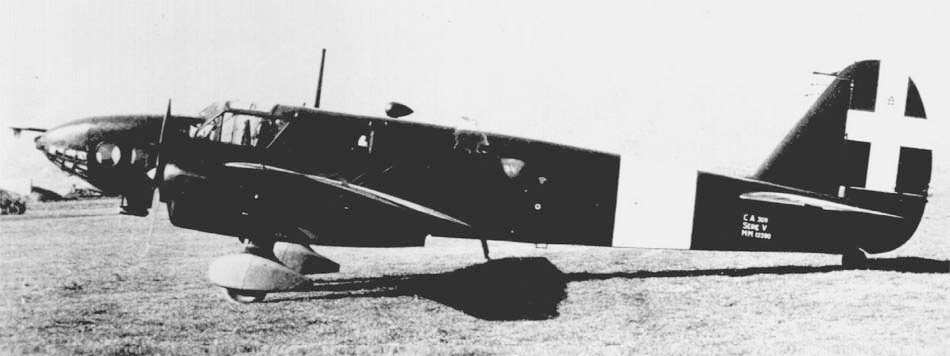 Ca.309 Ghibli |
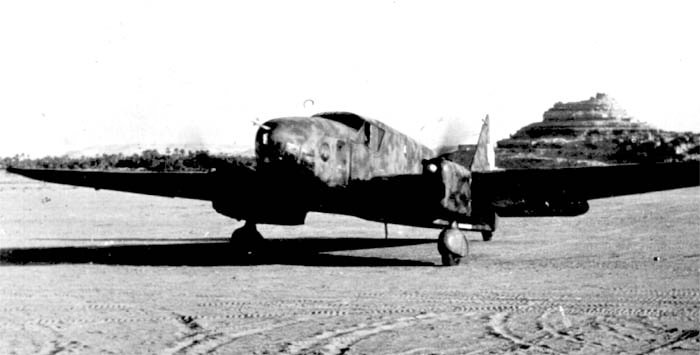 Ca.309 Ghibli |
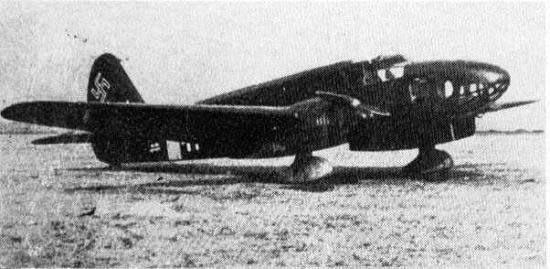 Ca.309 Ghibli |
 Ca.309 Ghibli |
 Ca.309 Ghibli |
 Ca.309 Ghibli |
 Ca.309 Ghibli |
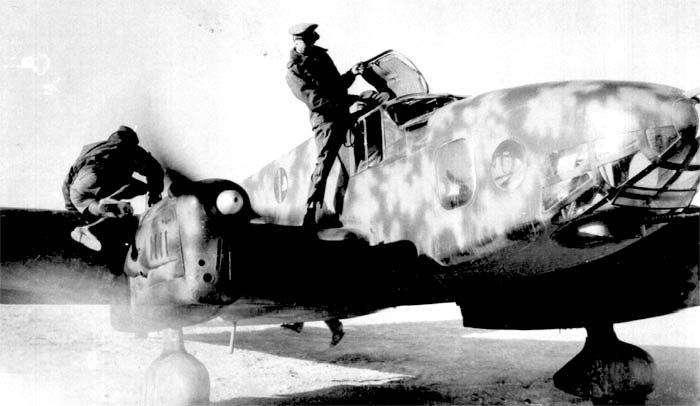 Ca.309 Ghibli |
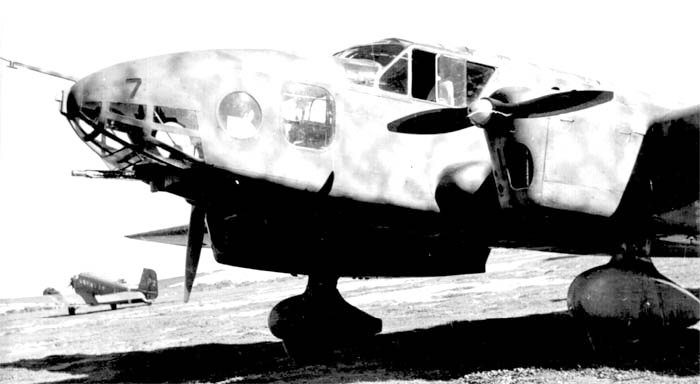 Ca.309 Ghibli |
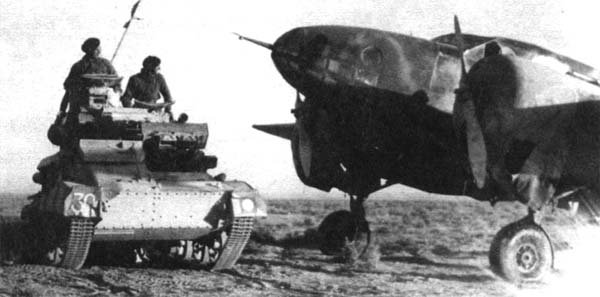 Ca.309 Ghibli |
 Ca.309 Ghibli |
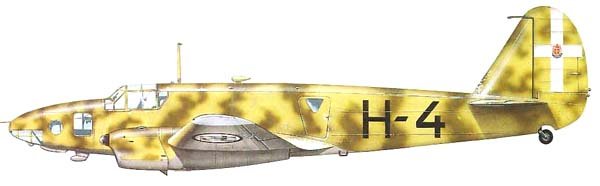 Ca.309 Ghibli |
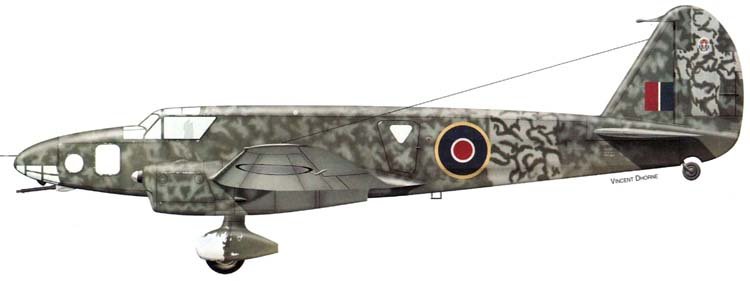 Ca.309 Ghibli |
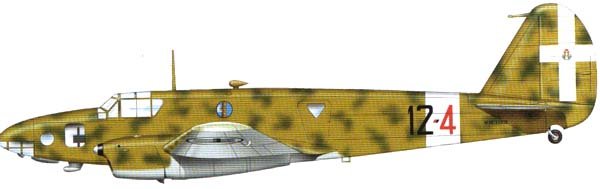 Ca.309 Ghibli |
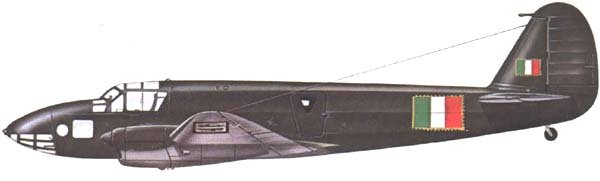 Ca.309 Ghibli |