
This Italian aircraft, designed in the first half of 1914, can rightfully be considered one of the world’s first planes created not for reconnaissance or bombing, but for destroying other aircraft. The Ca.20 monoplane was developed in 1913 based on previous reconnaissance models (Ca.8, Ca.16).
The Innovative Ca.20 Design
It differed from its predecessors by having a more powerful Rhône engine and an important design feature: a large spinner housing a two-bladed wooden propeller, allowing for a smoother fairing with the fuselage. The nose cone was perforated for better engine cooling. Furthermore, the wingspan was reduced to increase speed and improve the aircraft’s maneuverability.
Armament and Technical Challenges
Conceived for “hunting” (as a fighter), the Caproni Ca.20 carried offensive armament in the form of a 7.7mm Lewis machine gun. This drum-fed machine gun was mounted above the pilot’s cockpit on struts, allowing bullets to clear the propeller’s arc and enabling the pilot to reload.
For successful weapon deployment, the pilot was equipped with the world’s first eye-level sight. This solution was undoubtedly forced, as the synchronization device was first applied in the Fokker Eindekker fighter in 1915 (according to some sources, similar experiments were conducted in France in 1913).
Unfortunately, the aircraft failed to pique the interest of the Italian military and remained at the prototype stage. A similar fate could have befallen the ambitious project of the Ca.31 tri-motor bomber (a modification of the Ca.3). This project was “favored” by the aviation inspector General Maurizio Moris.
Only with the support and interest of the flight battalion commander and one of the first theorists of strategic aviation, Giulio Douhet, was the first prototype built, flying in October 1914. At this time, the company’s position was heavily influenced by official statements and opinions, as Caproni had been nationalized in 1913, retaining Giovanni Battista Caproni only the role of technical director of the factory.
Legacy and Historical Preservation
The Ca.20 was preserved, but only to reappear twenty years later at the 1936 Roman Exhibition of Italian Aeronautics, only to then return to oblivion. The aircraft was stored near Vengono, in a monastery belonging to the Caproni family.
It remained in the attic until 1999 when it was transferred to the Museum of Flight in Seattle, where it is exhibited today. The Caproni Ca.20 is a rare case of an aircraft from the dawn of aviation being preserved; the aircraft underwent only minimal restoration – the wooden frame remained unchanged, and the fabric covering was only partially replaced.
Technical Specifications
| Modification | Ca.20 |
| Wingspan, m | 7.92 |
| Length, m | 8.36 |
| Height, m | 2.90 |
| Wing area, m2 | 13.38 |
| Empty weight | 353 |
| Normal takeoff weight | 586 |
| Engine type | 1 Piston engine Gnome |
| Power, hp | 1 x 100 |
| Maximum speed, km/h | 166 |
| Cruising speed, km/h | 130 |
| Practical range, km | 350 |
| Practical ceiling, m | 3450 |
| Crew | 1 crew member |
| Armament | one or two 7.7-mm machine guns |
Image and diagram gallery of the Caproni Ca.20
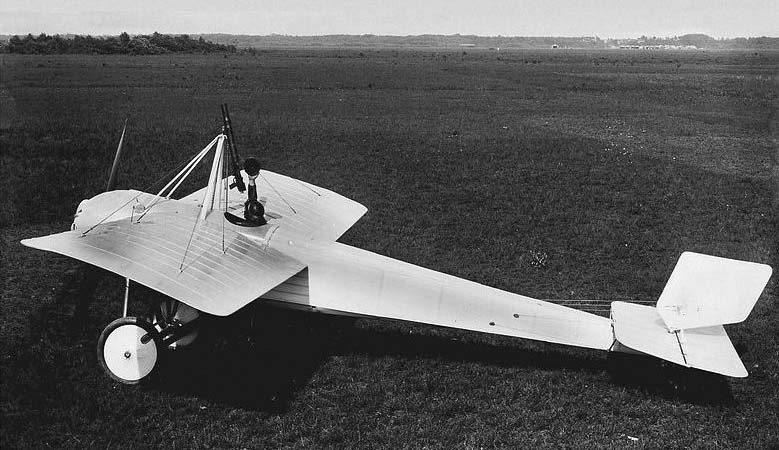 Caproni Ca.20 |
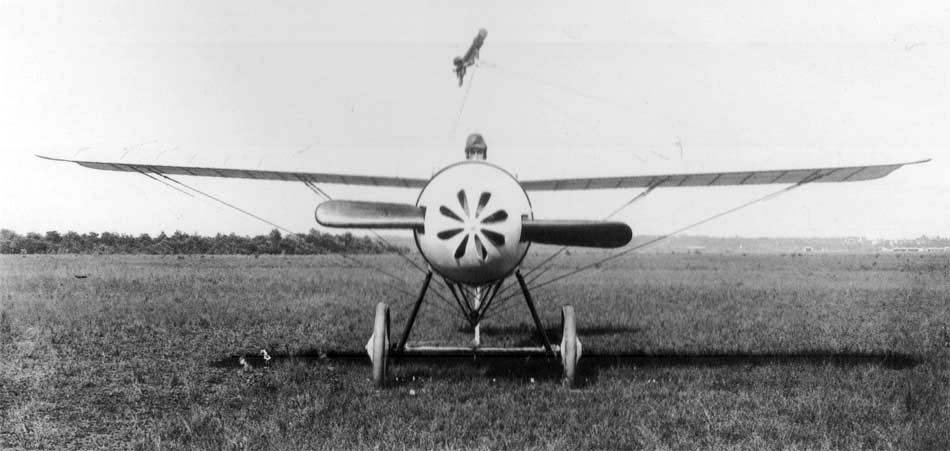 Caproni Ca.20 |
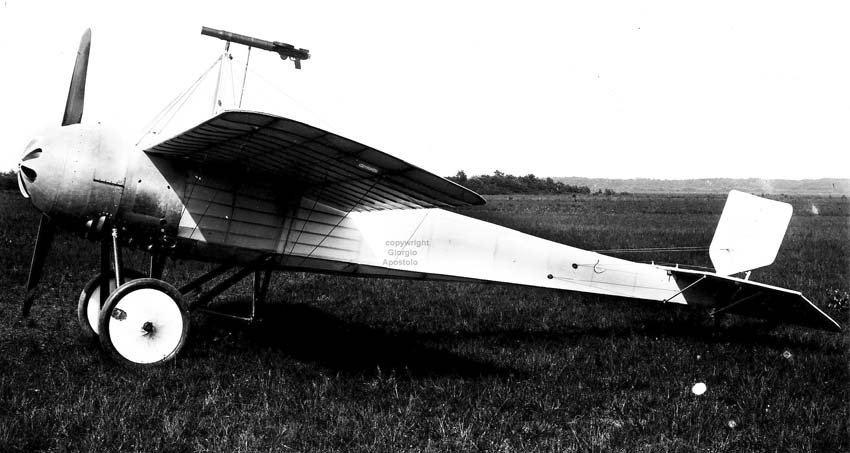 Caproni Ca.20 |
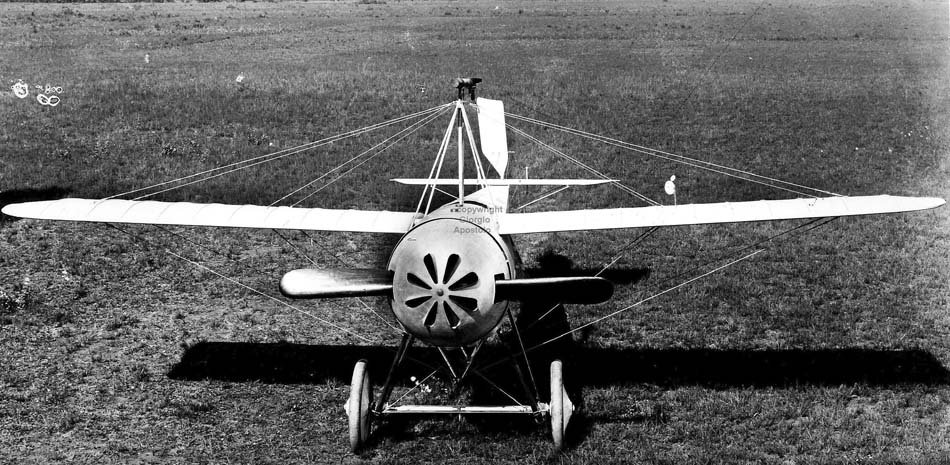 Caproni Ca.20 |
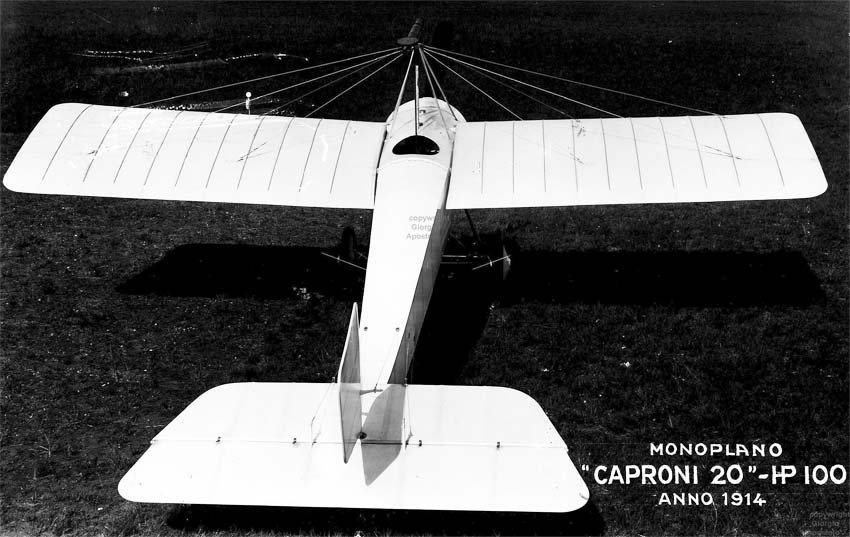 Caproni Ca.20 |
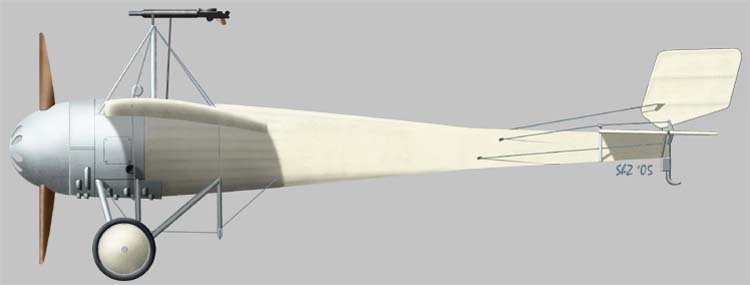 Caproni Ca.20 |